Choosing a siding color is one of the most visible decisions a homeowner makes, and one of the hardest to undo. Get it right and the house looks like it was always meant to look that way. Get it wrong and it's the first thing you notice every time you pull into the driveway.
The good news is that color theory for home exteriors is actually fairly predictable once you understand the principles. Westlake Royal Building Products notes that the combinations that hold their appeal longest are the ones that work holistically across siding, roof, and trim, rather than treating each element independently.
These five combinations are ones Ridge Top's design consultants see performing consistently well across Wisconsin and northern Illinois. Each one is described with specific colors, materials, and the home styles they suit best so you can immediately picture whether it might work on your home.
Why Combination Matters More Than Any Single Color
The biggest mistake homeowners make when choosing siding color is evaluating it in isolation. A color chip in a showroom doesn't tell you how that color reads against a brown architectural shingle roof, or how much it will lighten or deepen against white trim. The combination is the product.
This is why Allura USA's exterior design guidance emphasizes starting with the fixed elements of the home before selecting siding. Your roof color, any brick or stone, and your existing trim all set the parameters for what will and won't work. The combinations below are built with those relationships in mind.
For each combination, we've specified the exterior residential siding material and why it suits the look, the trim and accent direction, the roof pairing, and the home types and architectural styles it fits best. These are real-world house siding combinations, not stock photo inspiration.
Combination 1: Charcoal Fiber Cement with White Trim and Black Architectural Shingles
This is the combination that consistently delivers the strongest curb appeal per square foot across Wisconsin and Illinois. Dark charcoal siding, usually in the blue-gray to graphite range, against crisp white trim and a black or near-black architectural shingle roof creates high contrast and a lot of visual definition. The home looks intentional and cared for from the street.
Fiber cement is the right material for this look. The slight texture of lap siding or smooth panel profiles holds the dark color without looking flat, and the durability of fiber cement means the deep shade won't fade the way vinyl can over time in UV-heavy conditions.
This combination works on colonials, craftsman homes, cape cods, and modern farmhouse styles. It's less suited to ranch homes with very low profiles, where the dark color can feel heavy rather than grounded. White trim is non-negotiable here: off-white or cream trim reads as dirty rather than soft against a dark charcoal.
Best for: Traditional two-story and one-and-a-half story homes in established neighborhoods across Milwaukee, Madison, Appleton, and Gurnee.
Combination 2: Warm Greige Vinyl with Cream Trim and Weathered Wood Shingles
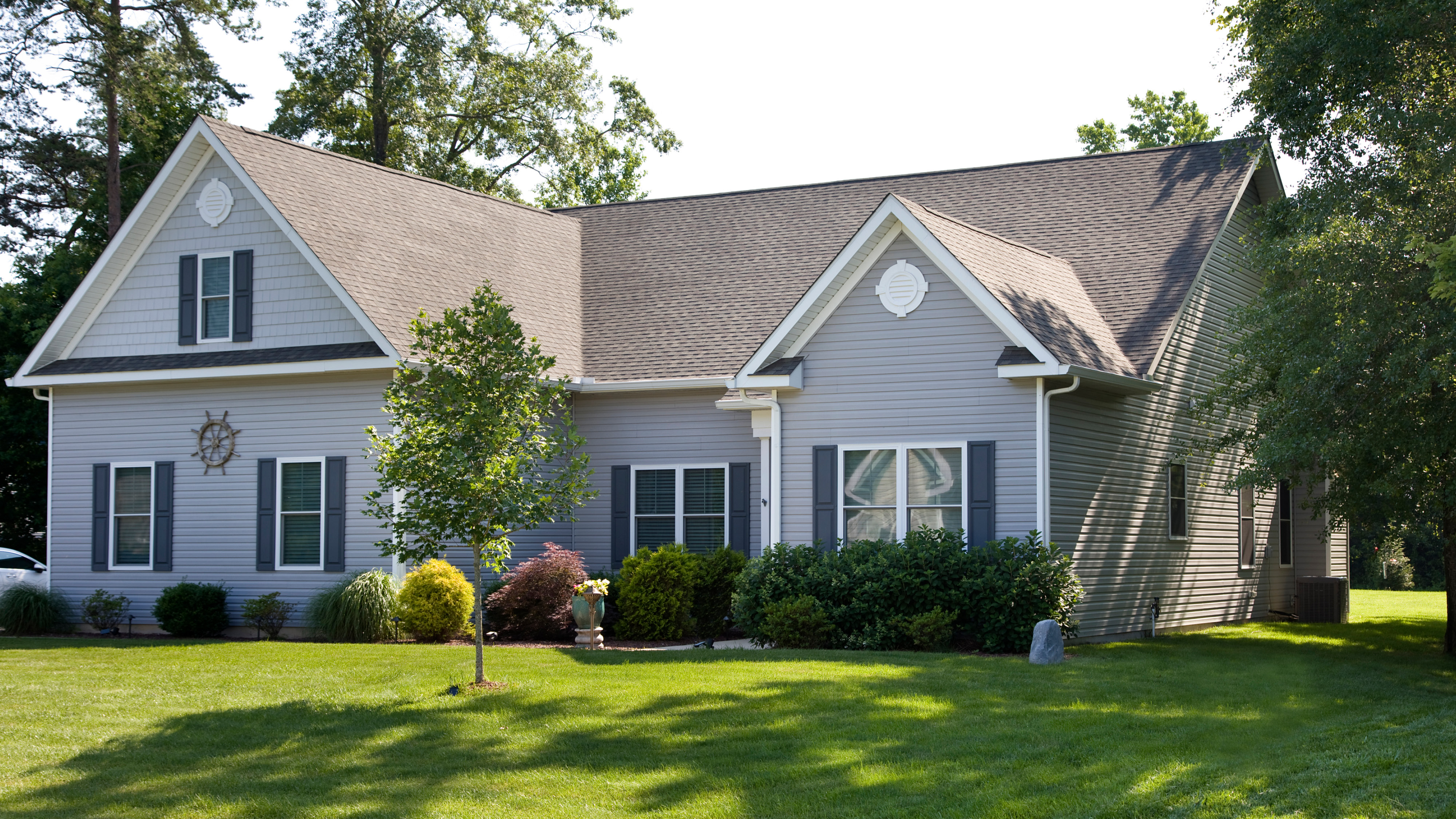
Greige, the warm gray-beige hybrid that's dominated exterior palettes in the Midwest for a decade, remains one of the most reliable performers for resale value and neighborhood fit. It reads as neutral without being boring, and it pairs naturally with the brown and tan tones common in older architectural shingles across Wisconsin and Illinois.
Vinyl is a practical material choice for this look because the warm neutrals in the greige palette don't rely on texture for their visual effect the way deeper colors do. A quality vinyl product in this color range performs well in freeze-thaw conditions and doesn't telegraph the material limitations of thinner panels the way dark colors can.
Cream trim, rather than bright white, keeps the palette cohesive and warm. A bright white trim against warm greige siding creates a slight color temperature mismatch that reads as slightly off. Cream bridges the gap and makes the whole facade feel deliberate.
Best for: Ranch homes, split-level homes, and older colonials in suburban neighborhoods where the dominant exterior palette runs warm and traditional.
Combination 3: Deep Navy Lap Siding with White Trim and Charcoal Roof
Navy has moved from a trend to a proven performer in the Midwest exterior market. When it's done well, it reads as bold but not aggressive, and it photographs exceptionally well for resale. The key is pairing it correctly.
A charcoal or dark gray architectural shingle roof is the right partner for navy siding. A brown or tan roof fights the cool blue undertones of navy and creates an undertone conflict that's subtle but uncomfortable. Charcoal reads as neutral across the warm-cool spectrum and lets the navy be the statement.
White trim is essential with navy. The contrast creates the crisp definition that makes navy siding look high-end rather than heavy. Black hardware on the front door and garage doors completes the palette without adding another color to manage.
LP SmartSide engineered wood siding is an excellent material choice for navy, particularly in colder climates. Its ExpertFinish pre-finished colors are applied in the factory and resist the fading that can dull dark siding colors in UV-heavy environments.
Best for: Craftsman homes, farmhouse-style homes, newer two-story homes, and any home where the owner wants to make a statement while staying resale-friendly.
Combination 4: Sage Green Board and Batten with Natural Wood Accents and Brown Roof
Sage green has seen a steady rise in Midwest exterior use over the last few years, and it works particularly well in wooded suburban settings and neighborhoods with mature trees. It reads as natural rather than trendy, which gives it more longevity than louder color trends.
Board and batten profile, with its vertical orientation and shadow lines, suits this color well. The profile creates visual interest that makes the color feel intentional rather than safe. Horizontal lap siding in sage reads flatter and loses some of the character that makes this combination work.
Natural wood accents, whether in the front door, garage door trim, or a wood porch ceiling, tie the exterior to its landscape setting. A brown or warm tan architectural shingle roof completes the palette by keeping the whole exterior in the warm-neutral family. This is not a combination that works with a cool gray or charcoal roof.
Best for: Craftsman and cottage-style homes, homes in wooded settings, and neighborhoods where the aesthetic skews toward natural materials and organic palettes rather than contemporary contrast.
Combination 5: Soft White Fiber Cement with Black Trim and Slate Gray Roof
The soft white-and-black exterior palette has become one of the most requested looks in Ridge Top's Wisconsin and Illinois service area over the last two years, and it's not hard to see why. It's clean, timeless, and photographs beautifully. It also works on a wider range of architectural styles than almost any other combination.
The key word is soft white, not bright white. A stark white siding in the Midwest reads differently under winter light than it does in showroom photography. Soft whites with a slight warm or gray undertone stay readable year-round and don't look clinical or sterile against the seasonal greens and browns of a Midwest landscape.
Black trim is the element that makes this combination modern rather than traditional. Black window casing, black gutters, and black hardware on doors pull the whole palette together and create definition at every edge. A slate gray or medium charcoal architectural shingle roof grounds the exterior without competing with either the white or the black.
Fiber cement is the right material for this look because the soft texture of lap siding reads beautifully in white and holds paint quality over time in a way that vinyl cannot match.
Best for: Colonial, craftsman, cape cod, and contemporary home styles. Works across nearly all lot sizes and neighborhood types in Wisconsin, northern Illinois, and Florida. This is one of the most versatile exterior residential siding combinations Ridge Top installs across all six of our locations.
How to Test These on Your Own Home
Reading about a color combination is useful. Seeing it on your actual house is a completely different experience. Ridge Top's 3D Designer lets you enter your home's address and apply any of these combinations directly to an aerial model of your property. You can adjust the siding color, trim, and profile and see how they interact with your specific roof, proportions, and neighborhood context.
It takes about 20 minutes to work through two or three combinations meaningfully. Most homeowners find that seeing a combination on their actual home quickly confirms or eliminates options that looked good in theory.
Once you've found a direction you're excited about, our siding service page covers the materials and profiles we install across Wisconsin and Illinois, and our instant quote tool gives you a real starting estimate based on your home's size and material choices. You can also search for exterior siding near me on ridgetopexteriors.com to find reviews and completed projects in your area.
Read verified reviews from homeowners across our service area to see how Ridge Top's design consultants help homeowners refine these combinations in person.
The right combination is out there for your home. These five are a strong place to start. When you're ready to connect with siding companies near me who can actually install it, Ridge Top covers Wisconsin, northern Illinois, and Tampa/Clearwater Florida.