The gutters on your home are not decorative. They exist for one purpose: to collect water from the roof surface and direct it away from the structure below. When they stop doing that job, the water has to go somewhere. In most cases, it goes directly into the ground alongside your foundation, and it keeps doing so every time it rains until something fails.
Foundation repairs are among the most expensive home improvement projects a homeowner can face. Many of them begin with a gutter that nobody noticed was failing. These five signs are worth checking right now, before the next rainfall.
Why Gutters Matter More Than Most Homeowners Realize
A roof sheds a significant volume of water during a rainstorm. Without gutters, that water cascades off the eaves and lands at grade level directly adjacent to the foundation. With damaged or clogged gutters, the water either overflows in concentrated streams at the same spots every time, or it backs up and seeps behind the fascia and into the wall structure above.
New rain gutters are not just an aesthetic upgrade. They are a water management system for the entire perimeter of your home. When that system is compromised, the structural consequences can be significant. The National Association of Home Builders notes that proper water management is among the most critical factors in long-term home structural integrity.
Sign 1: Soil Erosion or Bare Patches Along the Foundation
If you notice trenches, bare dirt, or displacement of mulch running along the base of your house, concentrated water overflow from failing gutters is the most common cause. The same water, landing in the same spots every time it rains, eventually erodes the grade and creates a slope that carries water toward the foundation rather than away from it.
This is one of the clearest physical signs that gutter overflow is occurring consistently. If you see it, the problem has likely been developing for at least one full rain season. Bob Vila’s guide to signs of bad gutters provides a useful checklist for identifying overflow damage patterns at grade level.
Sign 2: Water Stains on the Foundation Wall or Basement Floor
Horizontal staining on basement walls, efflorescence (the white chalky deposits that appear when mineral-laden water evaporates from concrete), or water marks at the base of a crawl space wall all indicate that moisture is infiltrating the foundation. Persistent gutter overflow or a failed downspout directing water against the foundation wall is a primary cause of this pattern.
If you are running a dehumidifier in your basement constantly or dealing with recurring dampness after rainstorms, walk the gutter line during the next significant rain event. Watch where the water is going. If it is pouring over the edge anywhere rather than exiting the downspouts, you have located the source.
Sign 3: Peeling Paint or Rot on Fascia Boards Below the Gutter Line
The fascia board is the horizontal trim board that runs along the roofline and supports the gutter itself. When gutters overflow consistently, clog, or pull away from the fascia, water runs behind the gutter and saturates the wood. The result over time is paint failure, soft spots in the wood, and eventually rot that can spread into the roof decking.
This sign is visible from the ground. If you see paint peeling or bubbling specifically on the fascia boards, it almost always indicates water is being retained against that surface. Left unaddressed, fascia rot can compromise the structural connection between the gutter and the roofline, and may eventually require roofing repairs in addition to seamless gutter replacement.
Sign 4: Gutters Pulling Away from the Roofline
Gutters are held in place by hangers that fasten through the gutter and into the fascia. When the fascia behind the gutter begins to rot, or when the gutter becomes heavy with debris and standing water over time, the hangers fail and the gutter begins to pull away from the roofline.
A gap between the back of the gutter and the fascia of even a quarter inch is enough to direct a significant volume of water directly behind the gutter and down the wall surface with every rain event. If you can see daylight between your gutter and the fascia, water is getting into a place it should not be. This is one of the most common triggers for seamless gutter replacement calls to our crews.
Sign 5: Pooling Water Near the Foundation After Rain
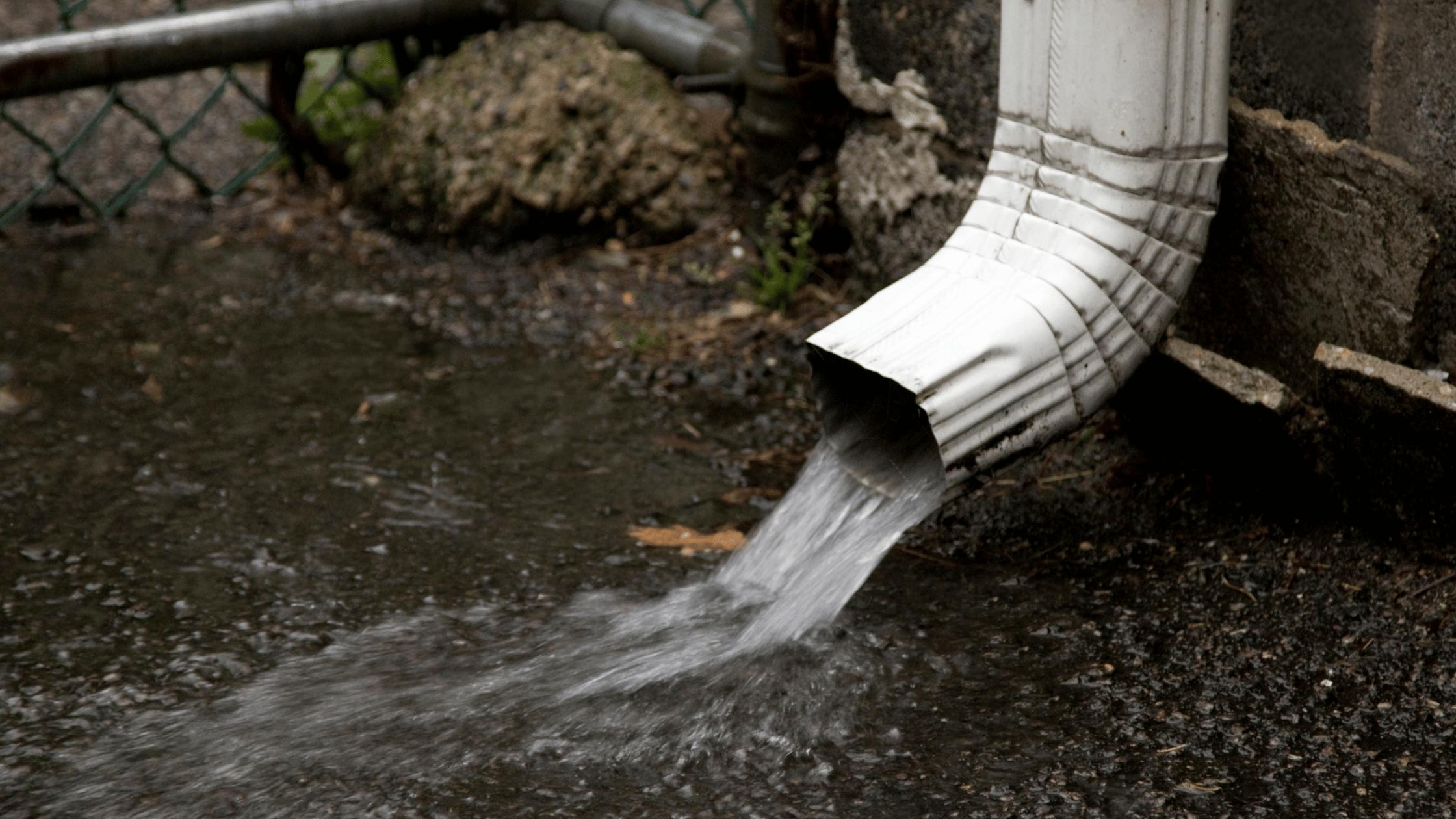
Downspout discharge should terminate at least four to six feet from the foundation and direct water onto a slope that carries it away from the house. If you walk the perimeter of your home after a moderate rain event and find standing water within a few feet of the foundation, the downspout system is either inadequate, blocked, or incorrectly positioned.
This is the most direct form of gutter-related foundation risk. Water sitting against a foundation for hours after a storm infiltrates over time, even through concrete block and poured concrete. The University of Minnesota Extension’s home exterior guidance outlines how grading and drainage systems work together to protect foundation integrity.
What Happens If You Wait
The cost of seamless gutter replacement is a fraction of the cost of foundation repair. Waterproofing a basement interior, installing a French drain system, or addressing settled foundation sections caused by sustained moisture intrusion can run from several thousand to tens of thousands of dollars depending on severity.
Homeowners who treat gutter failure as a cosmetic nuisance often discover the real cost when they go to sell their home and an inspector flags foundation moisture issues, or when a wet season produces enough water intrusion to require emergency remediation.
What a Gutter Inspection Covers
A professional gutter inspection from Ridge Top, your local roofing and siding company, includes an evaluation of gutter pitch and slope, downspout capacity and discharge location, hanger and fastener condition, seam integrity, fascia condition behind the gutter, and overall gutter protection performance. We assess the full gutter line rather than isolated sections because failure in one section affects performance across the entire run.
When Seamless Gutter Replacement Is the Right Answer
Gutters that are sagging, separating at seams, pulling from the fascia, or causing any of the five signs above are candidates for seamless gutter replacement rather than repair. Sectional gutters accumulate leak points at every joint over time. Seamless gutter contractors fabricate continuous runs on-site to the exact dimensions of your home, eliminating those failure points entirely.
Ridge Top’s seamless gutter contractors serve all of our markets in Wisconsin, Illinois, and Florida. If you have noticed any of the signs described here, schedule a free gutter inspection or use our instant quote tool to get a sense of project scope. Catching this problem before the next rain season is the most cost-effective thing you can do for your home.