Why Commercial Buildings Face Unique Hail Damage Risks
Hail damage commercial roofing is a serious threat to your business property's integrity and your bottom line. When hailstones strike your commercial roof, they can cause immediate visible damage or create hidden vulnerabilities that compound over time, leading to costly disruptions.
Quick Answer: Key Facts About Commercial Hail Damage
- Annual U.S. Losses: Over $14 billion in insured hail damage (2020)
- Storm Frequency: Thousands of major hailstorms hit the U.S. annually
- Common Damage Types: Dents, punctures, membrane fractures, granule loss, compromised flashing
- Most Vulnerable Components: Roof vents, exhaust caps, skylights, HVAC units, fasteners
- Critical Timeline: Be aware of your insurance policy's deadline for filing claims, often within 12 months
- Impact-Resistant Materials: Can significantly reduce damage
Unlike residential roofing, commercial structures have larger surface areas and house critical operations, making even minor hail damage a potentially expensive problem. The damage isn't always obvious—small punctures in a membrane or subtle dents in metal can lead to water infiltration, insulation failure, and structural issues.
The hidden nature of hail damage makes professional inspection essential. What appears as cosmetic denting may signal compromised waterproofing layers. Left unaddressed, these issues can escalate from a minor repair to a full roof replacement, not to mention business interruption costs.
I'm Carter Joyce, Director of Marketing at Ridge Top Exteriors. For over five years, I've helped commercial property owners steer hail damage commercial roofing challenges. Through thousands of storm damage assessments, I've seen how proactive inspection and the right materials can save businesses tens of thousands in emergency repairs.

Hail damage commercial roofing terminology:
The Anatomy of a Hailstorm's Assault on Your Business
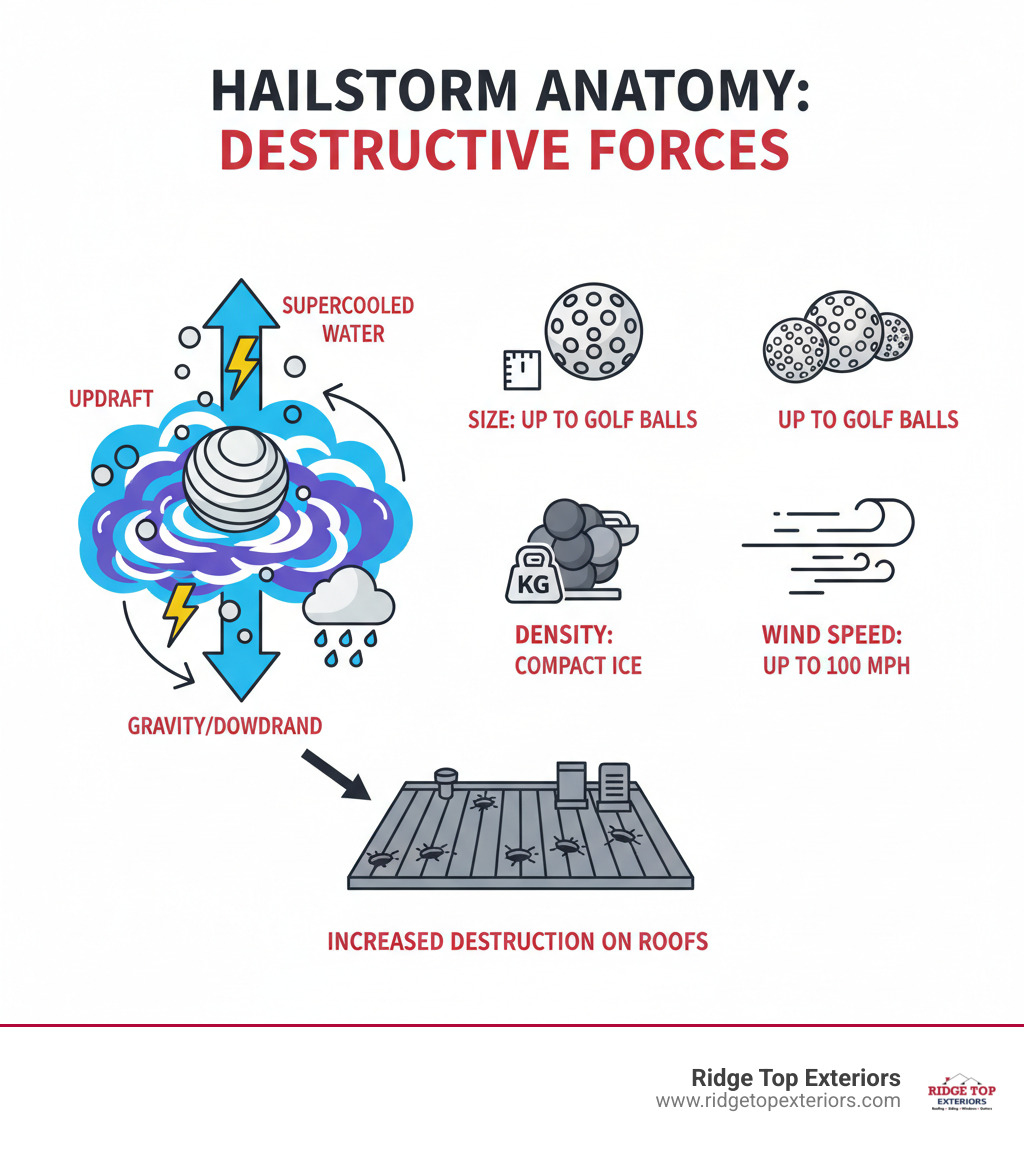
When a hailstorm rolls through, it's a direct threat to your commercial property. The power of hailstones, especially with high winds, can inflict serious damage on even durable roofing systems. The U.S. weathers thousands of hailstorms annually, resulting in billions in insured losses and leaving business owners with unexpected repairs and operational disruptions.
What makes hailstorms so dangerous is their unpredictability. The intensity of a hailstorm can vary greatly, from a brief shower of small pellets to a bombardment of large ice projectiles. The destructive potential depends on the size and density of the hailstones, their velocity, and the wind speed that can drive them at an angle, striking vulnerable areas.
Even storms that appear minor can cause hidden damage that doesn't reveal itself for months. A small puncture in a membrane today can become a major leak next winter. For businesses in Wisconsin, Illinois, and Florida—where Ridge Top Exteriors has been protecting properties for over 20 years—the threat of hail damage commercial roofing incidents is a constant concern. Being proactive about protection isn't just smart; it's essential.
Understanding the Financial Toll of Hail
The financial impact of hail damage commercial roofing is significant. While average claim costs provide a benchmark, commercial properties can face dramatically higher expenses, with full roof replacements representing a major capital investment. These costs can add up quickly across thousands of square feet.
The immediate repair costs are often just the beginning. Hail damage can shorten a roof's expected lifespan and create cascading problems. Small punctures become entry points for water, which spreads through insulation, drips onto inventory, and creates the perfect environment for mold growth.
We've seen it happen too many times: a business owner delays addressing what seems like minor damage, only to find months later that water has been quietly compromising insulation efficiency and weakening the building's support structures. Unaddressed hail damage can significantly reduce a roof's lifespan, forcing a premature and costly replacement that could have been avoided.
Beyond the roof itself, there's business disruption—lost revenue from closures, damaged inventory, and the hit to your professional reputation. These indirect costs can sometimes exceed the repair costs themselves.
The Vulnerability of Commercial Roofing Components
While the main roofing surface takes direct hits, it's often the smaller components that show damage first, signaling potential issues across the entire roof.
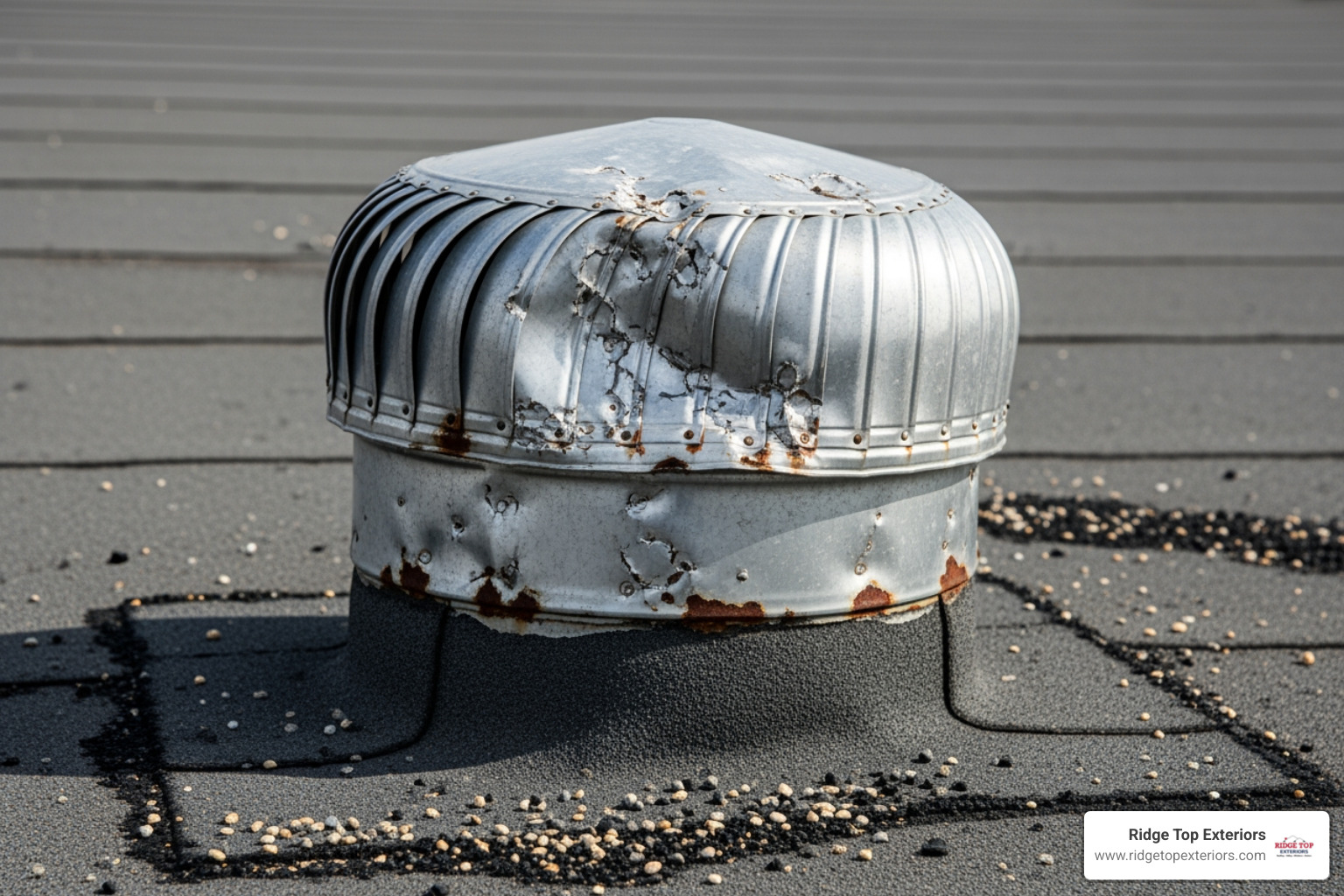
- Roof Vents and Exhaust Caps: Made from softer metals, they are often the first to show dents. Damage here can lead to pipe clogs or new entry points for moisture.
- HVAC Units: Delicate condenser fins can be pummeled by hail, reducing efficiency and leading to expensive repairs or replacement.
- Skylights: Glass or acrylic can crack or shatter, creating an immediate opening for water.
- Metal Flashing: Hail can dent or dislodge flashing, compromising critical watertight seals around penetrations and edges.
- Gutters and Downspouts: Dents and dings can impair your drainage system, causing water to pool on your roof or around your foundation.
- Fasteners: Hail impacts can loosen fasteners, particularly on metal roofs, allowing panels to lift or water to infiltrate.
- Membranes: Even tough TPO or EPDM on flat roofs can be punctured or weakened by sustained hail impact.
When our Ridge Top Exteriors team conducts an inspection, we check every one of these components. Catching damage early is the difference between a manageable repair and a roofing emergency.
How to Spot Hail Damage on Different Commercial Roofs
Identifying hail damage commercial roofing is often a job for a trained eye, as the most serious issues can be subtle and hidden. What you see from the ground may not tell the whole story, which is why a professional inspection is essential for protecting your investment.

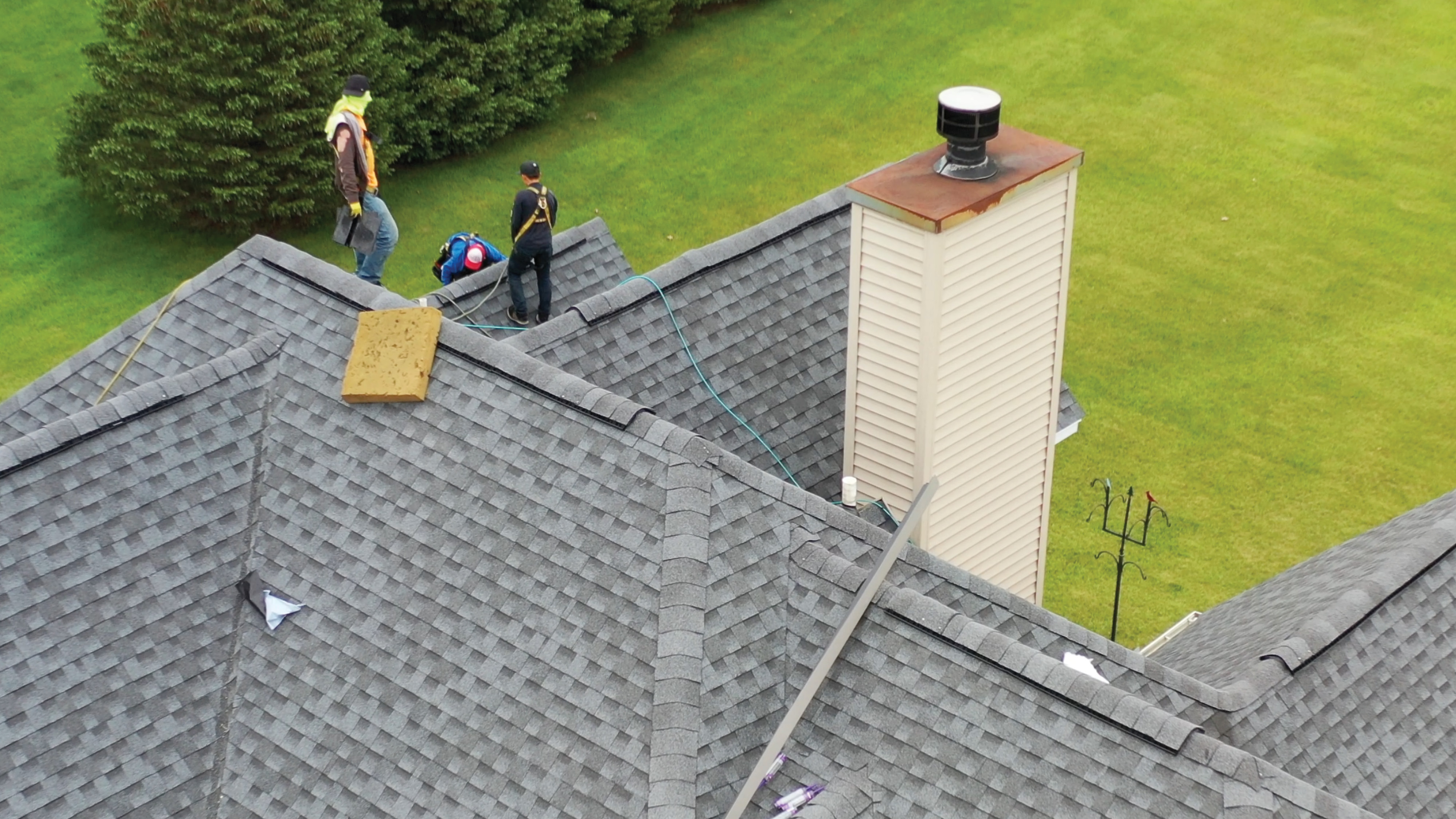
We strongly advise against attempting DIY roof inspections on commercial properties. The safety risks, including falls and exposure to unstable surfaces, are significant without proper equipment and training. Furthermore, an untrained eye will likely miss the subtle warning signs that our certified professionals are trained to spot, potentially leading to a manageable repair turning into a catastrophic failure.
Signs of Hail Damage on Asphalt Shingle Roofing
On asphalt shingles, including the industry-leading GAF products we install, hail damage can be deceptive. A professional inspector will identify signs like granule loss, where hail knocks loose the protective mineral granules, leaving dark spots where the underlying asphalt is exposed. An accumulation of these granules in gutters is a common indicator that a roof has been impacted. Losing granules isn't just cosmetic; it accelerates the roof's aging process.
Other signs a professional looks for include:
- Bruising: Soft spots on shingles where the impact has fractured the fiberglass mat beneath the surface without breaking through.
- Cracking: Sometimes visible on the surface, sometimes hidden, often with circular patterns indicating hail impact.
- Exposed Fiberglass Mat: In severe cases, granules are completely stripped away or the shingle is punctured, leaving it defenseless against UV rays and water.
While our GAF asphalt shingles offer excellent durability, even premium materials have limits. That's why impact-resistant shingles can be a great investment in hail-prone areas. For more details, see our page on Hail Damage.
Telltale Signs on Metal Roofing
Metal roofing is known for longevity, but it's not immune to hail. Our inspectors look for:
- Dents and Dings: The most obvious sign, ranging from minor cosmetic issues to deeper impacts that affect structural integrity.
- Chipped or Cracked Paint: Exposes bare metal, leading to corrosion.
- Scratches and Abrasions: Wind-driven hail can scrape off protective coatings, creating vulnerabilities for rust.
- Loosened Fasteners: The force of hail can shake attachment points, leading to water infiltration and potential panel displacement.
- Seam Separation: On standing seam systems, severe hail can break the watertight seal.
Our professionals can distinguish between cosmetic blemishes and functional damage that requires immediate attention.
Identifying Damage on Flat Roofing Systems (TPO, EPDM, Modified Bitumen)
Flat roofs are common on commercial buildings, and our inspectors are trained to identify hail damage specific to these materials.
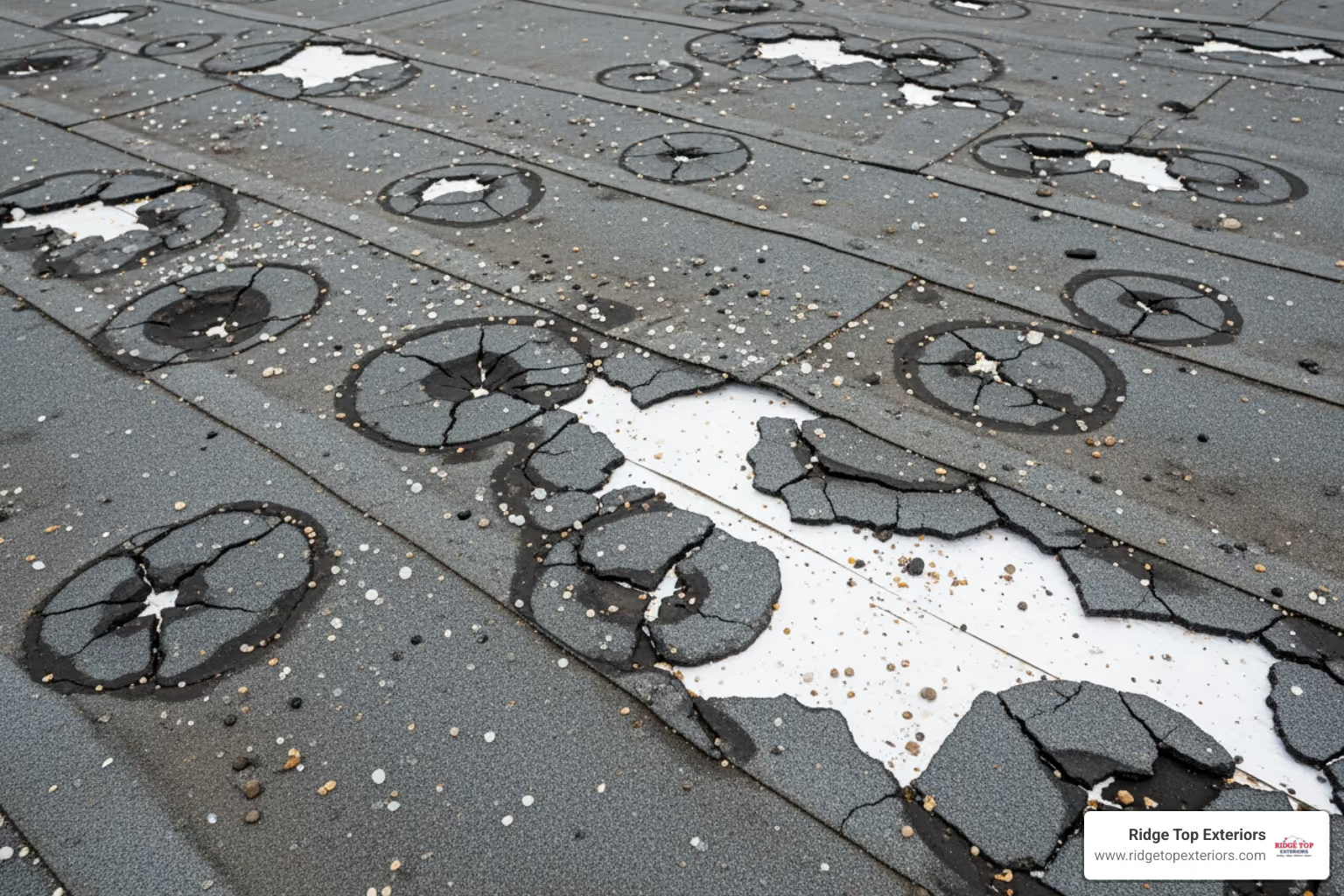
- Punctures or Tears: Larger hailstones can punch through the membrane, creating immediate water entry points.
- Membrane Fractures: On TPO (Thermoplastic Olefin) membranes, hail can create circular patterns or "crow's feet" beneath the surface. These may not leak immediately but can expand and breach the waterproofing layer over time.
- Blistering: On modified bitumen or built-up roofs, hail can break existing blisters, exposing vulnerable underlayers.
- Displaced Surfacing: On gravel-surfaced roofs, hail can displace the gravel, exposing the waterproofing layers to UV radiation and accelerating deterioration.
- Pooling Water: New or worsened ponding after a storm can signal hail-induced depressions that prevent proper drainage.
For a comprehensive evaluation guide, this Checklist for spotting roof damage provides excellent reference points. A professional assessment is crucial, as factors like membrane thickness and substrate rigidity influence how a roof withstands hail.
Your Post-Hailstorm Action Plan: What to Do Next

When hail strikes, acting quickly and methodically can prevent a straightforward repair from becoming a series of expensive problems. Here’s what to do to protect your property and your investment.
Step 1: Immediate Safety and Documentation
Your first priority is safety. Never climb onto your commercial roof yourself. Surfaces can be wet, debris-covered, or structurally compromised. Leave inspections to professionals with the proper safety equipment.
From the ground, you can take important first steps. Document the date and time of the storm for your insurance claim. Walk around your building's perimeter and take clear photos and videos of any visible damage.
Look for:
- Dents on gutters, downspouts, or vents.
- Obvious damage to HVAC units and skylights.
- Accumulations of shingle granules in gutters.
- Scattered debris indicating the storm's intensity.
If you see active leaks inside the building, use buckets or tarps to protect interior assets and flooring from water damage while you await professional help. This is about mitigating further loss, not fixing the roof yourself. Our Residential Storm Damage Repair page has more insights applicable here.
Step 2: Schedule a Professional Inspection
Next, schedule a professional inspection. This is where hail damage commercial roofing expertise is invaluable, because hidden damage often matters most.
When you call Ridge Top Exteriors, our team conducts a comprehensive assessment of your entire roofing system. We examine every vulnerable component, from vents and flashing to fasteners and HVAC units. Our professionals know how hail impacts different materials and where damage hides.
A qualified contractor does more than spot dents. We use advanced techniques, like drone inspections, to identify subtle issues that could lead to future leaks. Catching hidden problems like membrane fractures before they escalate is key to avoiding expensive disasters. This specialized knowledge is why a professional assessment is so critical. For more on our commercial expertise, visit our Commercial Services page.
Step 3: Navigating the Insurance Claim Process
Dealing with insurance after a hail damage commercial roofing event can feel overwhelming. Our team is here to help advocate for you.
Start by reviewing your commercial property insurance policy to understand your coverage, deductible, and claim filing requirements. Knowing your policy prevents surprises.
Timing is critical. It's important to be aware of your policy's deadline for filing, which is often within 12 months from the date of loss. Waiting to see if damage worsens can jeopardize your claim. File promptly, even if the full extent of the damage isn't yet known.
Ridge Top Exteriors can be your strongest ally in this process. Our project managers work with insurance adjusters, providing detailed documentation and professional estimates. We speak their language, ensuring all damage is accurately represented in your settlement.
It's a common misconception that hail damage is covered by manufacturer warranties; it's typically not. Most warranties exclude storm damage, often calling it an "Act of God." Your property insurance is your primary protection.
Another concern is that filing a claim will automatically increase rates. While widespread disasters can affect regional premiums, filing a legitimate claim ensures your property gets repaired as intended by your policy. For step-by-step assistance, visit our Insurance Claim Help page.
Proactive Protection: Fortifying Against Hail Damage Commercial Roofing
You can't control the weather, but you can control how well your building withstands it. For hail damage commercial roofing, the best defense is a good offense. This means smart material choices, understanding impact ratings, and committing to regular maintenance.

Choosing the Best Roofing Materials for Hail-Prone Areas
The roofing material you choose determines how your property weathers the next hailstorm. At Ridge Top Exteriors, we've seen how the right materials can mean the difference between minor damage and a complete roof replacement.
For commercial buildings with sloped roofs, we exclusively install GAF asphalt shingles. GAF's impact-resistant shingles with a UL 2218 Class 4 rating are the gold standard in hail protection. They are engineered to absorb and disperse impact, significantly reducing the risk of damage.
| Material Type | Durability Against Hail | Repairability | Cost-Effectiveness |
|---|---|---|---|
| GAF Impact-Resistant Asphalt Shingles | Excellent (UL 2218 Class 4); backed by industry-leading warranties | Good, individual shingles can be replaced | High long-term value due to durability and potential insurance discounts |
| Metal Roofing | Very Good (dents can occur, but rarely punctures) | Good, panels can be replaced or repaired | High initial cost, but very long lifespan |
| TPO/Flat Roofs | Good (depends on thickness & substrate) | Good, patches can be applied | Effective for flat/low-slope designs with proper maintenance |
For flat or low-slope roofs, TPO (Thermoplastic Olefin) membranes are a popular choice for their ability to absorb impact. The performance of any flat roof system depends heavily on membrane thickness, scrim density, and substrate rigidity—all elements our team evaluates when assessing your roof.
For guidance on selecting materials for severe weather, explore our Roofing Solutions for Harsh Weather Conditions.
Understanding Hail Impact Ratings for hail damage commercial roofing
Impact ratings aren't marketing fluff; they're the result of scientific testing that simulates hail.
The UL 2218 Standard is a key benchmark. In this test, roofing materials are tested with steel balls of increasing sizes dropped from various heights. A Class 4 rating means the material withstood the impact of a 2-inch steel ball without cracking or tearing.
Another standard, the Factory Mutual (FM) 4473 test, uses ice spheres to better replicate real hailstones. Materials that pass rigorous tests like these offer the most comprehensive protection.
For properties in Wisconsin, Illinois, and Florida, we strongly recommend Class 4 rated materials. The upfront investment can pay dividends in reduced damage and potential insurance premium discounts. Many insurers offer rate reductions for buildings with Class 4 roofing, which can offset the upgrade cost over time.
The Importance of Regular Maintenance for hail damage commercial roofing
Even the toughest roof needs regular attention. Think of maintenance as preventative medicine for your building.
The National Roofing Contractors Association recommends bi-annual inspections. Our team conducts thorough assessments in spring and fall to identify minor vulnerabilities before they become major headaches. An additional inspection after any severe weather event is also prudent.
A professional maintenance program includes key tasks performed by trained technicians:
- Debris Removal: Clearing leaves and branches that trap moisture and hide underlying damage, allowing for proper inspection and performance.
- Gutter Maintenance: Ensuring gutters are clear of blockages that cause water to pool on the roof, which can freeze and expand existing cracks. This ensures water flows away from your building as designed.
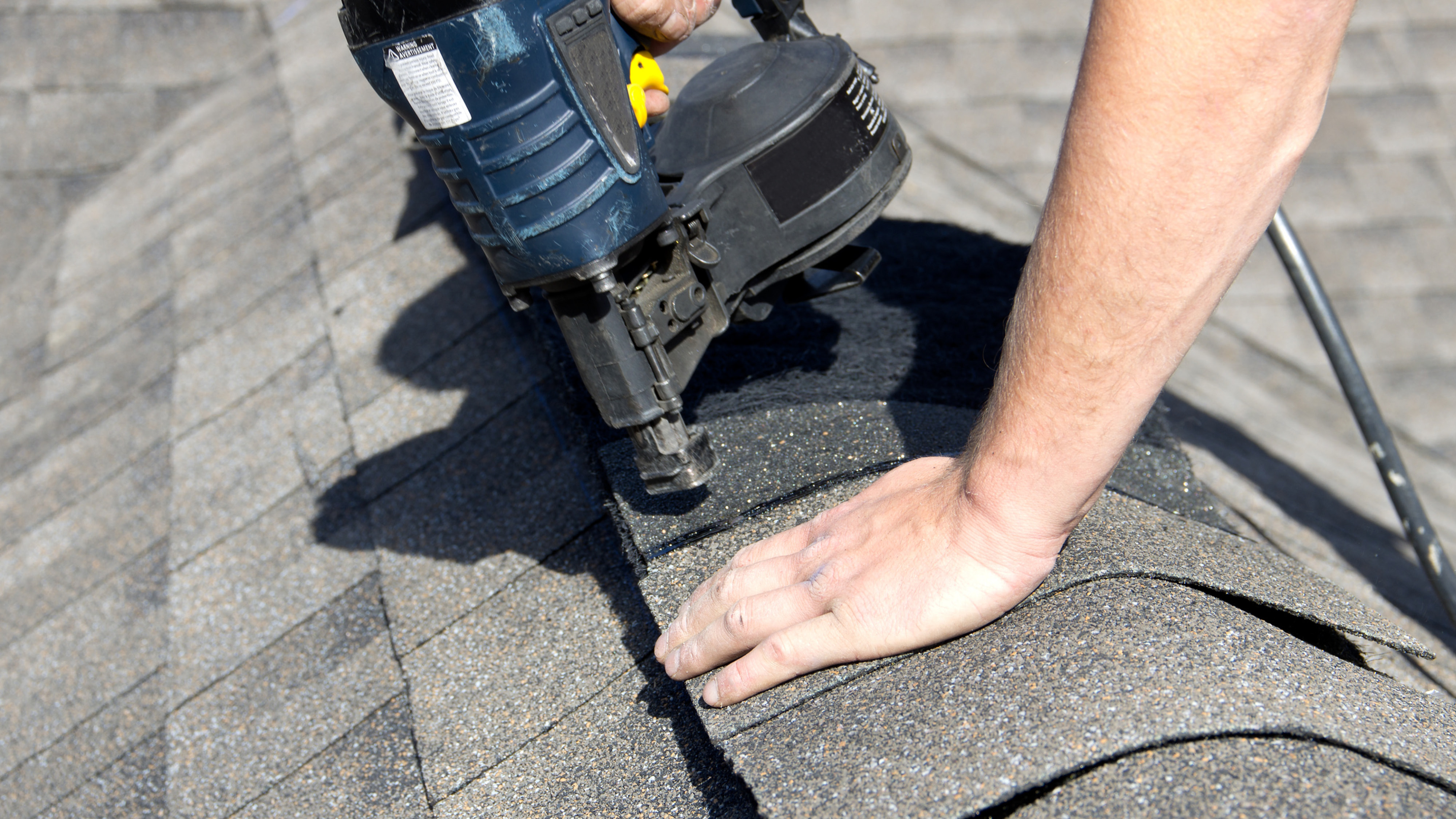
As part of a maintenance plan, a professional may also apply protective coatings to add a layer of impact resistance and UV protection, extending a roof's service life. A professionally maintained roof doesn't just survive hailstorms better—it lasts longer and costs less over its lifetime. Our maintenance programs are designed around your building's specific needs and local climate.
Frequently Asked Questions about Commercial Hail Damage
What's the difference between repairing and replacing a hail-damaged commercial roof?
Deciding between repair and replacement for hail damage commercial roofing depends on several factors.
- Spot repairs are suitable for minor, isolated issues like a few punctures or dented panels. These targeted fixes are cost-effective and cause minimal disruption.
- Section replacement is a middle-ground solution, ideal when damage is concentrated in one area but not widespread.
- Full roof replacement becomes necessary when damage is extensive, severe, or has compromised the roof's integrity. This is often the case if the roof is older or the hailstorm was particularly destructive. While minor repairs are less costly, a full replacement is a significant investment.
The age of your roof is also a key factor. For an older roof near the end of its lifespan, a full replacement with modern, impact-resistant materials often provides better long-term value.
We always conduct a thorough cost-benefit analysis with our clients. Sometimes, a complete replacement with Class 4 materials saves money over time by preventing future damage and qualifying for potential insurance discounts.
How does unaddressed hail damage affect my building's structural integrity?
Ignoring hail damage commercial roofing is a gamble. What starts as a tiny puncture can cascade into serious structural problems.
Water infiltration is the primary threat. Moisture seeps into the roofing system, saturating insulation and reducing its effectiveness, which can drive up energy bills. Over time, this moisture leads to decking rot, deteriorating the structural supports of your roof and potentially causing sagging or instability.
Mold and mildew growth is another serious concern. Damp conditions inside your roof assembly create a breeding ground for these health hazards, and remediation can be expensive and disruptive.
Your roof is a critical part of your building envelope. When hail compromises this barrier, it becomes a whole-building problem, affecting everything from structural integrity to indoor air quality. Addressing hail damage promptly can prevent a minor issue from escalating into a much more expensive emergency.
Are hail damage warranties common for roofing materials?
This is a common point of confusion. Standard manufacturer warranties for roofing materials typically do not cover hail damage. Most manufacturers classify hail as an "Act of God" or weather-related event, which is excluded from their standard coverage.
This makes your commercial property insurance your primary protection against hail damage costs. It's crucial to understand your policy and file claims promptly.
However, a strong workmanship warranty from your installer is also vital. It protects you against installation errors that could worsen hail damage or create other vulnerabilities.
At Ridge Top Exteriors, we stand behind our work. For our GAF asphalt shingle roofing, we offer the industry-leading GAF Golden Pledge Warranty, which provides up to 50 years of coverage. This comprehensive warranty covers both manufacturing defects and our workmanship, offering unparalleled peace of mind.
The bottom line: rely on solid property insurance, choose impact-resistant materials, and partner with a reputable contractor who offers robust workmanship warranties. For more insights, visit our Insurance Professionals page.
Secure Your Investment with Expert Hail Damage Solutions
Your commercial property is a significant investment that deserves protection. Hail damage commercial roofing isn't just about repairs; it's about a defense strategy that combines proactive maintenance, smart material choices, and a partnership with experienced roofing professionals.
At Ridge Top Exteriors, we've spent over 20 years helping commercial property owners protect their investments. With experience on over 45,000 properties across Wisconsin, Illinois, and Florida, a 98% customer satisfaction rating, and over 4,000 verified 5-star reviews, we've built our reputation on delivering what we promise.
Our local teams understand the unique weather challenges in each region we serve. Whether you're facing storms in Madison, WI, hail events in Milwaukee, WI, severe weather in Appleton, WI, or hurricane-driven hail in Clearwater, FL, we know how to handle it.
What sets us apart is our commitment to factory-certified installations and industry-leading warranties. For our GAF asphalt shingle systems, we offer the GAF Golden Pledge Warranty with up to 50 years of coverage, protecting both materials and workmanship. We also help you steer the insurance claims process, providing detailed documentation to ensure you receive fair compensation.
Don't let hail have the last word. Whether you need a post-storm inspection, an upgrade to impact-resistant materials, or a professional assessment of your roof's condition, we're here to help. We offer flexible financing options and a FREE, no-obligation estimate.
Your business depends on a roof that works. Let's make sure it's ready for whatever the weather brings. Schedule your free, no-obligation estimate for our Commercial Services today!

.jpg)