Your gutters don't ask for much. They sit along the edge of your roof, quietly doing their job every time it rains, channeling water away from your foundation, protecting your siding, and keeping your landscaping intact. Most homeowners never give them a second thought.
That's exactly the problem.
Gutters fail slowly and silently. By the time you notice water staining on your siding, rot creeping along your fascia, or water pooling near your foundation, the damage has usually been building for months. And the culprit? A gutter system that was long overdue for replacement.
So how long do gutters last, and how do you know when cleaning them just isn't enough anymore?
How Long Do Gutters Actually Last?
The honest answer: it depends on what they're made of.
Gutter lifespan varies significantly by material, and understanding that range is the first step to knowing whether your system is aging gracefully or quietly failing.
Vinyl gutters: 10 to 20 years. Vinyl is affordable and lightweight, but it's the least durable option. It cracks in cold temperatures, a real issue in Wisconsin and Illinois winters, and warps under intense heat, which shortens its lifespan in Florida's climate.
Aluminum gutters: 20 to 30 years. The most common material for residential gutters, and for good reason. Aluminum is rust-resistant, lightweight, and holds up well across a range of climates. With proper maintenance, a quality aluminum system can reach the top of that range.
Galvanized steel gutters: 20 to 25 years. Stronger than aluminum but prone to rust once the protective zinc coating wears away. Regular inspection and resealing can extend their life, but they tend to require more maintenance over time.
Copper gutters: 50+ years. The premium option. Copper is naturally corrosion-resistant, develops a protective patina over time, and can last a century with minimal upkeep. The tradeoff is a significantly higher upfront cost.
One factor that matters more than most homeowners realize: seamless vs. sectional gutters. Sectional gutters are assembled from shorter pieces joined by seams, and those seams are where leaks start. Seamless gutter installation, where gutters are custom-fabricated to fit your home in a single continuous run, results in far fewer vulnerable points and consistently outlasts sectional systems across all material types.
What Affects How Long Your Gutters Last?
Even the best gutter material won't reach its maximum lifespan without the right conditions. These four factors have the biggest impact:
Installation quality. Gutters pitched at the wrong angle pool water instead of draining it. Brackets spaced too far apart lead to sagging. Poor seam sealing invites leaks from day one. A proper professional installation sets the foundation for a system that actually reaches its expected lifespan.
Maintenance frequency. Gutters clogged with leaves, seeds, and debris hold standing water, which accelerates rust, adds excess weight, and creates the conditions for overflow damage. Most experts recommend cleaning gutters two to four times per year, depending on your tree coverage.
Climate and weather exposure. Ridge Top serves markets with very different demands on a gutter system. In Wisconsin and Illinois, freeze-thaw cycles stress gutter joints and brackets through the winter. Ice dams can add significant weight and pull gutters away from the fascia. In Florida, heavy rainfall, hurricane-force winds, and year-round heat create an entirely different set of stressors. A gutter system that's right for one climate may not be the best choice for another.
Tree coverage. Homes surrounded by trees deal with significantly more debris and organic buildup in their gutters, which means more frequent cleaning, faster deterioration, and a stronger case for gutter guards.
5 Signs It's Time to Replace Your Gutters (Not Just Clean Them)
Regular cleaning extends gutter life. But there's a point where cleaning is just delaying the inevitable, and continuing to delay costs you more in the long run. Knowing the signs gutters need replacing can save you from a much more expensive repair down the road. Here are five to watch for.
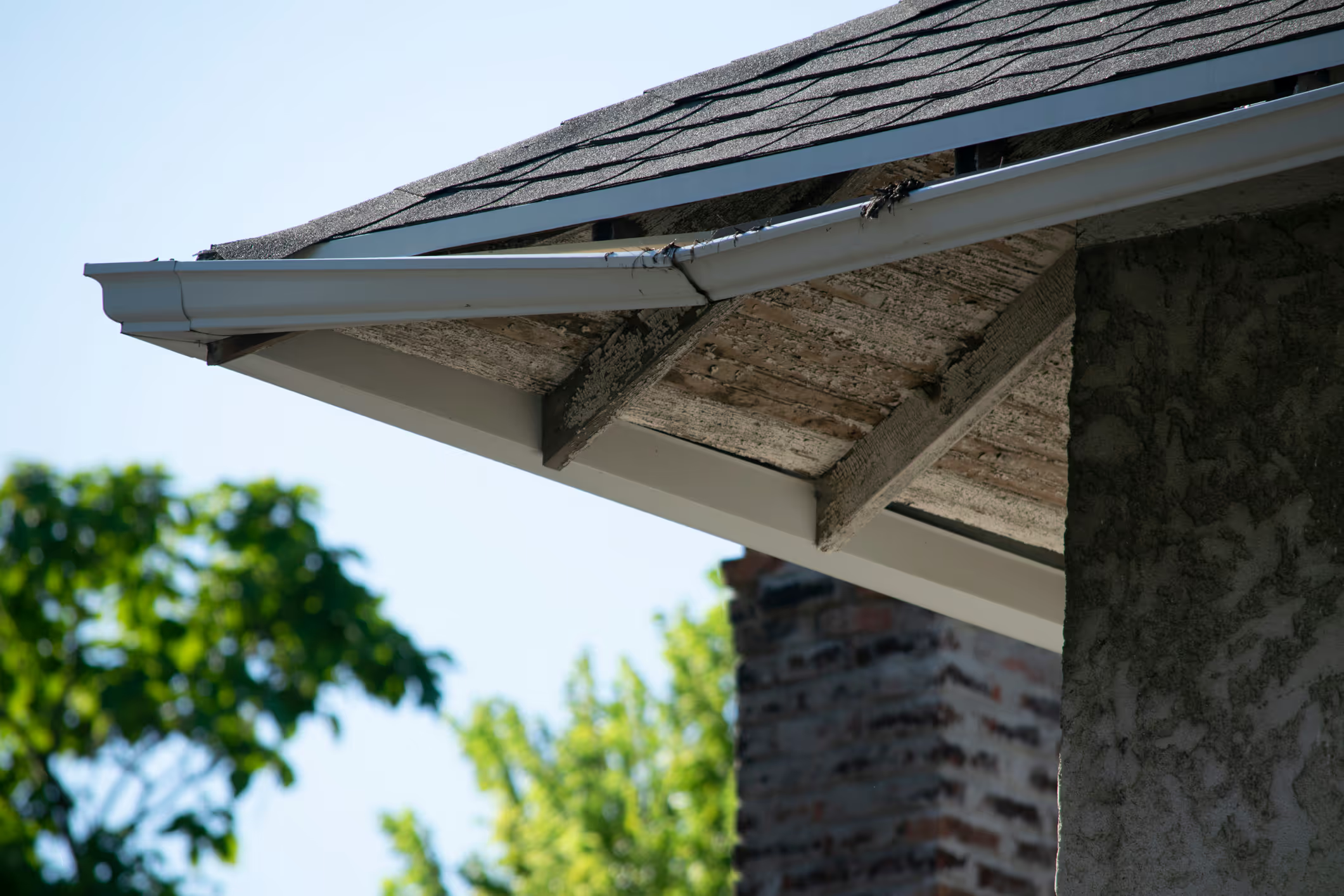
- Sagging or pulling away from the fascia. Gutters that sag or separate from your roofline have either failed brackets, excess weight from debris and standing water, or both. Once the attachment point is compromised, water doesn't go where it's supposed to. It goes behind the gutter, straight into your fascia and wall. This isn't a cleaning issue. It's a structural one.
- Visible cracks, holes, or rust. Small cracks seem minor until you realize they're allowing a slow, steady drip directly onto your foundation every time it rains. Rust spots indicate the protective coating has failed and deterioration is progressing underneath. Either way, widespread cracking or rust is a sign the system has reached end-of-life.
- Water stains or rot on your fascia and siding. If you notice dark streaking, staining, or soft, spongy material along the fascia boards beneath your gutters, water is getting where it shouldn't. This is often the first visible sign of a failing gutter system, and by the time it's noticeable, the underlying wood damage is usually more extensive than it looks.
- Persistent overflow despite being clean. If your gutters overflow every time it rains even after you've cleaned them out, the problem isn't debris. It's the system itself. This could mean the pitch is wrong, the gutters are undersized for your roof's water volume, or the system has deteriorated to the point where it can no longer function properly.
- Your gutters are 20+ years old. Age alone isn't a reason to replace gutters, but it's a reason to take a closer look. If your aluminum or steel gutters are approaching or past the 20-year mark, even if they look fine from the ground, a professional inspection can reveal what you can't see and help you get ahead of a failure rather than react to one.
Repair or Replace? How to Tell the Difference
Not every gutter problem requires a full replacement. A disconnected downspout, a single leaking seam, or a loose bracket are generally repairable issues. Quick fixes that buy you meaningful additional life from an otherwise solid system.
Knowing when to replace gutters rather than repair them comes down to the scope and pattern of the damage. Replacement makes more sense when:
- Damage is widespread rather than isolated to one area
- The gutters are pulling away from multiple sections of the roofline
- Rust or cracking appears throughout the system
- The gutters are near or past their expected lifespan
- Repairs have been made repeatedly with recurring problems
The clearest way to know? A professional inspection. It removes the guesswork and gives you an honest picture of whether repair or replacement is the smarter investment for your specific situation.
What Does Gutter Replacement Cost?
Gutter replacement cost varies based on material, linear footage, home height, and whether you're adding guards or upgrading to a seamless system. For most single-family homes, aluminum seamless gutter installation runs between $1,000 and $2,500 depending on the size of the home and regional labor rates. Copper systems run significantly higher given the material cost. The best way to get an accurate number for your specific home is a professional assessment, and Ridge Top's instant quote tool gives you a real estimate in minutes before anyone sets foot on a ladder.
How to Make Your Next Gutter System Last Longer
If you're replacing your gutters, here's how to get the most out of the new system:
Choose seamless over sectional. Fewer seams means fewer leak points, better water flow, and a cleaner look. Seamless gutter installation is done on-site, custom-fabricated to fit your home exactly, and consistently outlasts sectional systems.
Invest in professional installation. Proper pitch, correct bracket spacing, and quality sealing at corners and downspouts aren't optional. They're what separates a system that lasts 25 years from one that needs attention in five.
Add gutter guards. Gutter guards dramatically reduce debris buildup, meaning less cleaning, less standing water, and less strain on your system over time. For homes with significant tree coverage, or homeowners who simply don't want to think about their gutters, they're one of the best long-term investments you can make.
The Bottom Line
Gutters aren't the most glamorous part of your home's exterior. But they're doing critical work every time it rains, and when they fail, the consequences show up everywhere: your foundation, your fascia, your siding, and your wallet.
If your gutters are showing any of the signs above, or if it's simply been a while since anyone took a close look, now is the right time to find out where things stand.
Ridge Top Exteriors offers free gutter inspections across all of our service areas in Wisconsin, Illinois, and Florida. Our team will assess your system honestly and give you a clear recommendation, whether that's repair, replacement, or adding guards, with no pressure and no obligation.
Schedule your free gutter inspection at here.
And if you're already thinking about a replacement, our instant quote tool gives you a real price estimate in minutes.
Get an instant gutter quote at here.