Most homeowners shop for a patio door the same way they'd shop for a front door. Style, glass, color. A patio door faces different stresses than a front door does. A few questions that rarely come up in the sales conversation end up mattering more than the finish.
How Sliding vs. Hinged Actually Performs
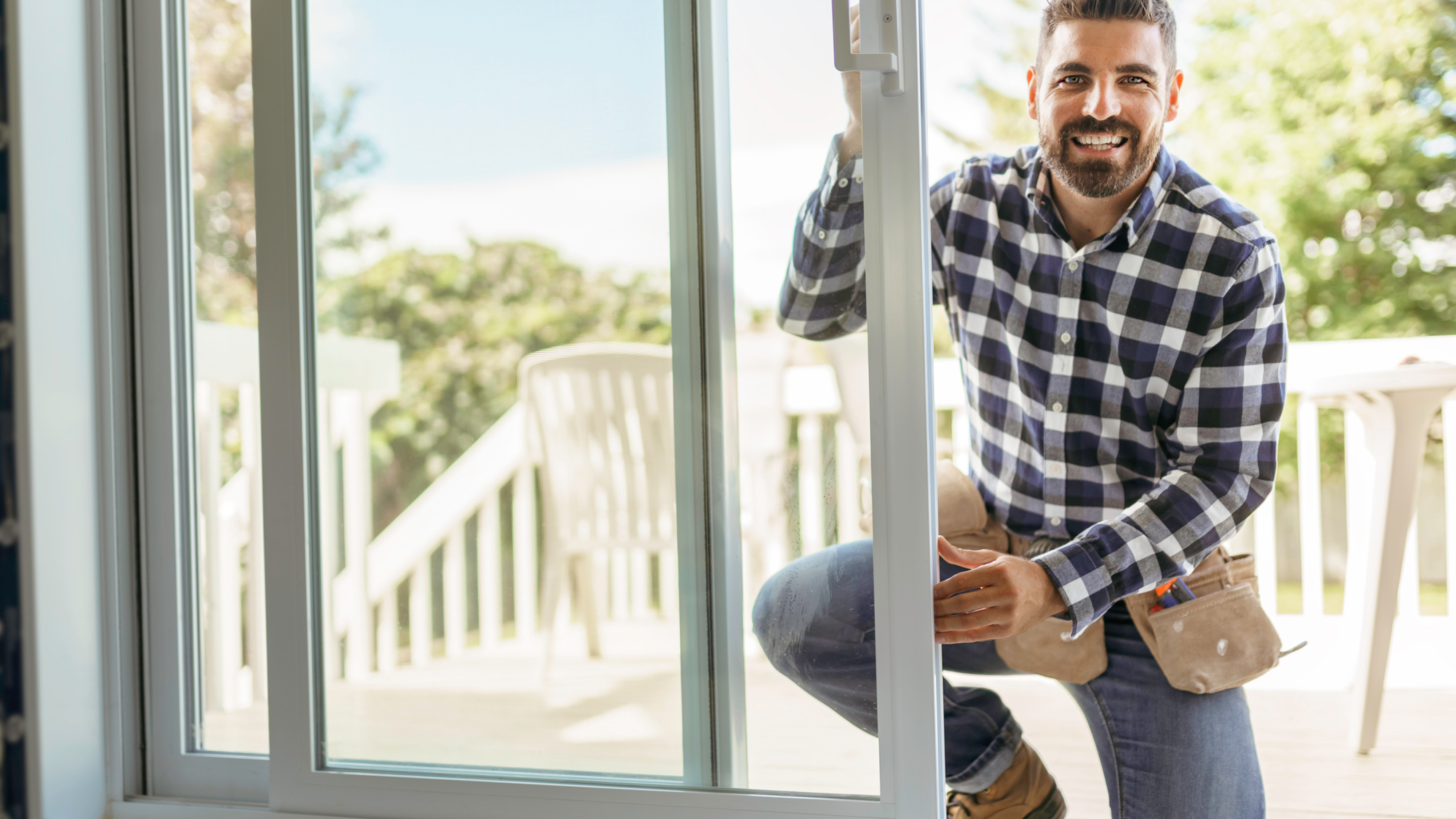
Sliding glass doors and hinged patio doors seal differently. That difference affects long-term performance more than most homeowners expect. A sliding door relies on a track and rollers to stay sealed while moving. That track collects dirt and debris over time. This wears down the seal eventually. A hinged patio door seals more like a regular door, with weatherstripping compressed by the closing motion. It tends to hold up longer, but it also takes up more swing space in the room.
Ask which type actually fits your space and your climate. Not just which one looks better in a showroom.
What Sliding Patio Doors Need That Homeowners Don't Ask About
Sliding patio doors need one detail most homeowners never think to ask about. The track has to be perfectly level across its full width. A track that's even slightly out of level puts uneven pressure on the rollers. That wears them out faster on one side. Eventually the door gets harder to slide, or worse, harder to seal shut.
Ask your installer how they check and adjust the track during installation. Ask if the rollers are field-adjustable after the door is hung. Many are, but only if the installer set them up correctly to allow for that adjustment later.
Security Questions Homeowners Should Ask First
A patio door is one of the largest glass openings in a home. That makes security a real consideration, not just an afterthought. Ask what the door's actual glass break rating is. Not just whether it's tempered or laminated. Ask whether the lock engages at multiple points along the frame, or just one point near the handle. Multi-point locks distribute force more evenly. They resist prying better too.
For homes considering exterior french doors instead of a slider, ask how the inactive panel locks. Check both the top and bottom of the frame. A poorly secured inactive panel undermines the security of the whole unit.
Why Screen Doors Are an Afterthought Worth Reconsidering
Screen doors for sliding patio doors often get treated as a minor add-on. Picked last and installed quickly. That's a mistake. A poorly fitted screen door track can bind against the main door track. That makes both harder to operate. Ask whether the screen track is separate from the door track. Ask how the screen door is expected to hold up over the years you'll actually use it.
What Determines Long-Term Weather Performance
Weather performance depends heavily on how the door was installed, not just what it's rated for. A sliding glass door with an excellent energy rating can still leak air around a poorly sealed frame. Same as any other exterior opening. Ask how the installer seals the perimeter of the rough opening. Ask if they use a specific product for sliding door thresholds, since these see more foot traffic and weather exposure than a standard door threshold.
Why Sliding Doors Complicate Furniture and Layout Planning
One detail rarely comes up in a sales conversation. How does the door swing or slide relative to your actual furniture layout? A sliding door that opens toward a high-traffic path can become an obstacle once the room is furnished. A hinged patio door swinging inward needs enough clear floor space to open fully. Bringing a rough floor plan to the consultation helps avoid discovering this problem after installation.
Why Glass Type Affects More Than Just the View
Patio doors carry more glass area than almost any other opening in a home, which means glass selection affects energy performance more here than it does on a standard window. Low-emissivity coatings reduce heat transfer through the glass, and the difference between a coated and uncoated patio door can be noticeable on both a summer cooling bill and a winter heating bill.
Ask what glass package comes standard with the door you're considering, and whether a low-emissivity coating and gas fill between panes are included or offered as an upgrade. These details rarely show up in a showroom conversation focused mainly on frame color and hardware finish.
How Weep Holes Prevent Water From Building Up
Sliding doors include small drainage openings along the bottom track called weep holes, designed to let any water that gets into the track drain back outside instead of pooling. These openings are easy to overlook during installation, and landscaping mulch or debris can block them entirely within the first year if nobody accounts for the finished grade around the door.
Ask your installer how they positioned the track relative to your exterior grade, and whether the weep holes will stay clear once landscaping is finished. A track installed too close to grade, or one that gets buried by mulch, can turn a working drainage system into a place where water simply collects instead.
What a Detailed Estimate Should Actually Include
A thorough patio door replacement estimate specifies the exact door type, glass package, and hardware finish, along with who handles disposal of the old unit and any anticipated framing repair. A quote that just states a single number for "patio door replacement" leaves too much room for disagreement once the actual scope becomes clear on installation day.
Ask whether the quote includes removal and disposal of the existing door, and whether any discovered framing damage would be handled as part of the original price or billed separately as a change order.
Why the Threshold Deserves a Closer Look
The threshold on a patio door sees more foot traffic than almost any other threshold in the house, plus direct weather exposure that an interior door threshold never faces. A properly installed patio door threshold sits level across its full width and includes a weep system to move water back outside rather than letting it collect against the sill.
Ask what material the threshold is made from, since aluminum thresholds resist wear differently than composite ones, and ask how the installer seals the threshold to the subfloor beneath it. A poorly sealed threshold is one of the more common sources of a slow leak that shows up as water damage on the interior floor months after installation, long after the original crew has moved on to other projects.
What Ridge Top Provides
Ridge Top Exteriors installs sliding glass doors, hinged patio doors, and exterior french doors. We pay attention to the details that determine how they'll perform for years, not just how they'll look on install day. You can browse our door services and read homeowner reviews. Our process page explains what to expect throughout your project. Ratings from the National Fenestration Rating Council can help you compare specific products before your consultation.
Use our instant quote tool to get a starting estimate on your patio door replacement. Or schedule a consultation with a Ridge Top project consultant to go over your specific space and questions.