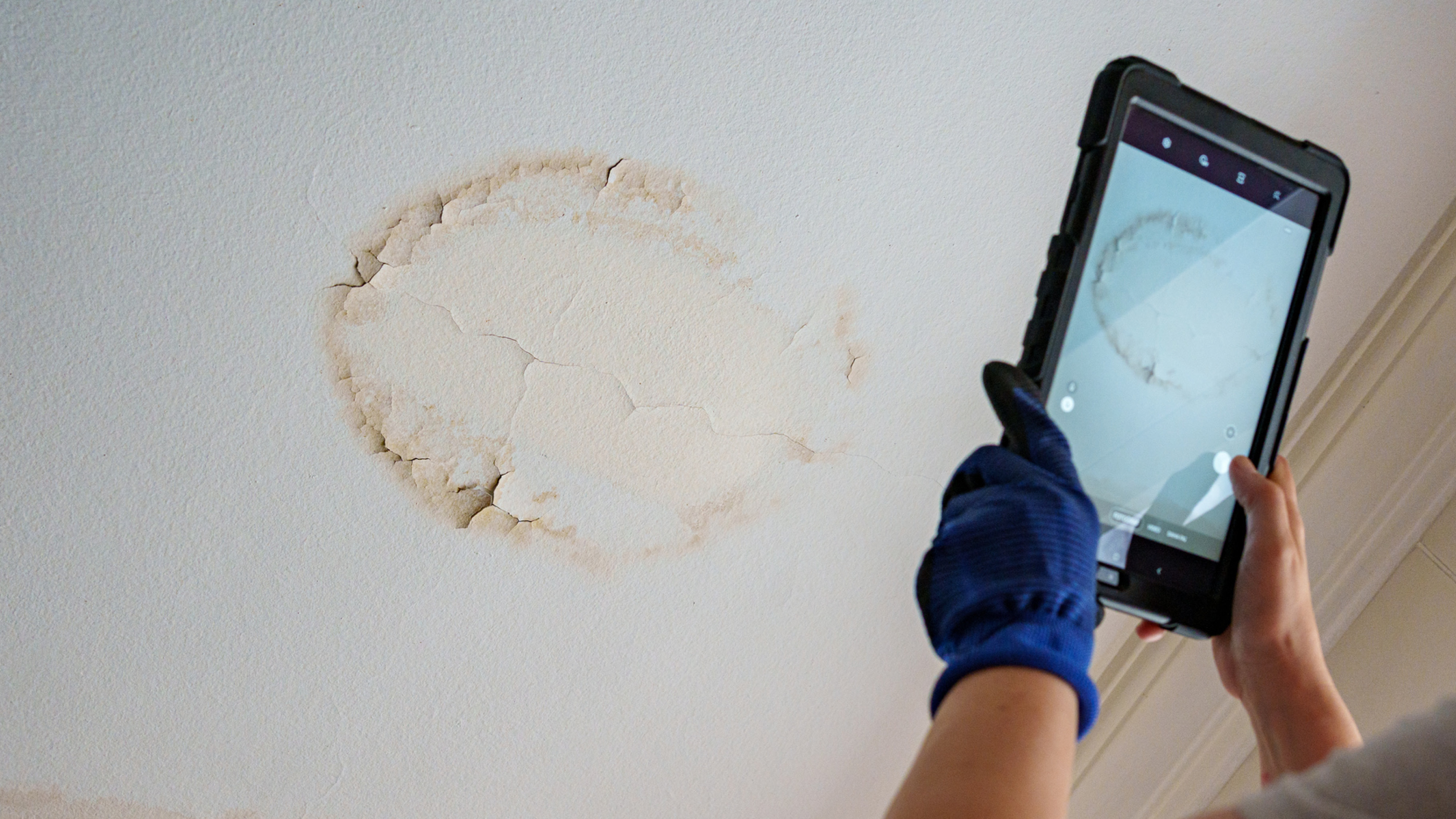
A ceiling stain feels like a treasure map. X marks the spot, right? Homeowners see the stain and assume that's exactly where the roof is failing. They expect a roof leak repair to be as simple as patching directly above it. Water has other plans. That mismatch is the single biggest reason DIY leak chasing fails, and why so many quick patches don't actually stop anything. It's also why a leak that seemed fixed last spring often shows up again the following winter, in a spot that looks completely unrelated.
How Water Actually Moves Through a Roof
Once water slips past a damaged shingle, gravity takes over. But not in a straight line. Water travels along the roof deck. It follows the path of least resistance across framing members. It moves along insulation until it finds a gap or a low point to drip through. That drip point can sit several feet from where the water actually got in. Sometimes it shows up on a totally different section of roof than the one above the stain.
This is why patching the shingle right above a ceiling stain often does nothing. The real damage might be near a chimney, a vent pipe, or a valley where two roof slopes meet. Water travels sideways, sometimes a surprising distance, before it ever shows up where you can see it.
The Usual Suspects That Don't Match the Stain
A few spots cause far more leaks than their size would suggest.
Flashing Around Chimneys and Vents
Flashing is the thin metal that seals the joint between your roof and anything sticking up through it, like a chimney or vent pipe. Once it cracks or lifts, water gets in right at that seam. Then it travels before it ever drips somewhere visible.
Valleys Where Two Slopes Meet
Valleys concentrate water as it drains off both roof slopes at once. A small gap in the valley flashing lets in far more water than the same size gap would on a flat stretch of roof.
Ice Damming in Cold Climates
Melting and refreezing snow can back up under shingles well above the roofline. That water can travel a long way before finding an opening into the attic, which means the leak's final resting spot tells you almost nothing about where the ice dam actually formed.
Plumbing Vent Boots
Every plumbing vent pipe that pokes through your roof gets sealed with a rubber or plastic collar called a boot. These boots wear out faster than the shingles around them. The material flexes with temperature swings and eventually cracks. A failed boot lets water in at one specific pipe. But that water can travel along a rafter for several feet before it drips through drywall in a completely different room than the bathroom the pipe actually serves.
Why the Repair Bill Grows the Longer You Wait
Roofing repairs follow a predictable pattern. A problem that costs a few hundred dollars to fix in year one can cost several thousand by year three, once the water has had time to spread into framing, insulation, and drywall that a simple flashing fix would never have touched. The leak itself doesn't get more expensive to fix. The damage it causes along the way does.
This is part of why a fast, accurate diagnosis matters so much. Every week a leak goes unaddressed is another week for water to keep finding new paths through insulation and framing, expanding the actual scope of repair beyond the original entry point. If the damage turns out to be storm-related, GAF's guide to roof damage insurance claims is worth reading before repairs begin, since documentation matters as much for insurance purposes as it does for the repair itself.
Why Professional Diagnosis Actually Matters
A proper roof leak repair starts with tracing water back to its real source. You don't guess based on where it showed up inside. That usually means checking the attic during or right after rain, when water is easiest to follow. It means examining flashing at every point something pokes through the roof, not just near the stain. Sometimes it means running a controlled water test on specific sections to isolate the entry point. The National Roofing Contractors Association recommends exactly this kind of attic-first inspection rather than guessing based on where a stain appears on the ceiling below.
Skip this step, and the leak keeps happening. A quick search for roof leak repair near me often turns up companies that skip the diagnostic work entirely. They handle shingle roof repair on the surface, patch whatever's nearby, and move on. That's exactly why the same leak tends to come back within a season.
Why Homeowners Rarely Catch This Themselves
Most people don't get on their own roof, and for good reason. Wet or aging shingles are slippery. The pitch is steeper than it looks from the ground. A fall from roof height is a serious injury even from a single story. That means most homeowners are stuck diagnosing a leak from inside the house. They're using nothing but a flashlight and a guess about where the water sound seemed loudest during the last storm.
Even homeowners who are comfortable getting up there run into a different problem. They don't know what a failing flashing seal or a cracked vent boot actually looks like compared to a normal one. A roof can look fine to an untrained eye while still having several small failure points. Those only become obvious once you know exactly what you're checking for. This isn't a knock on homeowners. It's just a genuinely different skill set than most people have reason to build.
What Happens If You Just Wait It Out
It's tempting to live with a small stain, especially if it only shows up during heavy storms and seems to dry out in between. That waiting period is rarely as harmless as it looks. None of the damage below happens overnight, which is exactly why so many small leaks quietly turn into expensive repairs while the stain on the ceiling barely changes size.
- Wet insulation loses most of its ability to hold heat, so a small leak can raise your energy bills long before it ever causes visible damage
- Wood framing exposed to repeated moisture starts to soften within months, not years, especially in humid climates where it never fully dries between rain events
- Mold conditions can develop inside a wall or attic space in as little as a couple of days once moisture is trapped
- By the time mold is visible or you can smell it, it has usually spread further than the original leak point
What a Real Fix Actually Involves
Once the entry point is found, the fix usually touches more than one shingle. A thorough repair addresses the damaged shingle itself, the flashing or seal at the actual entry point rather than just near the stain, and any wet insulation or decking discovered along the way. Skip any one of these, and the same leak, or one just like it, tends to come back. Sometimes what looks like a new leak the following year is really the same one, just finding a slightly different path through material that's already been softened by the first round of water damage.
This is also why a repair quoted over the phone, based on a homeowner's description alone, is really just a guess dressed up as an estimate. Nobody can price a repair accurately without first seeing where the water is actually getting in and how far it's traveling once it does.
What Ridge Top Provides
Ridge Top traces roof leaks back to their actual entry point instead of patching the ceiling stain location and hoping it holds. That means the repair fixes the real problem the first time, so you're not paying for the same leak twice.
Use our instant quote tool to get a starting estimate on your roof leak repair, or schedule a free inspection with a Ridge Top project consultant if you're dealing with an active leak.