If you've seen a national guide that says asphalt shingles last 25 to 30 years, that number doesn't apply to your home in Tampa or Clearwater. Florida is one of the hardest roofing environments in the country. Year-round UV exposure, high humidity, salt air, and annual hurricane pressure all combine to degrade materials faster here than anywhere else in the continental United States.
This post covers Florida-specific lifespan numbers, the climate forces behind them, and the insurance rule that makes timing a roof replacement more urgent in Florida than in most other states. If you've been wondering whether your roof has hit the end of its life or is just aging, these are the numbers and warning signs that actually apply to where you live.
Florida Is Not an Average Climate
Most roofing warranties are based on testing in moderate climate conditions. They're designed to represent a broad national average, not the specific conditions your roof faces every day in the Tampa Bay area.
The National Roofing Contractors Association advises homeowners to account for local climate when evaluating roof performance. Manufacturer ratings often reflect ideal conditions, not real-world exposure in demanding markets like Tampa Bay.
In Florida, every one of those conditions is significantly more demanding than the national average: UV intensity, heat, humidity, coastal salt, and wind event frequency. The practical result is that the same shingle that lasts 25 to 30 years in the Midwest might only last 15 to 20 years in Tampa. In some cases, less.
The Four Forces That Shorten Every Roof in Tampa and Clearwater
Understanding what's working against your roof helps you interpret what you're seeing and set realistic expectations for replacement timing.
- UV radiation. Florida receives some of the highest year-round UV exposure in the continental United States. Dark shingle surfaces absorb that radiation and convert it to heat, which causes the asphalt binder to break down over time. Shingles become brittle, lose their granule coating faster, and eventually crack or curl. This process happens continuously, even when there are no storms.
- Heat load. Tampa's summer temperatures routinely push shingle surface temperatures well above 150 degrees Fahrenheit during peak afternoon hours. An attic without adequate ventilation compounds this by trapping heat beneath the deck, essentially cooking the shingles from below as well as above. Poor attic ventilation alone can shorten a shingle roof's life by five to ten years.
- Humidity and moisture cycling. Florida's high humidity means roofing materials go through constant expansion and contraction as they absorb and release moisture. Over time, this cycling loosens fasteners, opens seams, and creates entry points for water at exactly the locations most vulnerable to storm-driven rain.
- Hurricane and storm pressure. Annual storm season subjects every roof in the Tampa Bay area to wind uplift, wind-driven rain, and debris impact on a recurring basis. The cumulative stress from multiple storm seasons compounds the UV and heat damage. A single significant event can advance a roof's condition by several years in just a few hours.
These four forces work simultaneously and reinforce each other. A roof that's been weakened by UV and heat degradation is far more vulnerable to wind and water damage than a newer system in the same storm.
Asphalt Shingles in Florida: The Real Numbers
Asphalt roofing is the most common choice for residential roofs in Tampa and Clearwater, and GAF notes that architectural shingles provide significantly better performance than 3-tab shingles across all climate categories. But even architectural shingles perform differently in Florida than their rated life suggests.
Here is what Florida-specific performance actually looks like by shingle type:
- Standard 3-tab shingles: 12 to 15 years in Florida's climate. These are the most basic asphalt option, and they're the most vulnerable to UV degradation, granule loss, and wind uplift. Most roofing professionals in Tampa and Clearwater recommend against 3-tab for new installations.
- Architectural (dimensional) shingles: 15 to 20 years in Florida. These are the current standard for residential roofing in the Tampa market. Their multi-layer construction provides better UV resistance, improved wind ratings, and a longer functional life than 3-tab. A well-installed architectural shingle roof with proper ventilation can reach the upper end of this range.
- Premium architectural shingles: 20 to 25 years in Florida with proper installation and maintenance. Products in this category typically include enhanced granule coatings with algae-resistance properties, which matter significantly in Florida's humid environment.
These Florida-specific ranges run five to ten years shorter than what the same products are rated for in Northern climates. A shingle advertised as a '30-year shingle' is rated for performance in conditions that don't match what your Tampa roof experiences. In Florida, that same product will realistically last 18 to 22 years.
Metal and Tile: How the Longer-Life Options Hold Up
For homeowners who want to extend their roof replacement cycle, metal and tile are the two materials that perform significantly better than asphalt in Florida's climate.
Metal roofing, particularly standing seam and aluminum panel systems, carries a realistic Florida lifespan of 40 to 60 years. Metal is highly resistant to UV degradation, doesn't support mold or algae growth, and can be rated for wind resistance up to 140 miles per hour or higher. In coastal markets like Clearwater, aluminum's natural resistance to salt air corrosion gives it a meaningful advantage over steel options. The upfront cost of metal roofing is significantly higher than asphalt, but the extended replacement cycle often makes the lifetime cost comparison more favorable.
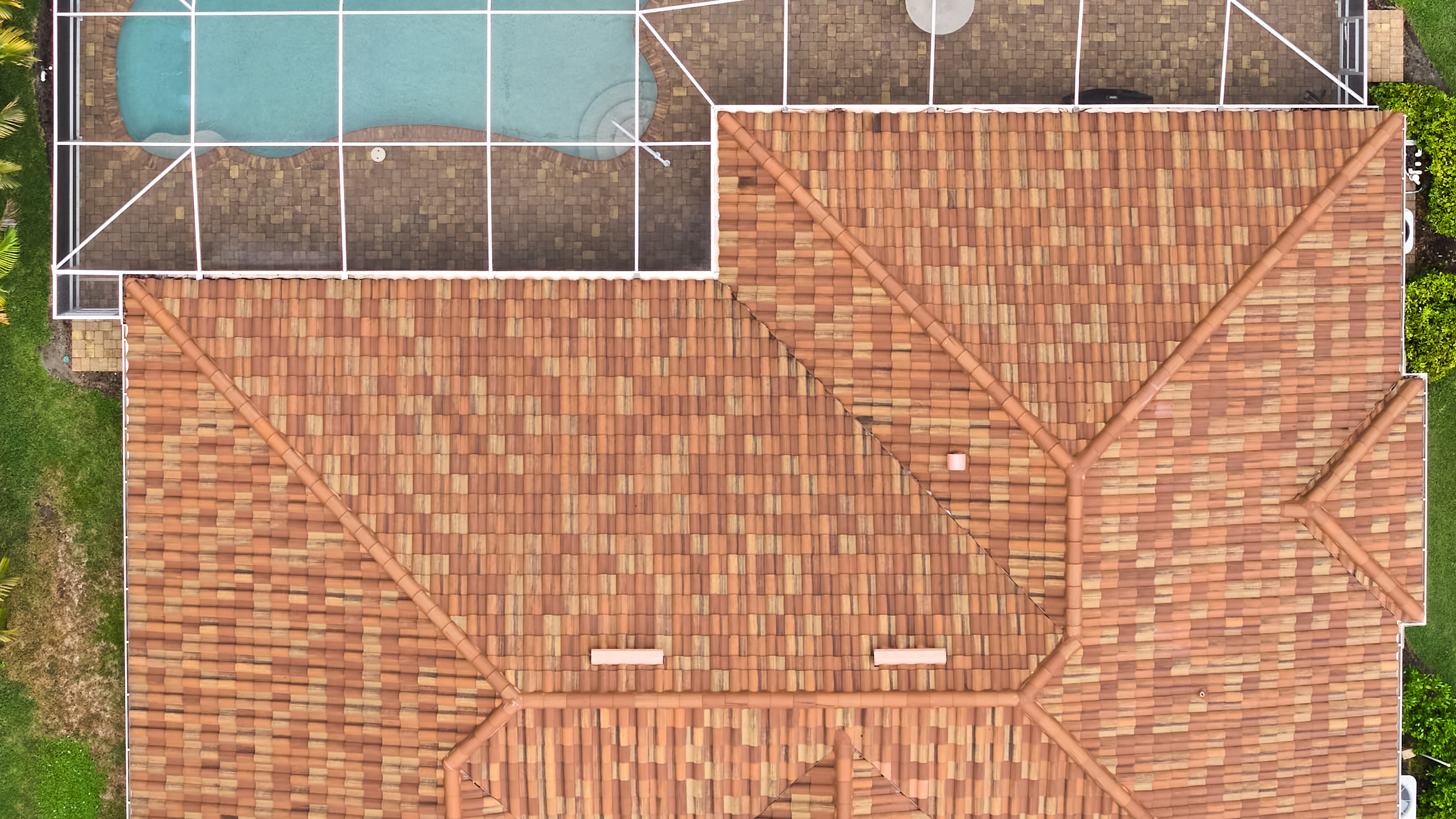
Concrete and clay tile is the other long-life option, with realistic Florida lifespans of 40 to 50 years for the tile itself. The important caveat is that tile protects the roof system, but the underlayment beneath it still needs replacement at regular intervals. When a tile roof 'needs replacement,' it is often the underlayment system that has reached end of life rather than the tiles themselves. Many tile roof replacements in Tampa and Clearwater involve removing and re-setting intact tiles over a new underlayment, which is a different scope and cost than full material replacement.
The Florida Insurance 15-Year Rule and What It Means for Your Timeline
Florida homeowners face a roofing consideration that doesn't exist in most other states: the insurance 15-year rule. Under Florida Statute 627.7011, insurers cannot deny or non-renew a homeowners policy solely because the roof is less than 15 years old. Once the roof hits 15 years, the insurer can require a certified inspection. If that inspection finds less than five years of useful life remaining, the policy can be non-renewed.
This means the insurance timeline and the physical performance timeline are running in parallel, and they don't always align. A roof at 16 years that is still performing adequately may trigger an insurance inspection requirement. If that inspection results in a non-renewal and the homeowner cannot find replacement coverage, the consequences extend well beyond the roof itself.
In practice, Tampa and Clearwater homeowners should start planning for roof replacement around year 12 to 13, not year 18 or 20. Getting ahead of the insurance threshold by two to three years lets you plan on your schedule, shop contractors without pressure, and avoid a forced replacement during a coverage gap.
The 25-year mark is a harder threshold for many carriers. Roofs beyond 25 years often face coverage restrictions or significantly limited claim payouts even if the physical condition is reasonable.
Warning Signs Your Florida Roof Is Running Out of Time
Florida roofs rarely fail dramatically. These are the signs that the clock is running short:
- Visible granule loss. Granules in the gutters or downspout splash zones, or bare dark patches on the shingle face, mean the UV protection is gone in those areas. Once granule loss is visible, degradation accelerates.
- Curling or cupping shingles. Edges that curl upward or centers that buckle downward indicate the asphalt has dried out from sustained heat exposure. These are no longer lying flat, which means wind has an edge to get under.
- Widespread algae or moss growth. Dark streaking from algae is common on Florida roofs. Widespread growth that penetrates between shingles or lifts edges creates a moisture problem that accelerates deterioration.
- Interior staining near the roofline. Water staining on ceilings or upper walls near exterior walls can indicate slow leaks that don't show up as obvious drips. In Florida's humidity, these stains are worth investigating immediately.
- Roof age at or above 15 years. Even without visible symptoms, an asphalt shingle roof at 15 years in Florida deserves a professional assessment before the insurance inspection cycle creates pressure.
When to Call for an Inspection vs. When to Plan for Replacement
An inspection is the right first step when your roof is between 12 and 16 years old and you aren't seeing active symptoms. A qualified inspector can assess granule coverage, flashing condition, deck integrity, and estimated remaining life. That information gives you a real picture of where the roof stands rather than a guess based on age alone.
Planning for roof replacement is the right step when the roof is above 16 years. It's also the right step when an inspection has found significant granule loss or structural concerns, or when you've received an insurance inspection notice.
The worst outcome isn't a roof failure. It's a forced replacement during hurricane season with limited contractor availability, compressed timelines, and potential insurance complications running simultaneously. Getting ahead of that scenario by one or two years changes the entire experience.
How Ridge Top Florida Approaches Roof Lifespan
Ridge Top Exteriors has been installing and replacing roofs in the Tampa and Clearwater area for years. Our local roofing contractor teams are trained on Florida Building Code requirements, the climate stresses of coastal and inland Tampa Bay properties, and the insurance documentation homeowners need to get through the 15-year threshold without coverage gaps.
We provide free roof inspections that give you a honest assessment of where your roof stands and what your realistic timeline looks like. When you search roofing companies near me in the Tampa Bay area, expect a contractor who tells you honestly how many years your current system has left. Not just one who wants to sell you a replacement you may not need yet. That's the standard we hold ourselves to. Our roofing service page covers everything we install in the Florida market.
If you're ready to get a real number on roof replacement, our instant quote tool delivers a starting estimate in minutes. Or read verified reviews from Tampa and Clearwater homeowners to see how we handle the process from first inspection through completed installation.
Learn more about how our process works, including what a Ridge Top Florida inspection covers and what to expect at each stage of a roofing project.
Florida roofs age differently. Understanding that difference is the first step toward protecting your home and your insurance coverage before either one becomes an emergency.