Winter does not announce the damage it leaves behind. It happens quietly, shingle by shingle, freeze by freeze, until spring arrives and what looked like a minor problem in November has turned into a leak in April. A proactive roof inspection checklist is the most effective tool a homeowner has to catch that damage early, before it becomes expensive.
This guide walks you through how to inspect your roof after winter, what roof damage signs to look for, and when what you find means it is time to call a professional. Ridge Top Exteriors serves homeowners across Wisconsin, Illinois, and Florida with exactly this kind of assessment, and we want you going into spring with a clear picture of where your roof stands.
Why Spring Is the Right Time to Inspect
Spring is the most important season for a roof inspection, and the reason is simple: winter is the most destructive season for roofing materials, and the damage it causes often stays hidden until the weather warms up.
Roof winter damage in Wisconsin and Illinois comes primarily from freeze-thaw cycles. According to the National Weather Service, repeated cycles of melting and refreezing allow water to work its way under shingles, where it refreezes and expands, forcing materials apart and creating openings that compound with every subsequent storm. Ice dams at the eaves trap meltwater and push it backward under the roofline, causing damage to ceilings, insulation, and attic structure that may not be visible until spring thaw.
In Florida, winter roof stress comes from a different direction: wind events, temperature swings, and heavy rain that expose any existing weaknesses in flashing, sealants, or aging shingles.
In both cases, spring is when the evidence surfaces. Catch it now, before summer storms hit, and you are repairing. Miss it, and you may be replacing.
How to Inspect Your Roof: Start Outside
You do not need to climb on your roof to conduct a useful inspection. Most of what you need to see is visible from the ground with a pair of binoculars or from a ladder at the roofline. Here is what to check.
Shingles. Look for shingles that are missing, cracked, curling at the edges, or cupping upward. These are direct roof damage signs that the material is no longer shedding water properly. Also check for dark patches or areas where the shingle surface looks worn smooth, which indicates granule loss. Granules protect the asphalt underneath from UV exposure, and their loss accelerates deterioration significantly.
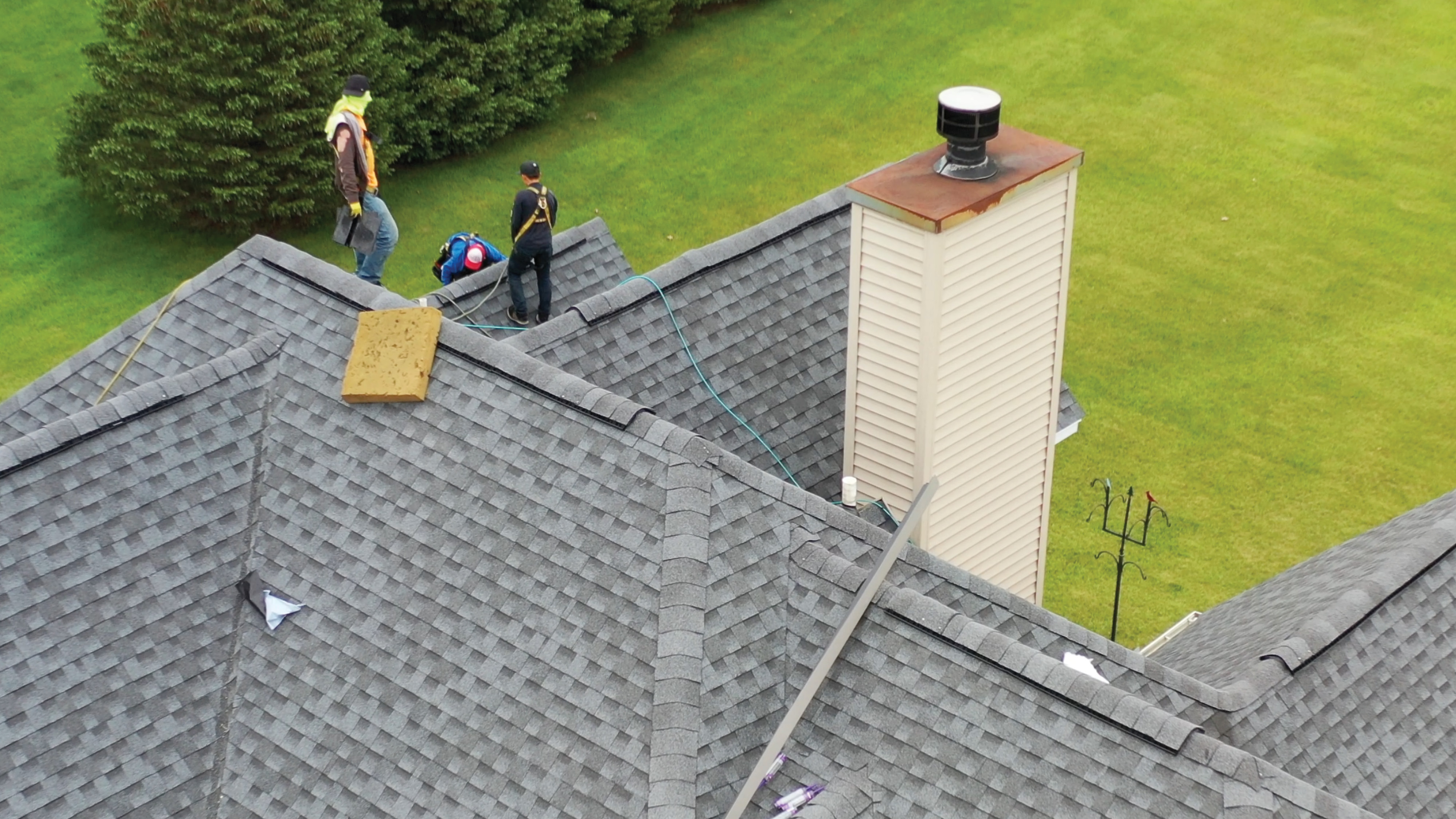
Flashing. Metal flashing seals the joints around chimneys, vents, skylights, and roof valleys. After winter freeze-thaw cycles, flashing is one of the most common failure points: it expands and contracts with temperature changes, and the sealants holding it in place can crack or pull away. Look for gaps, rust, or visible separation at any of these joints.
Gutters. Check your gutters for shingle granules collecting in the channels, which is a reliable indicator of shingle wear. Also look for gutters that are pulling away from the fascia, sagging, or showing signs of damage from ice buildup over the winter. A gutter system that cannot drain properly creates the exact conditions that lead to roof leaks. Ridge Top's exterior services include gutter evaluation as part of a full post-winter assessment.
Roofline. Step back and look at the overall line of your roof. It should be straight and even. Any sagging, dipping, or uneven sections along the ridge or eaves suggest structural stress, often caused by prolonged moisture exposure or snow load, and require immediate professional evaluation.
Moss or algae growth. Dark streaking or green growth on the roof surface is not just an aesthetic issue. It indicates moisture retention, which accelerates shingle breakdown from the surface down.
Move Inside: What Your Attic Can Tell You
A ground-level inspection tells you part of the story. Your attic tells the rest. On a dry day, go into your attic and look for the following.
Water stains or dark streaking on the underside of the roof deck are signs of active or recent leakage. Even if the stain looks dry, it indicates a point where water has entered. Soft or spongy wood in the decking or rafters signals rot, which means moisture has been present long enough to compromise the structure.
Daylight visible through the roof boards is an immediate concern. Any gap large enough to let light through is large enough to let water through.
Finally, check attic ventilation. The U.S. Department of Energy notes that proper attic ventilation is essential to roof longevity: it regulates temperature and moisture, and prevents the heat buildup that drives ice dam formation in cold climates. Blocked soffit or ridge vents, compressed insulation, or signs of condensation on rafters all point to ventilation problems that shorten roof lifespan.
Roof Damage Signs That Need Professional Attention
Some of what you find during a self-inspection is manageable. Other roof damage signs mean you should stop and call a professional before the problem grows. Contact a qualified roofer if you find any of the following.
Multiple missing or damaged shingles across a significant area of the roof. A few isolated shingles can be replaced. Widespread damage means the roof system has been compromised.
Any sign of active leakage inside the home, including water stains on ceilings, walls near the roofline, or in the attic. Leaks do not self-correct.
Sagging anywhere along the roofline or decking. This is a structural issue, not a surface one, and it carries risk beyond water damage.
Flashing that is visibly lifted, rusted through, or separated from the surface it is supposed to seal. Water entering at flashing points can travel far from the entry site before becoming visible inside the home.
Granule loss so significant that the underlying asphalt mat is exposed. At this point the shingle has lost its primary protective layer and its lifespan is measured in months, not years.
When to Replace Your Roof Instead of Repair It
Knowing how to inspect your roof is only half of the equation. The other half is knowing when what you find means repairs are no longer the right answer. When to replace your roof is one of the most common questions homeowners face after a hard winter, and the answer depends on a combination of factors.
Age is the starting point. Most asphalt shingle roofs are designed to perform for 20 to 30 years under normal conditions. If your roof is approaching or past that range and you are finding multiple issues from this inspection, repairs will address symptoms but not the underlying fact that the system is aging out.
Widespread damage is the second factor. If roof winter damage has affected large sections of shingles, multiple flashing points, and shows signs of water intrusion in the attic, the cumulative cost of repairs often approaches or exceeds the cost of replacement, with none of the warranty protection or longevity that a new roof provides.
ENERGY STAR-certified roofing products offer an additional consideration: a replacement roof installed with certified materials can reduce roof surface temperature, lower cooling costs, and qualify for federal tax credits depending on the product and your location. In Florida especially, this is a meaningful part of the total value calculation.
Ridge Top Exteriors holds GAF Master Elite and President's Club certification, which means we have met the highest standards GAF requires for installation quality, training, and customer satisfaction. When we recommend replacement, it is because the numbers support it. When repairs are the right call, we will tell you that too.
Ridge Top Exteriors Can Help
If this checklist has you looking at your roof differently, that is the point. Roof winter damage is real, it is common in all three of our markets, and catching it in spring before summer storm season is the single most effective thing you can do to protect your home's structure and your budget.
Ridge Top Exteriors offers free estimates across Wisconsin, Illinois, and Florida. We will walk your property, go through every item on this checklist with you, and give you an honest assessment of where your roof stands and what it needs.
Do not head into summer guessing. Schedule your free estimate with Ridge Top Exteriors today.

.jpg)