You pay your energy bill every month without questioning it. The house is a few degrees too warm in summer, a little drafty in winter, and you figure that is just how old homes are. But what if your windows were the reason? Not the roof, not the insulation, not the HVAC system. Your windows.
The data backs this up. And once you see it, it is hard to ignore. If you have been thinking about window replacement and wondering whether it is actually worth it, this is the article that answers that question.
The Numbers Don't Lie: How Much Energy Your Windows Waste
According to the U.S. Department of Energy, heat gain and heat loss through windows account for 25 to 30 percent of residential heating and cooling energy use. That means nearly one-third of what your HVAC system produces every single month is escaping through your glass.
In colder months, it gets worse. The DOE reports that in winter, 35 to 45 percent of a home's heat loss can pass through windows alone, depending on their age and condition. If you have single-pane windows or older double-pane units with compromised seals, you are on the high end of that range.
ENERGY STAR puts the new windows energy savings in real terms: replacing single-pane windows with ENERGY STAR-certified models saves homeowners an average of $101 to $583 per year, depending on location and fuel type. Replace double-pane, clear glass windows and you can still expect to save around $134 per year on average. That is not a one-time benefit. That is money back in your pocket every month. If you want to understand what window replacement costs and how financing works, Ridge Top can walk you through the options.
Five Signs Your Drafty Windows Are the Problem
Most homeowners do not connect daily discomforts to window failure. Here is what to look for.
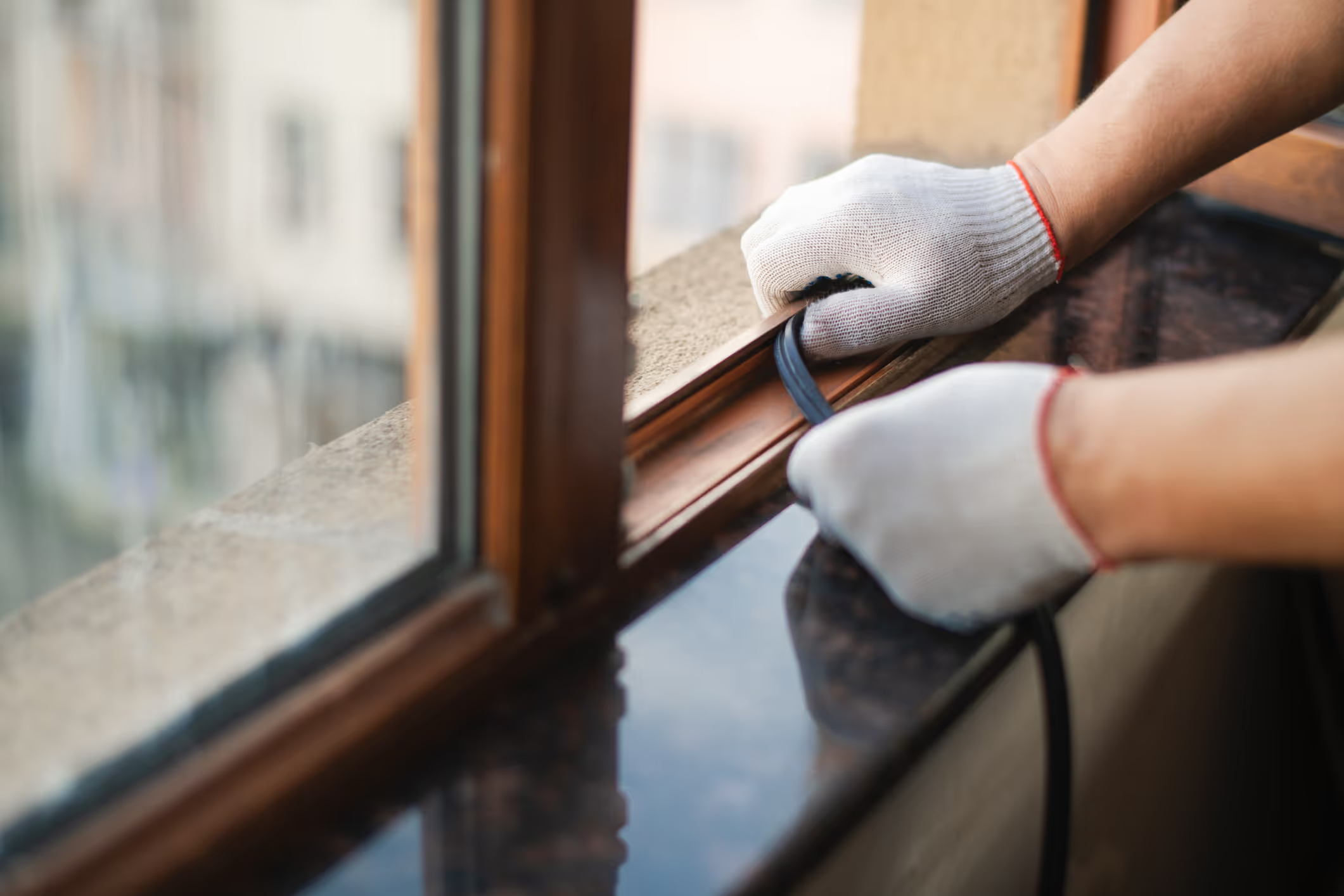
Drafts near closed windows. Hold a lit candle or incense stick near the edges of your window on a windy day. If the flame moves, air is getting through. Drafty windows force your heating and cooling system to compensate constantly, adding to your monthly bill.
Fogging between panes. Condensation or cloudiness trapped between double-pane glass is not a cleaning problem. It means the seal has failed and the insulating gas inside has escaped. Once the seal breaks, the window cannot be repaired. You need to replace windows at that point, not patch them.
Cold spots or warm spots near glass. If one room feels different from the rest of the house, walk toward the windows. Older glass conducts heat and cold directly, turning your windows into radiators in July and refrigerators in January.
Rising utility bills with no clear cause. If your energy costs have crept up and nothing obvious has changed, inefficient windows are a common culprit. Your HVAC system is simply working harder to make up for what your windows are losing.
Windows that are 15 to 20 years or older. Most residential windows have a functional lifespan of 15 to 20 years. Past that point, seals degrade, frames warp, and insulating performance drops off significantly, even if the windows still open and close.
What Energy-Efficient Windows Actually Do
Today's energy-efficient windows are not just glass in a frame. They are engineered systems designed to hold temperature inside your home where it belongs.
Double- and triple-pane construction creates insulating air pockets between glass layers. Low-emissivity (Low-E) coatings reflect radiant heat, blocking solar gain in summer while keeping warmth inside during winter. Inert gas fills, typically argon, reduce conductive heat transfer between panes. Together, these features deliver the kind of new windows energy savings that show up on your utility bill within the first month after installation.
Look for the NFRC label when shopping. It lists U-factor (heat transfer rate) and Solar Heat Gain Coefficient (SHGC), the two metrics that matter most for energy performance. Lower U-factor means better insulation. Lower SHGC means less solar heat enters in warm climates. If you are also considering other exterior upgrades like siding, replacing windows and siding together is one of the most effective ways to improve your home's overall efficiency at once.
Why This Matters More in Wisconsin, Illinois, and Florida
Window performance is not a one-size-fits-all problem. Where you live shapes how much you lose.
In Wisconsin and Illinois, long, hard winters mean your heating system runs for months. Drafty windows in these climates are a slow, constant drain. Every degree of heat that escapes through your glass is a degree your furnace has to reproduce. Over a full winter, that adds up fast.
In Florida, the problem flips. Summer heat gain through windows forces your air conditioning to run longer and harder. According to the DOE Energy Saver, 76 percent of sunlight hitting standard double-pane windows converts to heat inside the home. In a Florida summer, that stat is not abstract. It shows up on your electric bill every month from April through October. Ridge Top's roofing and exterior services are built around the specific demands of all three markets.
Ridge Top Exteriors Can Help
Ridge Top Exteriors serves homeowners across Wisconsin, Illinois, and Florida with exterior solutions built for real climates. Our teams know what drafty windows and failing seals look like on a home, and we know what window replacement actually does for comfort and cost.
If you have noticed fogging, cold spots, or a utility bill that keeps climbing, the first step is a free estimate. We will identify what is failing and give you honest options for energy-efficient windows that fit your home and your budget.
Do not keep paying for heat and air conditioning that your windows are giving away. Get your free estimate from Ridge Top Exteriors today.