Why Commercial Roof Leak Repair Can't Wait
Commercial roof leak repair is a critical issue that demands immediate attention—not just because of the visible water damage, but because of what's happening behind the scenes. A small drip today can spiral into structural decay, ruined inventory, and business disruption tomorrow. Nearly 40% of all building-related problems stem from water intrusion through the roof, and the cost of inaction compounds rapidly with each passing day.
If you're dealing with a commercial roof leak right now, here's what you need to know:
- Act within 24-48 hours to prevent water from spreading through insulation and structural materials
- Document everything with photos and notes for insurance claims
- Call a licensed professional immediately—DIY fixes often void warranties and miss hidden damage
- Expect repair costs to be 60-70% less than dealing with extensive interior water damage
- Prioritize preventative maintenance going forward to avoid future emergencies
The good news? Professional repairs are significantly more affordable than dealing with the cascading effects of water damage—from rotted decking and saturated insulation to mold remediation and lost business revenue. But time is not on your side. Water intrusion accelerates quickly, and what starts as a manageable repair can become a full roof replacement if left unaddressed.
This guide walks you through everything you need to know: how to spot warning signs, what immediate actions to take when you find a leak, the professional repair solutions available, and most importantly, how to prevent leaks from happening in the first place through proactive maintenance.
I'm Carter Joyce, Director of Marketing at Ridge Top Exteriors, and I've spent years helping commercial property owners steer complex roofing decisions, from emergency commercial roof leak repair to long-term maintenance strategies that protect their investments. Whether you're dealing with an active leak or want to prevent one, this guide will give you the clarity and confidence to make informed decisions about your commercial roof.
Spotting the Red Flags: Signs and Common Causes of Commercial Roof Leaks
A commercial roof is a building's primary shield against the elements, constantly battling wind, rain, snow, and the relentless sun. Over time, this exposure can lead to vulnerabilities. Recognizing the early signs of a leak and understanding its root cause is crucial for timely commercial roof leak repair and preventing extensive damage.
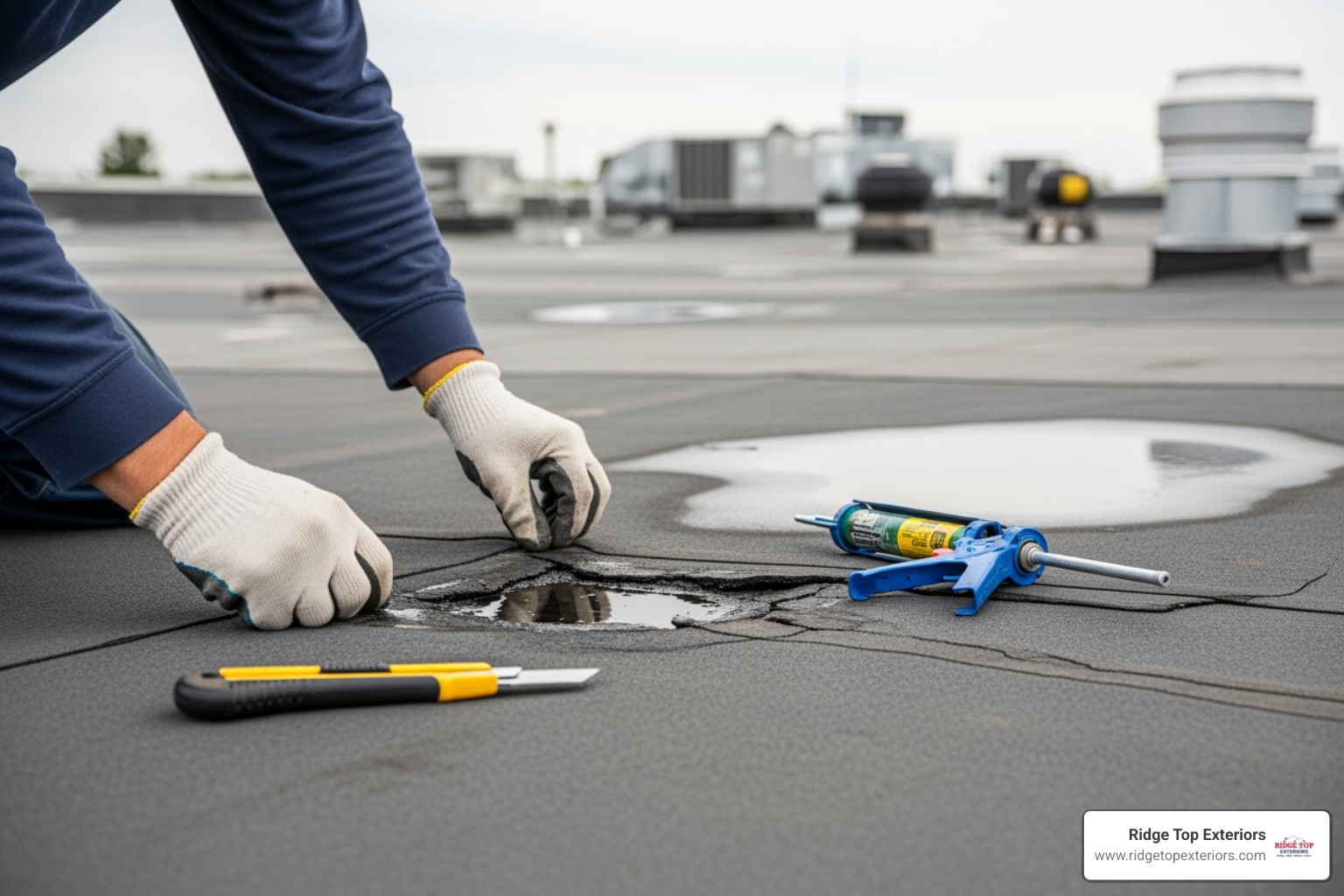
Immediate Signs of a Commercial Roof Leak
The first indication of a commercial roof leak often appears inside your building. Being vigilant about these immediate signs can save you significant time and money:
- Water dripping: The most obvious sign, indicating an active leak.
- Discolored ceiling tiles or walls: Water stains, often yellow or brown, are tell-tale signs that moisture has penetrated the ceiling or wall materials.
- Damp spots on walls: Beyond discoloration, a noticeable dampness to the touch suggests water is seeping through.
- Sagging ceiling areas: If drywall or ceiling panels begin to bow or sag, they are saturated with water and could collapse.
- Unexplained increase in utility bills: Compromised insulation due to water saturation loses its R-value, leading to higher heating and cooling costs.
- Audible dripping sounds: Even if you can't see the water, hearing drips can indicate a hidden leak.
- Musty odors: A persistent musty or moldy smell can signal hidden moisture and potential mold growth within walls, ceilings, or insulation.
- Puddles or ponding water on the roof: While not an interior sign, standing water on a flat roof is a major red flag for exterior inspection.
Common Causes of Leaks on Commercial Roofs
Understanding the common culprits behind commercial roof leaks helps us address them effectively and prevent recurrence. These can range from natural wear and tear to installation errors:
- Aged or deteriorated roofing materials: Just like any building component, roofing materials have a lifespan. As they age, materials can become brittle, crack, or lose their protective qualities. For instance, TPO and EPDM roofs typically last 20-25 years, while metal roofs can last 30-50 years. Beyond these lifespans, materials degrade, becoming prone to leaks.
- Degraded flashing around vents, chimneys, and HVAC units: Flashing—the thin material, often metal, installed around roof penetrations—is a critical barrier against water. If it's improperly installed, damaged, or has degraded sealant, water can easily seep into the building.
- Clogged drainage systems: Leaves, debris, and even pest nests can block gutters, downspouts, and scuppers. This causes water to pool on the roof, especially on flat or low-slope systems, leading to hydrostatic pressure that forces water through tiny cracks or seams.
- Failed seams and sealants: Many commercial roofing systems, especially single-ply membranes (TPO, EPDM, PVC) and modified bitumen, rely on sealed seams to prevent water intrusion. Over time, UV exposure, thermal expansion, and contraction can cause these seams to separate or the sealants to crack and fail.
- Punctures in the roof membrane: Foot traffic from maintenance crews, falling debris, or even sharp objects left on the roof can puncture the membrane, creating direct entry points for water.
- Poor installation or previous faulty repairs: Shoddy workmanship, whether during the initial installation or a prior repair, is a significant cause of premature roof failure. Improperly sealed seams, inadequate flashing, or using incompatible materials can all lead to leaks.
- Damage from severe weather or hail damage commercial roofing: High winds can lift or tear membranes, hail can create punctures or cracks, and heavy snow loads can stress the roof structure. Extreme temperatures and UV intensity can also accelerate material degradation, particularly in regions like Florida with intense sunlight and monsoon rains.
Immediate Actions: What to Do When You Find a Leak (And What Not to Do)
Finding a leak in your commercial property can be alarming, but acting quickly and methodically is key to minimizing damage and protecting your assets.
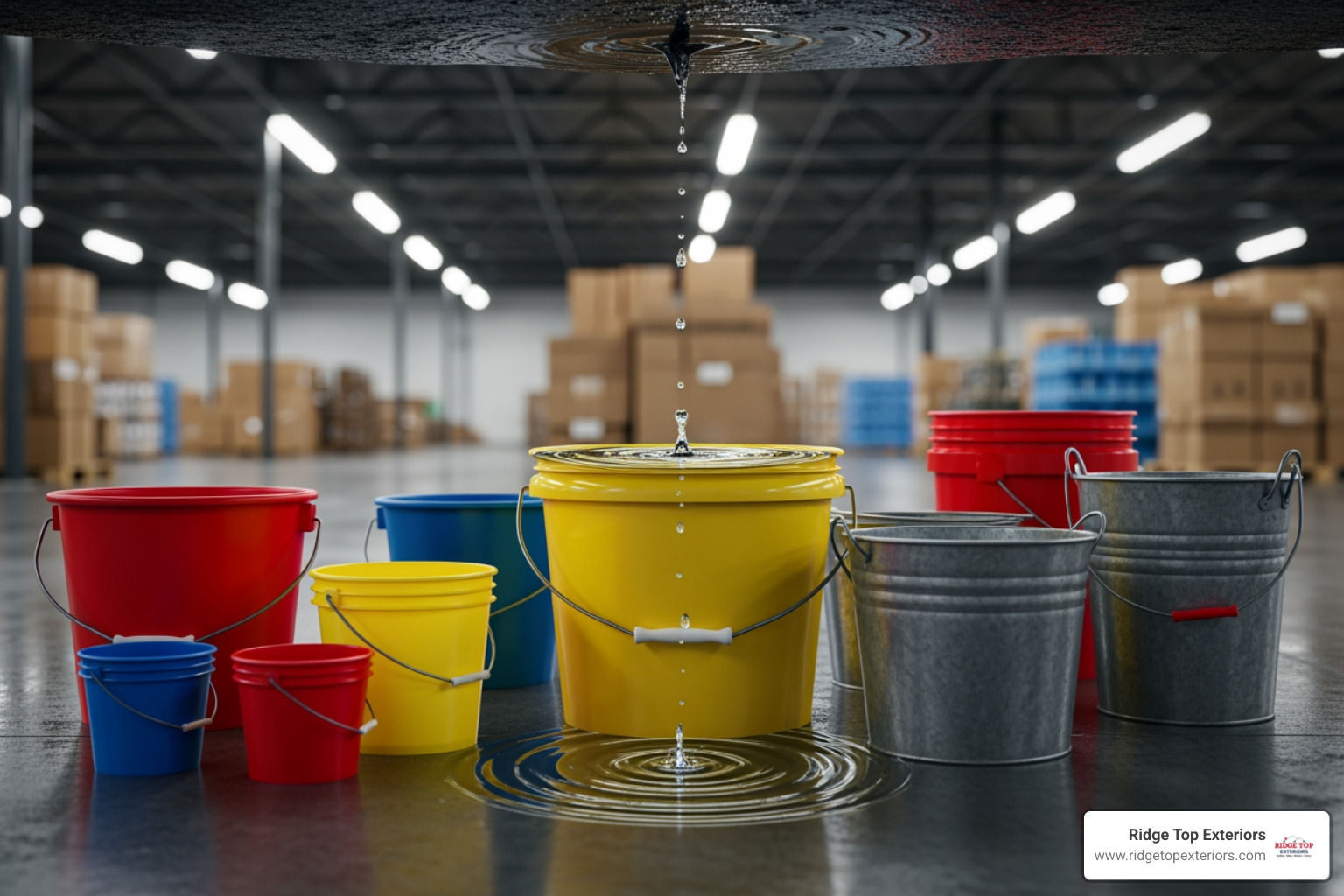
Steps to Take Immediately Upon Finding a Commercial Roof Leak
- Safety first: Water and electricity don't mix. If the leak is near electrical wiring or equipment, immediately turn off the power to that area. Mark off wet, slippery areas to prevent accidents and ensure the safety of employees and customers.
- Move or cover valuable equipment and inventory: Relocate any items that could be damaged by water. If they can't be moved, cover them with plastic tarps or waterproof sheeting.
- Contain the water: If possible, contain the dripping water with buckets or other containers to minimize slip hazards and protect flooring and assets below.
- Document the damage: Take clear photos and videos of the leak, the water stains, and any damaged property. This documentation is crucial for assessing the extent of the problem and for potential insurance claim help. Make sure to note the date and time the leak was finded.
- Contact a professional commercial roofing contractor: This is the most important step. As soon as you notice a leak, call a reputable local commercial roofing company like Ridge Top Exteriors. We offer rapid response services for commercial roof leaks in our service areas, including Appleton, Madison, Milwaukee, Wisconsin Rapids, Gurnee, and Clearwater, FL.
The Dangers of DIY Repair
While it might be tempting to attempt a quick fix yourself, especially for what appears to be a minor leak, we strongly advise against DIY commercial roof leak repair. Here's why:
- Voiding warranties: Many commercial roof systems come with manufacturer warranties that can be voided if repairs are not performed by a certified professional.
- Personal injury: Working on a commercial roof, particularly a large or high-rise structure, can be extremely dangerous without proper safety equipment and training. Falls are a leading cause of injury in roofing work.
- Incomplete or incorrect fixes: Water can travel significant distances within a roof system before becoming visible. A DIY repair often only addresses the visible symptom, not the actual source, leading to ongoing leaks or new problems. You might inadvertently trap moisture, leading to rot or mold.
- Hidden damage: Without a professional inspection, you won't know the full extent of the damage to the underlying structure, insulation, or decking.
The High Cost of Delaying Commercial Roof Leak Repair
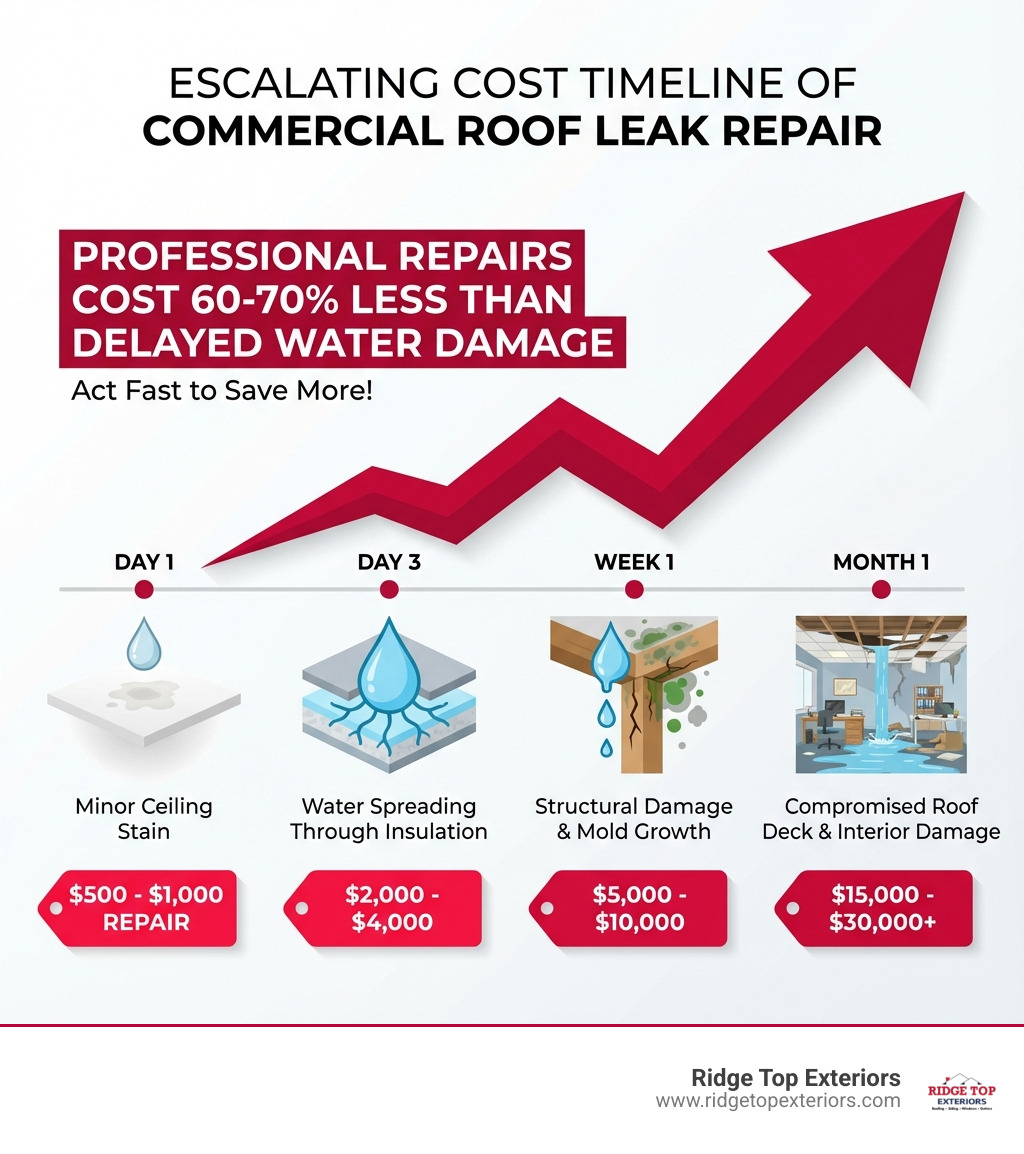
Delaying commercial roof leak repair is a costly mistake. What seems like a minor inconvenience can quickly escalate into a catastrophic problem, leading to significant financial losses and operational disruptions. Professional repairs typically cost 60-70% less than dealing with the extensive water damage that spreads throughout your building.
- Structural damage: Water infiltration can compromise the internal structure of your building, including roof decking, framing, and supports. Over time, this leads to wood rot, weakened steel components, and potential structural failure.
- Saturated insulation: Wet insulation loses its thermal efficiency (R-value), leading to increased energy consumption and higher utility bills. Replacing saturated insulation is often a complex and expensive process.
- Mold and mildew growth: Moisture creates an ideal breeding ground for mold and mildew. These not only cause unsightly stains and unpleasant odors but also pose serious health risks to employees and customers, potentially leading to respiratory issues and allergic reactions. Mold remediation is a costly and specialized service.
- Business interruption and lost revenue: A significant leak can force you to close down parts of your operation, disrupt production, damage inventory, and negatively impact customer experiences. The resulting downtime translates directly into lost revenue and potential reputational harm.
- Damage to interior finishes and equipment: Water can destroy ceilings, walls, flooring, office furniture, machinery, and valuable inventory, leading to expensive replacement costs.
- Safety hazards: Leaks can create slippery surfaces, increasing the risk of slips and falls. If water reaches electrical systems, it can pose fire hazards or electrocution risks.
Water damage spreads rapidly through insulation and structural materials, with repair costs increasing significantly each day you delay. Don't let a small drip turn into a disaster.
Your Guide to Professional Commercial Roof Leak Repair Solutions
When faced with a commercial roof leak, knowing your options and trusting experienced professionals is paramount. At Ridge Top Exteriors, we emphasize a thorough approach to ensure lasting solutions.
Identifying the Source of a Commercial Roof Leak
Identifying the exact source of a commercial roof leak can be challenging. Water often travels along internal structures like cable runs, pipes, trusses, or ventilation before becoming visible inside, meaning the entry point on the roof could be far from the interior stain. Our experienced technicians use a combination of methods:
- Visual inspection: A comprehensive exterior walk-through looking for obvious signs like membrane tears, punctures, ponding water, corrosion, loose flashings, or open seams. We also conduct an interior check for water stains, mold, wet insulation, and ceiling bubbles.
- Moisture-scan tools: For hidden leaks, we use advanced tools such as infrared scanners to detect trapped moisture in the roof layers. These devices identify uneven heat distribution caused by moisture, even when there are no visible leaks.
- Water testing: In some cases, controlled water testing, where specific roof sections are saturated, can help pinpoint the exact entry point while an inspector monitors from inside.
Once the source is precisely identified, we can recommend the most effective commercial roof leak repair strategy. For a thorough assessment, schedule a professional roof inspection clearwater with us.
Repair Strategies for Commercial Roofs: Why GAF Asphalt Shingles Stand Out
The best repair strategy depends heavily on the type of commercial roofing material, the extent of the damage, and the overall condition of the roof. While many commercial buildings feature flat or low-slope roofing systems, some may have sloped sections or architectural elements where asphalt shingles are used.
| Commercial Roof Type | Common Leak Points | Typical Repair Strategies | Ridge Top Exteriors' Approach |
|---|---|---|---|
| GAF Asphalt Shingles (Steep-Slope) | Missing, cracked, or curled shingles; exposed nail heads; flashing around chimneys, walls, and skylights; valleys and roof-to-wall transitions. | Remove and replace damaged shingles; re-nail and seal lifted shingles; rework or replace flashing; apply ice and water barrier in key areas; seal exposed fasteners. | For steep-slope commercial sections, we prioritize GAF asphalt shingles because of their proven durability, weather resistance, and strong warranty options. Our crews are factory-trained on GAF systems, so repairs are completed to manufacturer standards, helping maintain warranty coverage and long-term performance. |
| Single-Ply (TPO, EPDM, PVC) | Seams, terminations, penetrations (HVAC, vents, pipes), punctures, shrinkage at edges, ponding areas. | Heat-weld or glue new membrane patches; reinforce seams and terminations; apply compatible sealants around penetrations; add crickets or tapered insulation to improve drainage; install or refresh fluid-applied coatings. | We match repair methods and materials to the exact membrane type, using manufacturer-approved patches, primers, and adhesives. Our focus is on restoring watertight seams and details, improving drainage, and extending roof life without compromising existing warranties. |
| Built-Up/Modified Bitumen | Blisters, alligatoring (surface cracking), splits, open laps, deteriorated flashing, ponding water zones. | Cut out failed sections; install new plies or cap sheets; torch- or cold-apply patches; reflash walls and penetrations; add surfacing or coatings for UV and moisture protection. | Our team understands how these multi-layer systems age. We target both the visible defect and any moisture-saturated layers beneath, then design repairs or restoration coatings that stabilize the system and reduce future leak risk. |
| Metal Roofs | Loose or backed-out fasteners; rusted panels; open horizontal and vertical seams; failed sealant at transitions and penetrations; damage from expansion/contraction. | Replace or re-seat fasteners with proper washers; install butyl tape or sealant at laps; add stitch screws at seams; replace damaged panels; apply rust-inhibiting primers and elastomeric or silicone coatings. | We focus on tightening and sealing the metal “envelope”: securing fasteners, tightening seams, addressing corrosion early, and, when appropriate, installing roof coatings to create a continuous waterproof and reflective surface. |
| Clay, Concrete Tile, and Other Specialty Materials | Broken or slipped tiles; cracked tiles from impact; underlayment deterioration; failed mortar or ridge caps; flashing issues. | Replace individual damaged tiles; reset displaced tiles; repair or replace underlayment in affected areas; re-bed and re-point ridge caps; seal or replace flashing. | While our steep-slope work centers on GAF asphalt shingles for their value and warranty strength, we can inspect and service tile and other systems. When roofs near the end of their life or need frequent repairs, we often recommend evaluating an upgrade to a GAF shingle system for better long-term protection and cost control in our Wisconsin, Illinois, and Florida service areas. |
The Role of Roof Coatings and Sealants
Roof coatings and sealants are powerful tools in both commercial roof leak repair and long-term prevention. They can extend the life of an existing roof, improve energy efficiency, and provide an additional layer of protection.
- Silicone coatings: Ideal for roofs with ponding water issues, as they resist water degradation and maintain elasticity even when submerged. They offer excellent UV resistance.
- Acrylic coatings: Known for their high reflectivity, which helps reduce roof surface temperatures and lower cooling costs. They are durable and UV resistant, making them a good choice for energy efficiency.
- Polyurethane coatings: Offer excellent durability and abrasion resistance, making them suitable for roofs with higher foot traffic.
- Applying high-quality sealants: Crucial for creating a watertight barrier on seams, joints, and penetrations. These are applied to vulnerable areas where different materials meet or where the membrane has been cut or punctured.
- Extending roof life with a full restoration coating system: For roofs that are structurally sound but showing signs of wear, a fluid-applied coating system can provide a seamless, waterproof layer, often at a fraction of the cost of a full replacement, and significantly extend the roof's service life.
The Best Defense: Proactive Maintenance and Long-Term Prevention
The most effective and cost-efficient strategy for managing your commercial roof is not reactive repair, but proactive prevention. Maintenance costs a fraction of emergency repairs. By investing in a scheduled roof maintenance services plan, you can identify and address minor issues before they escalate into costly leaks.
Creating a Roof Maintenance Plan
A comprehensive roof maintenance plan is essential for ensuring the longevity and performance of your commercial roof after repairs and for preventing future leaks.
- Scheduling regular professional inspections: We recommend having your commercial roof inspected at least twice a year—ideally in the spring and fall—and especially after severe weather events like heavy storms, high winds, or significant snowfall. These inspections, like our roof inspection clearwater services, help detect subtle damage or vulnerabilities that might not be visible to the untrained eye.
- Keeping a detailed log: Maintain a comprehensive digital log of all inspections, maintenance activities, and repairs. This documentation provides a historical record of your roof's condition, helps track recurring issues, and is invaluable for warranty claims or insurance purposes.
- Understanding your warranties: Be fully aware of the terms and conditions of your roofing material and workmanship warranties. For instance, our GAF Golden Pledge Warranty offers up to 50 years of coverage for roofing on qualifying installations. Understanding what voids a warranty (e.g., unauthorized DIY repairs) and what is covered (e.g., manufacturer defects) is crucial.
- Budgeting for routine maintenance: Setting aside funds for biannual inspections, gutter cleaning, and minor fixes keeps your roof functioning properly and extends its lifespan. This preventative budgeting is significantly more cost-effective than facing unexpected, expensive emergency repairs.
- Ensure Drains, Gutters, and Scuppers are Clear of Debris: Blocked drainage systems are a leading cause of commercial roof leaks. It's critical to ensure they are regularly cleaned to prevent water from pooling on the roof, which reduces stress on the membrane and prevents water intrusion. Professional maintenance services, like our RoofCare+ program, include this essential task to prevent thousands in potential water damage.
- Managing rooftop foot traffic: Uncontrolled foot traffic from maintenance crews for HVAC systems or other rooftop equipment can damage membranes and accelerate wear. Establish designated walkways and use protective mats in high-traffic areas to minimize impact.
- How to extend the lifespan of your roof after repairs are complete: Beyond regular maintenance, consider material upgrades appropriate for your local climate, such as highly reflective coatings in sunny Florida to mitigate UV damage and reduce cooling costs. Addressing minor issues promptly, like loose flashing or small cracks, prevents them from escalating into major leaks.
Frequently Asked Questions about Commercial Roof Leak Repair
How quickly should a commercial roof leak be addressed?
Leaks should be addressed immediately, ideally within 24-48 hours of findy. Water damage spreads rapidly through insulation and structural materials, with repair costs increasing significantly each day you delay. A swift response from a professional can mitigate structural risks, protect inventory, and significantly reduce overall repair costs. Ignoring a leak, even for a few days, can turn a minor issue into a major structural problem, lead to extensive mold growth, and cause significant business interruption.
What factors determine the cost of a commercial roof leak repair?
The cost of a commercial roof leak repair is determined by several key factors:
- Severity and size of the leak: A small, easily accessible puncture will cost less than extensive damage requiring multiple patches.
- Location and accessibility: Leaks in hard-to-reach areas or on high-rise buildings often incur higher labor costs.
- Type of roofing material: Repairing a TPO membrane might differ in cost from repairing a metal roof or GAF asphalt shingles, due to specialized techniques and material costs.
- Extent of underlying damage: If water has saturated insulation, rotted decking, or caused mold, these additional repairs will significantly increase the total cost.
- Labor and material costs in your area: Costs can vary depending on your location, whether it's Madison, Milwaukee, Appleton, Gurnee, or Clearwater, FL.
Typically, commercial roof repairs can range from a few hundred dollars for a minor patch to several thousands for more complex issues. For exact pricing, we recommend scheduling a free, on-site quote with Ridge Top Exteriors, as final costs can vary based on size, complexity, material tier, code/permits, access, and local labor/market conditions.
When is a full roof replacement necessary instead of a repair?
The decision to repair, restore, or replace your commercial roof depends on several factors:
- Age of the roof: A typical lifespan for a commercial roof is 20 to 30 years. If your roof is approaching or has exceeded this age, especially if it's experiencing multiple leaks, a full replacement may be more cost-effective than continuous repairs.
- Extent of damage: If there are widespread leaks, significant structural damage, or large areas of saturated insulation, the cost of extensive repairs can approach or even exceed the cost of a new roof.
- Material availability: Sometimes, the original roofing material may no longer be available, making a full replacement a more viable option.
- Warranty considerations: Frequent repairs might indicate a systemic issue, and a new roof often comes with a fresh, comprehensive warranty, such as the GAF Golden Pledge Warranty we offer.
- Business plans: If you plan to own the property for many more years, a replacement offers long-term peace of mind and potentially lower maintenance costs.
If the cost of repairing wet insulation or multiple leak points approaches a significant percentage (e.g., 50-75%) of a new roof's cost, replacement is often the more prudent long-term investment. Our experts at Ridge Top Exteriors can provide an honest assessment to help you make this critical decision.
Protect Your Investment with Expert Commercial Roof Repair
A leaking roof is a critical issue that requires a swift, professional response. It threatens your building's structural integrity, can damage valuable assets, disrupt operations, and lead to significant financial setbacks if not addressed promptly. Proactive maintenance is the most cost-effective strategy to protect your asset, ensuring its longevity and performance.
Choosing a certified and experienced contractor like Ridge Top Exteriors ensures quality GAF materials, expert workmanship, and peace of mind with industry-leading warranties. With over 20 years of experience, 45,000 satisfied homeowners, and a 98% customer satisfaction rating, we are the name businesses trust across Wisconsin, Illinois, and Florida. Our local teams in Madison, Milwaukee, Appleton, Wisconsin Rapids, Gurnee, Clearwater FL, and beyond deliver best craftsmanship and factory-certified installations.
Don’t wait for a small drip to become a disaster. Take control of your property’s health today by scheduling a professional instant quote or contact us for your commercial roof inspection. We're here to help you solve your roof leak issues and ensure your business is protected.