Introduction: More Than Just Curb Appeal

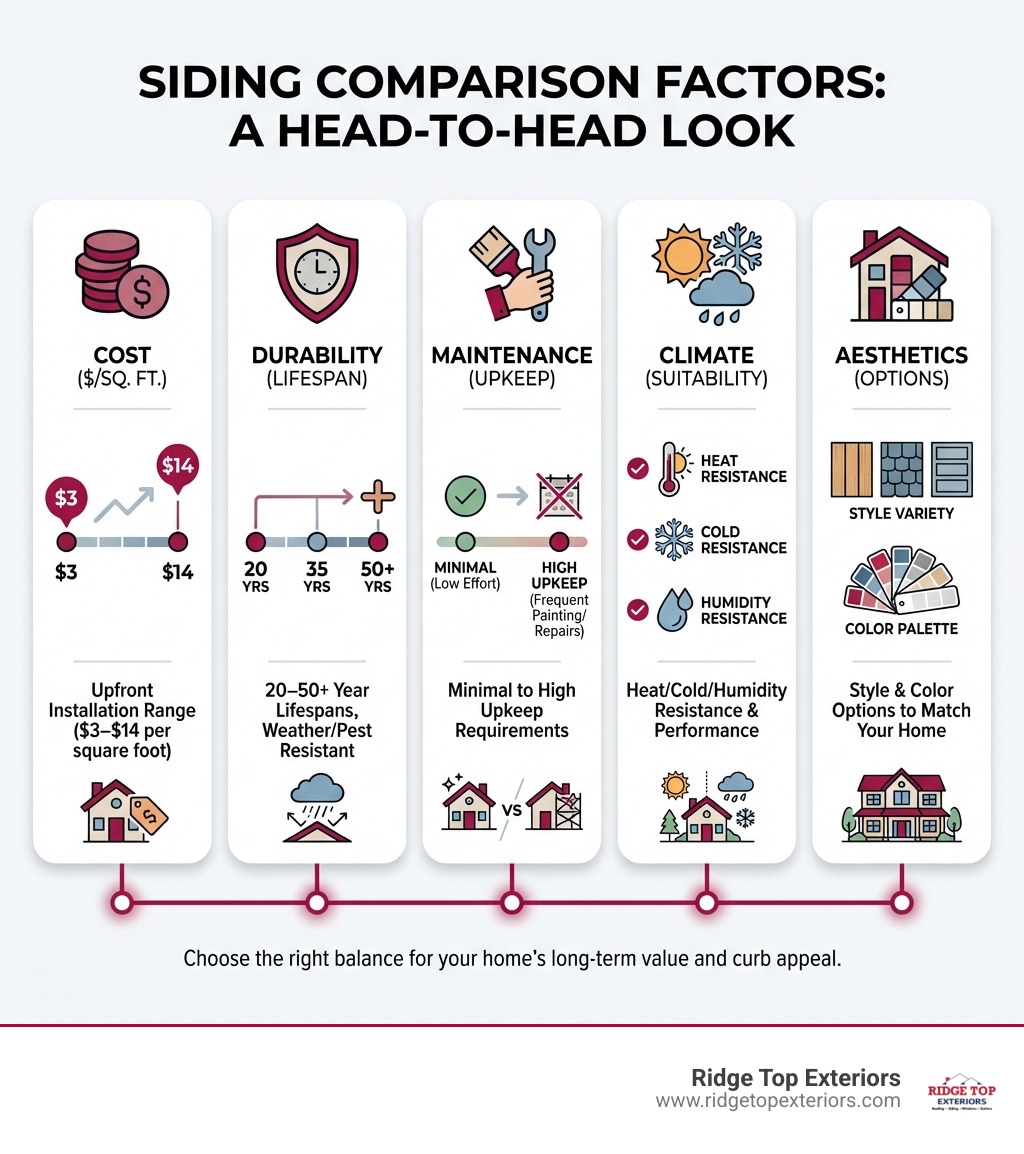
Compare siding options and you'll quickly find that choosing the right material involves far more than picking a color you like. Here's what matters most when evaluating siding for your home:
| Factor | What to Consider |
|---|---|
| Cost | Upfront installation ($3–$14/sq. ft.) plus long-term maintenance expenses |
| Durability | Lifespan (20–50+ years), resistance to weather, pests, and fire |
| Climate | Performance in extreme heat, cold, humidity, or UV exposure |
| Maintenance | Frequency of painting, repairs, and cleaning required |
| Aesthetics | Style, texture, and color options that match your home's architecture |
Your home's siding is its first line of defense against rain, wind, sun, and pests. It also accounts for a huge portion of your home's curb appeal and resale value. In fact, siding replacements have one of the highest returns on investment of any exterior upgrade, often recouping more than 75% of the project cost.
But with so many materials on the market—vinyl, fiber cement, engineered wood, traditional wood, metal, stucco—how do you know which one is right for your home? Each material has distinct advantages and trade-offs in terms of cost, durability, maintenance, and performance in different climates.
The wrong choice can lead to expensive repairs, frequent repainting, or even structural damage from moisture intrusion. The right choice, however, can protect your home for decades while boosting its beauty and efficiency.
Whether you're in the humid heat of Florida or enduring the freeze-thaw cycles of a Wisconsin winter, your siding needs to stand up to the elements. And whether you're budget-conscious or looking for a premium, long-lasting solution, there's a material that fits your needs.
I'm Carter Joyce, Director of Marketing at Ridge Top Exteriors, and I've helped guide thousands of homeowners through the process to compare siding options across our locations in Wisconsin, Illinois, and Florida. With over 45,000 completed projects and expertise in materials like James Hardie, LP SmartSide, and modern vinyl, I'll break down exactly what you need to know to make the best choice for your home.
A Head-to-Head Look at Popular Siding Materials
Choosing the right siding is a big decision, and we understand you want to make an informed one. This section compares the most common siding materials, focusing on the high-performance options available to homeowners today that we proudly install across Wisconsin, Illinois, and Florida.
Vinyl Siding: The All-Around Contender
Vinyl siding has been the most popular choice in the U.S. for the past 50 years, and for good reason! About one-third of all homes in the United States feature some form of vinyl siding. It's a fantastic option for homeowners looking for a balance of aesthetics, durability, and affordability.
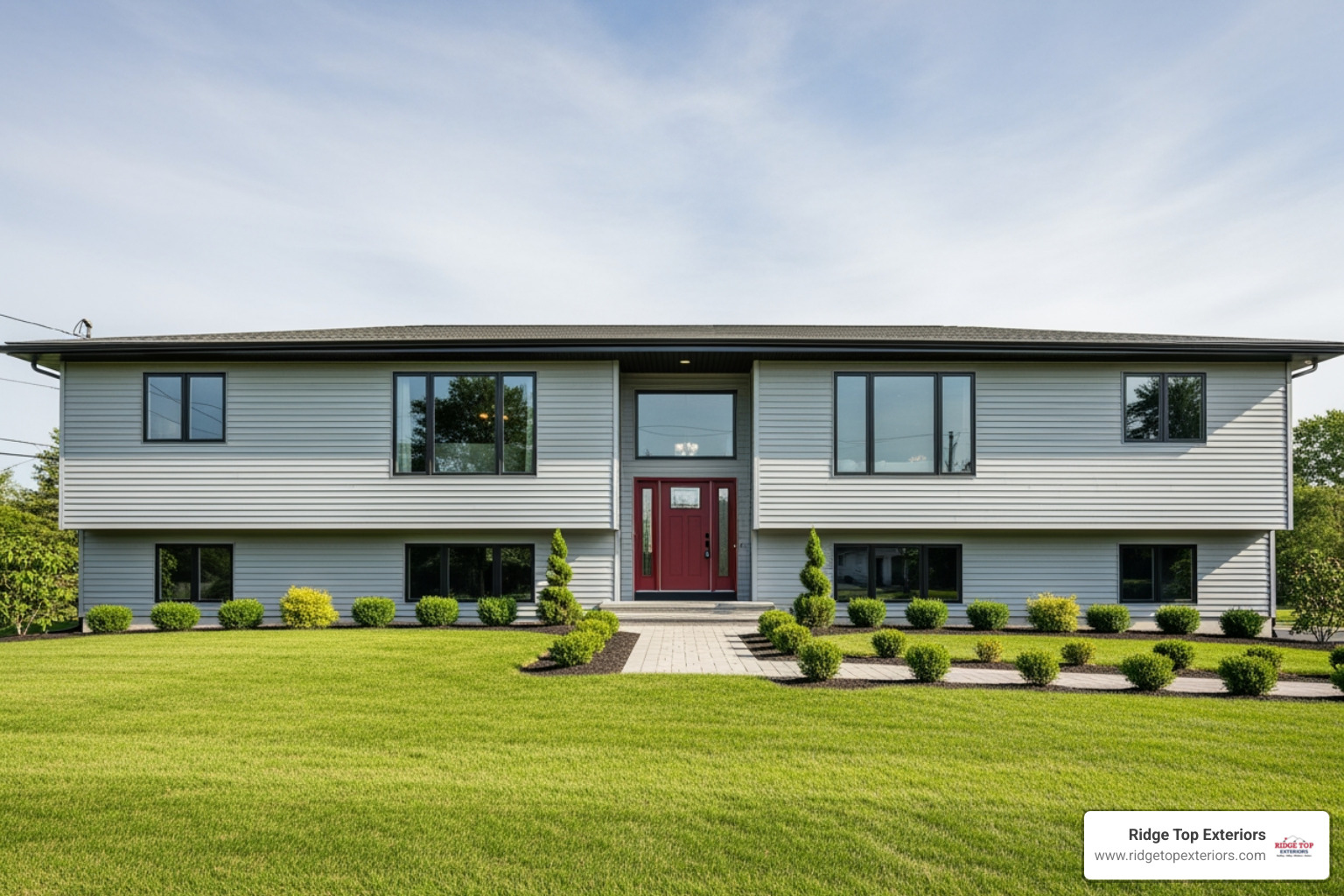
Pros:
- Affordability: Vinyl siding is generally the most budget-friendly option, both in terms of material and installation costs. You can find options as low as $3 per square foot.
- Low Maintenance: It's incredibly easy to care for, typically only needing an occasional cleaning to maintain its appearance. It doesn't require painting, scraping, or staining, saving you significant time and money over its lifespan. What are the benefits of vinyl siding?
- Wide Color and Style Variety: Modern vinyl siding comes in an impressive array of colors, textures, and profiles that can mimic the look of real wood, allowing for great design flexibility. Our partners at Royal Building Products and Exterior Portfolio offer superior vinyl siding options.
- Weather Resistance: It stands up well to rain and general weather conditions.
Cons:
- Temperature Sensitivity: Cheaper versions can become brittle and crack in extremely cold temperatures, which is a consideration for our Midwest homeowners. In very sunny, dry regions, it can also fade.
- Potential for Warping/Buckling: If not installed correctly, vinyl siding can warp or buckle, especially in fluctuating temperatures.
- Aesthetics (for some): While modern vinyl has come a long way, some purists feel it can't fully replicate the authentic look of natural wood.
Best for: Budget-conscious homeowners in Wisconsin, Illinois, and Florida seeking a low-upkeep solution that offers a wide range of aesthetic choices.
Average Cost Range (materials + labor): $3-$12 per square foot. For a small home (10 squares) in the Midwest, costs can range from $8,000-$15,000, while in Florida, it might be $17,000-$22,000.Lifespan: 20-40 years, with some products warranted for as much as 50 years.
Fiber Cement Siding: The Durable Champion
Fiber cement siding, notably from industry leader James Hardie, is a powerhouse material known for its incredible resilience and versatility. Invented in the 1980s, it's made from Portland cement, sand, water, and cellulose fibers, creating an exceptionally strong and stable product. We specialize in installing James Hardie siding in Florida, where its properties are particularly beneficial.

Pros:
- Exceptional Durability: Fiber cement is engineered to withstand extreme weather conditions, including strong winds, hail, and torrential rain, making it ideal for Florida's climate.
- Fire-Resistant: It's highly fire-resistant, a significant safety advantage. James Hardie fiber cement siding is so durable and fireproof that it can even stand up to historic wildfires. This can even lead to savings on homeowners' insurance.
- Pest-Resistant: Unlike wood, it's impervious to termites and other pests that can cause extensive damage.
- Mimics Wood or Stucco: Available in a variety of textures and styles, fiber cement can beautifully replicate the look of natural wood grain, cedar shingles, or even stucco, offering premium aesthetics without the associated vulnerabilities.
- Long Lifespan: With proper installation and maintenance, fiber cement can last 50 years or more, often coming with 50-year warranties.
Cons:
- Higher Upfront Cost: Fiber cement typically has a higher material and installation cost than vinyl siding.
- Requires Professional Installation: Due to its weight and specific installation requirements, professional installation is crucial to ensure its longevity and performance.
- Repainting: While durable, it may require repainting every 10 to 15 years, though pre-finished options extend this period significantly.
Best for: Homeowners in Florida seeking unparalleled longevity, protection in harsh climates (humidity, sun, storms), and a premium aesthetic that can mimic other materials. Our James Hardie Siding Madison Guide provides more insight into this material, even if it's primarily for our Florida operations.
Average Cost Range (materials + labor): $5-$14 per square foot. For James Hardie siding in Florida, a small home (10 squares) might cost $5,000-$15,000, while a medium home (20 squares) could be $27,500-$34,500.Lifespan: 50+ years.
Engineered Wood Siding: The Natural Innovator
Engineered wood siding, such as LP SmartSide which we install in the Midwest, offers the cherished look of natural wood with improved durability and reduced maintenance. It's a composite product made from wood fibers, resins, and waxes, designed to outperform traditional wood siding.
Pros:
- Authentic Wood Look: Engineered wood provides the warmth and beauty of natural wood, with deep grain textures and a wide range of colors and finishes.
- Improved Durability: It's treated to resist moisture, rot, and pests, making it significantly more durable than traditional wood siding. It also holds up well against impact.
- Sustainable: Often made from recycled wood fibers, it's a more environmentally friendly option than virgin timber.
- Lower Maintenance than Real Wood: While not maintenance-free, it requires less frequent painting or staining compared to traditional wood.
Cons:
- Requires Proper Installation: Like fiber cement, correct installation is vital to prevent moisture issues and ensure its long-term performance.
- Not Completely Maintenance-Free: It will still require occasional cleaning and painting/recoating over its lifespan, though less frequently than natural wood.
- Potential for Moisture Trapping: If installed incorrectly, moisture can get trapped behind the panels, leading to issues.
Best for: Homeowners in Wisconsin and Illinois who desire the classic aesthetic of wood siding but want better resistance to the elements and lower maintenance than traditional wood. You can explore more about the Pros and Cons of Different Siding Materials to see how engineered wood stacks up.
Average Cost Range (materials + labor): $4-$9 per square foot. For LP SmartSide in the Midwest, a small home (10 squares) might range from $15,000-$19,000, while a medium home (20 squares) could be $25,000-$32,000.Lifespan: 20-40 years.
Traditional Wood Siding: The High-Maintenance Benchmark
For centuries, traditional wood siding was the standard, admired for its natural beauty and classic charm. However, its time as a practical, mainstream option has passed, with less than 5% of new homes using it today. While it offers an authentic look, this comes at a significant cost in both money and time.
The primary drawbacks of traditional wood are its demanding upkeep and vulnerability:
- Constant Maintenance: Wood requires repainting or re-staining every 4-6 years to prevent it from deteriorating. This ongoing, costly maintenance is a major commitment.
- Susceptibility to Damage: Without meticulous care, wood is highly prone to moisture damage, rot, and mold. It is also a target for pests like termites and woodpeckers, which can lead to expensive structural repairs.
- Fire Risk: Unlike modern composite materials, wood is combustible, posing a significant fire risk to your home.
Because of these substantial disadvantages, we recommend modern alternatives like engineered wood (LP SmartSide) and fiber cement (James Hardie). These products deliver the beautiful, authentic appearance of wood without the constant maintenance, vulnerability to pests, and risk of rot, offering a far more durable and cost-effective solution for today's homeowners.
How to Compare Siding Options for Your Home
Choosing siding involves balancing several key factors. Here’s a breakdown to help you make an informed decision for your specific needs, considering both initial outlay and long-term performance.
Compare Siding Options by Cost: Upfront vs. Long-Term Value
When we help homeowners compare siding options, cost is always a primary consideration. But it's crucial to look beyond the initial price tag and consider the long-term value. The average cost to replace siding is around $11,500 nationally, with most projects ranging between $5,570 to $17,595 for materials and installation. Siding removal can add $0.70 to $2.00 per square foot to the overall expense.
Upfront Installation Cost: This is what you pay to purchase and install the materials. As you've seen, vinyl is generally the cheapest, while fiber cement and engineered wood are mid-range, and traditional wood can vary widely.
Long-Term Maintenance Expenses: This includes the cost of cleaning, painting, staining, and potential repairs over the siding's lifespan. For example, wood siding needs treatment every 4-6 years, which can cost $800-$2,500 each time. Fiber cement might need repainting every 10-15 years. Vinyl and engineered wood generally have lower maintenance costs.
Return on Investment (ROI): Siding replacement is a smart investment. As mentioned, it has one of the highest returns on investment among home improvement projects, often recouping a significant portion of its cost when you sell your home.
Energy Savings: The right siding, especially when combined with proper insulation and house wrap, can significantly impact your home's energy efficiency, leading to lower heating and cooling bills. This ongoing saving contributes to the material's long-term value.
Exact pricing requires a free, on-site quote. Final cost can vary based on size, complexity, material tier, code/permits, access, and local labor/market conditions. We offer a free, no-obligation estimate to give you precise numbers for your project.
Here's a quick comparison of our primary offerings:
| Siding Material | Installed Cost (per sq. ft.) | Lifespan | Maintenance Needs |
|---|---|---|---|
| Vinyl Siding | $3-$12 | 20-40 years | Low (cleaning) |
| Fiber Cement | $5-$14 | 50+ years | Moderate (periodic repainting) |
| Engineered Wood | $4-$9 | 20-40 years | Low-Moderate (occasional cleaning/recoating) |
For more detailed information on potential costs, HomeGuide.com provides estimated costs for siding replacement based on material and home size.
Compare Siding Options by Durability and Climate Suitability
Your home's location—whether in the snowy Midwest or sunny Florida—plays a huge role in determining the best siding material. We know that the climate in places like Madison, WI, is vastly different from Clearwater, FL, and your siding needs to perform accordingly.
Resistance to Impact (Hail): In areas prone to hailstorms, like many parts of Wisconsin and Illinois, impact resistance is key. Fiber cement and engineered wood siding generally perform well against impacts, while some vinyl options can be susceptible to cracking or denting from severe hail.
Performance in Freeze/Thaw Cycles (Midwest): For our Midwest clients in Appleton, Milwaukee, or Gurnee, siding needs to withstand drastic temperature fluctuations. Engineered wood, with its special waxes and resins, holds up exceptionally well to extreme temperatures and humidity. Higher-quality vinyl is also formulated to resist cracking in the cold. Traditional wood, if not carefully maintained, can suffer from moisture damage during freeze-thaw cycles.
Resistance to Humidity, Salt, and UV Rays (Florida): In Florida, especially along the coasts in Clearwater or Tampa, siding faces intense UV exposure, high humidity, and salt air. Fiber cement, particularly James Hardie, is an excellent choice for its superior resistance to moisture, rot, and UV damage, making it ideal for the coastal environment. High-performance vinyl siding is also a durable option that holds up well against humidity and rain.
Fire and Pest Resistance:
- Fire: Fiber cement is highly fire-resistant, which is a significant advantage in any area. Traditional wood siding is combustible and poses a higher fire risk.
- Pests: Vinyl, fiber cement, and engineered wood sidings are generally impervious to pests like termites and carpenter ants. Traditional wood, however, is vulnerable and can attract pests if not properly protected.
Choosing the right siding for your climate is paramount to its longevity and your home's protection. We always consider your specific local conditions when recommending materials. For more insights on this, read our guide on How to Choose the Right Siding for Your Climate.
Key Factors Beyond the Material
Your siding choice goes beyond the raw material itself. Aesthetics, energy performance, and the quality of the installation are just as crucial to ensuring you love your new exterior and that it performs as expected for decades to come.
Aesthetics and Style: Finding the Perfect Look
Your home's siding is the largest component of its exterior, making it a primary driver of curb appeal. The look and feel of your siding can dramatically transform your home's character.
Siding Profiles:
- Lap Siding: The most common style, where planks overlap horizontally, creating classic lines.
- Vertical Siding: Offers a more modern or rustic aesthetic, often used as an accent or for a barn-like appearance (e.g., board and batten).
- Shake & Shingle: Mimics the look of cedar shakes, adding texture and a craftsman or coastal feel.
Textures: Siding materials come in various textures, from smooth, contemporary finishes to deeply embossed wood grain patterns that convincingly replicate natural timber. For example, engineered wood and fiber cement can offer highly realistic wood textures.
Color Selection: The color palette for siding is vast. Vinyl siding, in particular, offers an enormous range of colors, and modern technology ensures these colors are fade-resistant. Fiber cement and engineered wood also come in pre-finished colors or can be painted to your exact preference. Choosing the right color involves considering your home's architectural style, surrounding landscape, and even your personal taste. We have a great resource on How to Choose the Perfect Color for Your Home’s Siding.
Matching Your Home's Architectural Style: The best siding complements your home's existing architecture. A Victorian home might benefit from the intricate details offered by wood or fiber cement shakes, while a modern farmhouse could shine with board and batten style engineered wood or fiber cement. Our 3D design tools can help you visualize different options on your actual home before you make a commitment.
Energy Efficiency and Insulation
Beyond aesthetics and durability, your siding plays a vital role in your home's energy performance. It's not just a decorative shell; it's a layer of protection that contributes to keeping your home comfortable and your energy bills manageable.
R-Value Explained: R-value measures a material's resistance to heat flow. A higher R-value means better insulation. While siding itself isn't a primary insulator like wall insulation, some materials offer inherent thermal benefits. Regular vinyl siding has a low R-value of around 0.61.
Insulated Siding Options: We offer insulated vinyl siding, which incorporates a layer of foam insulation directly behind the panel. This can significantly boost the R-value, with insulated vinyl siding reaching R-values of 2.0-3.5. This added insulation helps reduce heat transfer, keeping your home warmer in Wisconsin winters and cooler during Florida summers.
The Role of House Wrap: Regardless of the siding material you choose, adding a high-quality thermal house wrap underneath is crucial. This extra layer acts as a moisture barrier and can further improve your home's insulation, preventing air leakage and adding to the overall R-value. This is especially important for How to Prepare Your Home for Winter with Proper Siding and Insulation.
Potential to Lower Heating and Cooling Bills: By choosing insulated siding options and ensuring proper underlayment, you create a more energy-efficient envelope for your home. This can lead to noticeable long-term savings on your utility bills, making the initial investment even more worthwhile.
The Critical Role of Professional Installation
You could choose the most expensive, most durable siding on the market, but if it's not installed correctly, it won't perform as advertised. This is why professional installation is not just a recommendation; it's a necessity.
Risks of Improper Installation:
- Moisture Damage: The biggest risk. Incorrectly installed siding can allow water to seep behind the panels, leading to mold, rot, and structural damage to your home's sheathing and framing. This can lead to thousands of dollars in repairs down the line.
- Warping and Buckling: Especially with materials like vinyl, improper fastening can cause panels to warp or buckle as they expand and contract with temperature changes.
- Voided Warranties: Most manufacturer warranties require professional installation to remain valid. A DIY job or installation by an uncertified contractor could leave you without coverage for product defects.
- Aesthetic Issues: Poor installation can result in uneven lines, visible seams, or an overall unprofessional appearance that detracts from your home's curb appeal.
Finding a Certified and Experienced Contractor: We can't stress this enough: choose your contractor wisely. Look for companies with a long-standing reputation in your area (we've been serving homeowners since 2002!). Check their references, reviews, and ensure they are licensed and insured. Contractors certified by organizations like the Polymerics Exterior Products Association (PEPA) have received specialized training in best installation practices. Our team at Ridge Top Exteriors consists of factory-certified installers, ensuring every project meets the highest standards.
Manufacturer Requirements: Different siding materials have specific installation guidelines from their manufacturers. For example, James Hardie fiber cement siding requires precise handling and fastening to ensure its 50-year warranty is honored. Our expert installers are highly experienced with James Hardie, LP SmartSide, and high-quality vinyl products. You can find more comprehensive advice in our Siding Contractors Ultimate Guide.
Frequently Asked Questions about Siding
We often hear similar questions from homeowners looking to upgrade their exteriors. Here are some of the most common ones we address:
What is the most durable and longest-lasting type of siding?
Fiber cement siding, like that from James Hardie, is renowned for its exceptional durability and lifespan, often exceeding 50 years. It's engineered to resist fire, pests, and the harshest weather conditions, making it a top choice for long-term performance. While other materials like certain types of metal siding can also last a very long time, for the blend of durability, aesthetics, and resistance to common home issues, fiber cement stands out. Our James Hardie installations in Florida are a testament to this material's robust nature in challenging climates.
What is the most budget-friendly siding option?
Vinyl siding is typically the most affordable option in terms of both material and installation costs. With material costs ranging from $3 to $12 per square foot, it offers excellent value. Modern vinyl provides a wide array of aesthetic choices and requires minimal maintenance, making it a popular choice for homeowners looking for a cost-effective upgrade without compromising on looks or basic protection. For many homeowners in the Midwest and Florida, vinyl siding offers a fantastic balance of initial cost and long-term benefits.
How does new siding increase a home's value?
New siding dramatically boosts curb appeal, which is a major factor in home valuation. A fresh, attractive exterior makes a strong first impression on potential buyers. It also signals to them that the home is well-maintained and protected, reducing concerns about future exterior repairs. Furthermore, high-performance siding can improve energy efficiency, leading to lower utility bills, which adds to its long-term value and appeal. As we noted earlier, siding replacements consistently offer one of the highest returns on investment in home improvement.
Conclusion: Choosing the Right Armor for Your Home
Navigating siding options can feel overwhelming, but it doesn't have to be. The best siding for your home depends on a thoughtful balance of your budget, local climate, and personal style. By understanding and comparing the pros and cons of materials like low-maintenance vinyl, incredibly durable fiber cement, and beautifully authentic engineered wood, you can make a choice that not only protects your home but also lifts its beauty for decades to come.
A siding replacement is a significant investment that pays dividends in curb appeal, protection, and potentially energy savings. Don't leave such an important decision to chance or a less experienced contractor. For an expert installation that guarantees performance and peace of mind, trust the certified professionals at Ridge Top Exteriors. With over 20 years of experience and thousands of satisfied homeowners across Wisconsin, Illinois, and Florida, we're here to ensure your home is clad in the perfect armor.
Ready to see what new siding can do for your home? Get your Instant Siding Quote today and let us help you find the winning material for your home!