Compare Window Types at a Glance
Compare window types quickly with this overview of the most common styles and what each does best:
| Window Type | Best For | Opens? | Key Benefit |
|---|---|---|---|
| Double-Hung | Most rooms | Yes | Easy cleaning, great ventilation |
| Single-Hung | Budget installs | Yes (bottom only) | Lower cost |
| Casement | Kitchens, bathrooms | Yes (crank) | Maximum airflow, tight seal |
| Awning | Rainy climates | Yes (top-hinged) | Ventilates even in rain |
| Picture (Fixed) | Views, stairways | No | Maximum light, best insulation |
| Sliding | Small spaces | Yes | Space-saving, simple operation |
| Bay / Bow | Living rooms | Partial | Added space, dramatic light |
| Garden | Kitchens | Partial | Indoor plant shelf, greenhouse feel |
| Hopper | Basements | Yes (inward) | Fits tight, low wall spaces |
| Skylight | Attics, hallways | Some models | Overhead natural light |
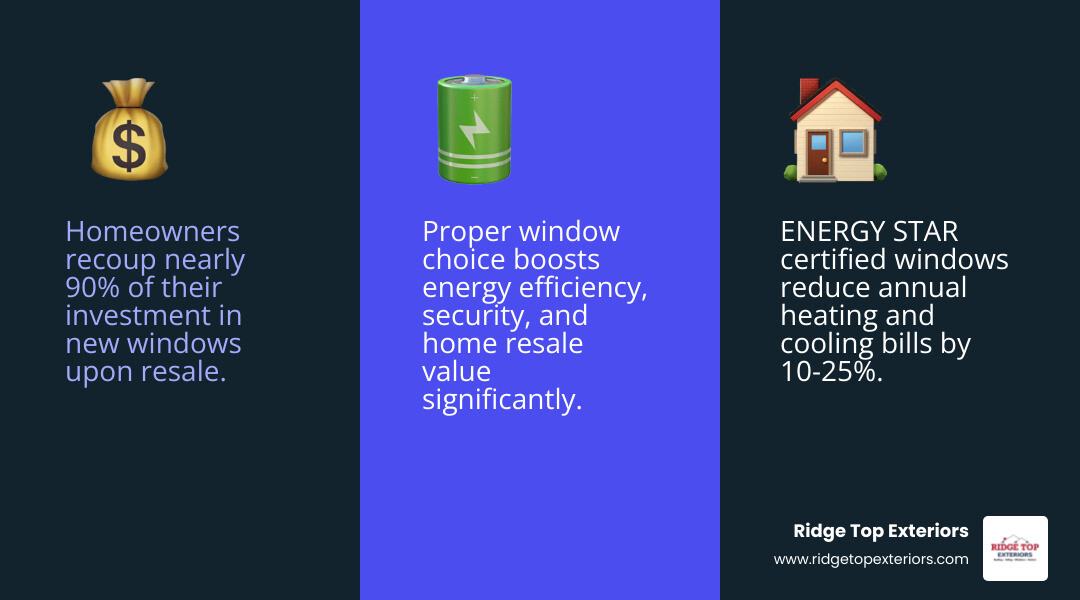
Choosing the wrong window style is an easy and expensive mistake. The right window does more than look good — it controls airflow, cuts energy costs, keeps your home secure, and can even boost your resale value. In fact, homeowners can expect to recoup nearly 90% of their investment in new windows, and high-performance windows certified under the ENERGY STAR® program can reduce annual heating and cooling bills by 10–25%.
But with so many styles, materials, and glazing options available, the decision can feel overwhelming fast.
This guide breaks it all down in plain language — from the difference between single-hung and double-hung windows, to how bay windows compare to bow windows, to which frame material holds up best in Wisconsin winters or Florida hurricane seasons.
I'm Carter Joyce, Director of Marketing at Ridge Top Exteriors, where I've helped thousands of homeowners navigate exterior renovation decisions — including how to compare window types to find the right fit for their home and climate. My goal here is to cut through the noise so you can make a confident, informed choice.
Important Compare window types terms:
- Best window contractor
- Compare siding options
Understanding Window Design Basics
Before we dive into specific styles, we need to speak the same language. When you compare window types, you'll hear contractors use terms like "sash," "glazing," and "operable." Understanding these basics helps you see beyond the price tag to the actual performance of the unit.

Operable vs. Fixed
All windows fall into one of two primary categories:
- Operable Windows: These are windows that open to allow for ventilation. They give us control over our indoor environment and can provide natural cooling, though they generally cost about 20% more than fixed windows due to the moving parts and hardware required.
- Fixed Windows: These do not open. Because they are sealed directly to the frame, they are incredibly airtight and offer the best protection against drafts.
Panes, Sashes, and Glazing
- Panes: This is simply the sheet of glass itself. Modern windows usually feature at least two panes (double-pane) or three (triple-pane) to create insulating air pockets.
- Sash: The window sash is the movable part of the window that holds the glass panes in place. It consists of horizontal rails and vertical stiles.
- Glazing: This term refers to the glass assembly within the frame. Glazing types can include specialized coatings like Low-E (low emissivity) to reflect heat or tinted glass for privacy.
Frame Materials and Installation
The frame is the "skeleton" of your window. Whether you choose vinyl, wood, or fiberglass, the material impacts durability and maintenance. However, even the most expensive window will fail if it isn't installed correctly. At Ridge Top Exteriors, we emphasize that quality manufacturing and professional installation are the keys to ensuring your windows last at least 25 years. You can dive deeper into these technical details at our Learning Center Windows page.
Compare Window Types: Operable Styles for Every Room
When we look at our homes, we often need windows that do more than just let in light; we need them to breathe. Operable windows are essential for safety (egress) and comfort.
Single-Hung vs. Double-Hung Windows
This is the most common comparison homeowners make. Both styles look very similar from the curb, but their functionality differs significantly.
- Single-Hung Windows: In this design, the top sash is fixed in place, and only the lower sash can be opened. Because the top is sealed, they are often thought to be slightly less susceptible to air infiltration. They also typically cost 10% to 20% less than double-hung options. You can check out more on Single Hung Window Cost for your specific area.
- Double-Hung Windows: Both the upper and lower sashes are operable. This allows for superior ventilation—you can open the bottom to let cool air in and the top to let warm air out. Most modern Double Hung Window designs also feature "tilt-in" sashes, which means we can clean the exterior glass from the safety of our living room. This is a huge benefit for homes in Madison or Milwaukee with multiple stories. For a deep dive, see our Madison Double Hung Windows Ultimate Guide.
How to Compare Window Types for Ventilation
If airflow is your top priority, you should look toward casement and awning windows.
- Casement Windows: These are hinged on one side and swing outward like a door, usually operated by a hand crank. Because the entire sash opens, they provide the maximum possible ventilation. When closed, the sash presses firmly against the frame, creating a very tight seal that is excellent for energy efficiency.
- Awning Windows: Hinged at the top, these swing outward from the bottom. They are the "rain-friendly" choice; because they open at an angle, they act like a little roof, allowing you to keep the window open for fresh air even during a light summer shower without soaking your floors.
- Sliding Windows: These operate like a sliding glass door, moving horizontally on a track. They are perfect for areas where you don't have the leverage to push a window up (like over a kitchen sink) or where an outward-swinging window would block a walkway or patio.
Fixed and Specialty Windows: Aesthetics and Purpose
Sometimes, the goal isn't airflow—it's the view. Fixed windows allow for larger expanses of glass because they don't need the heavy reinforcement required for moving parts.
Picture and Architectural Shape Windows
A picture window is designed to "frame" the outdoors. Since they don't open, they consist of a single, unobstructed pane of glass. This makes them the most energy-efficient operable style because there is zero risk of air leaking through seals.
We often use these in stairways or high-ceiling living rooms in Appleton, WI. For added security, these large panes are often made of tempered or laminated glass, which helps improve home security by being much harder to break than standard glass.
Projection Windows: Bay, Bow, and Garden
These windows literally "project" outward from your home's exterior wall, adding interior square footage and dramatic flair.
- Bay Windows: Typically consist of three panels—a large center picture window flanked by two smaller windows (usually double-hung or casement) at an angle. They create a "boxy" look and are perfect for creating a cozy window seat.
- Bow Windows: These use four to six panels of equal size to create a graceful, curved appearance. They allow light to enter from multiple angles throughout the day.
- Garden Windows: Think of these as a mini-greenhouse for your kitchen. They extend outward with glass on all sides and usually include a shelf for herbs or houseplants. They often have small side vents that can be opened for a breeze while you're cooking.
Performance Factors: Materials, Glazing, and Energy Ratings
When you compare window types, the "invisible" features often matter more than the style. The frame material and the glass technology determine how much you'll spend on utilities.
Compare Window Types by Cost and Maintenance
Here is how the most popular materials stack up for our homeowners in the Midwest and Florida:
| Material | Maintenance | Insulation | Best For |
|---|---|---|---|
| Vinyl | Very Low | Excellent | All-around value, moisture resistance |
| Wood | High | Excellent | Historic homes, traditional aesthetics |
| Fiberglass | Low | Superior | Large panes, extreme temperature swings |
- Vinyl Frames: Our most popular choice in Milwaukee. High-quality vinyl won't rot, peel, or require painting. Modern vinyl frames are often hollow but can be filled with foam insulation to boost performance.
- Wood Windows: The classic choice for a reason. Wood offers a timeless look and natural insulation. However, it requires regular staining or painting to prevent rot, especially in humid climates.
- Fiberglass: Incredibly strong and expands/contracts at the same rate as the glass itself, which helps maintain seals for decades.
Pricing Note: Exact pricing for any window project requires a free, on-site quote, as costs vary based on size, material tier, and local labor conditions. However, for a general idea:
- Midwest Market: Vinyl pocket replacements typically range from $950–$1,300 per window, while wood full-frame replacements can range from $2,300–$2,600.
- Florida Market: Vinyl full-frame replacements typically range from $1,500–$2,000, with impact-rated options ranging from $1,800–$2,400.
For more details on investment, see New Windows Cost 2026 and our guide to Affordable Windows Milwaukee.
Glazing and Energy Efficiency Ratings
The glass is where the energy-saving magic happens.
- Double vs. Triple Pane: While double-pane is the standard, Triple Pane Windows offer an extra layer of glass and a second pocket of insulating gas (like Argon). This is the "gold standard" for noise reduction and extreme cold.
- Low-E Coatings: This microscopic metallic layer reflects heat. In the winter, it keeps your furnace's heat inside; in the summer, it reflects the sun's rays away.
- Energy Star Standards: Always look for the Energy Star label. It ensures the window meets strict regional criteria for U-factor (how well it insulates) and SHGC (Solar Heat Gain Coefficient). Choosing the right rating can significantly lower your utility bills.
Choosing the Right Windows for Your Climate and Home Style
At Ridge Top Exteriors, we operate in very different climates, and what works for a cottage in Verona, WI, might not be the best choice for a beach house in Clearwater, FL.
Midwest Solutions: Insulation and Durability
In places like Madison, Milwaukee, and Appleton, our windows have to survive sub-zero temperatures and heavy snow. We recommend windows with low U-factors to prevent heat loss.
- Draft Reduction: We often suggest double-hung or casement windows with high-performance weather stripping to block those biting Wisconsin winds.
- Style Matching: For traditional Wisconsin architecture, Andersen Windows or Pella Windows offer styles that respect the home's history while providing modern efficiency. Check out our Verona WI Guide for more local tips.
Florida Solutions: Impact and UV Protection
In Florida, the "enemies" are hurricanes and the intense sun.
- Hurricane Resistance: In Clearwater and Tampa, we specialize in Clearwater Hurricane Windows. These impact-rated vinyl windows use laminated glass that stays in the frame even if it's struck by flying debris, protecting your home from pressure changes that can blow off a roof.
- UV Protection: The Florida sun can fade your furniture and flooring in a single season. High-performance Low-E glazing is a must to block UV rays while letting in the light. Learn more about regional needs in Pinellas County.
Frequently Asked Questions about Window Replacement
How much more do operable windows cost than fixed windows?
On average, you can expect an operable window to cost about 20% more than a fixed (picture) window of the same size. This is due to the added cost of the hardware (hinges, cranks, locks) and the more complex frame construction required to allow movement while maintaining a seal.
What is the average lifespan of a high-quality replacement window?
High-quality windows, when professionally installed, are designed to work well for at least 25 years. Vinyl and fiberglass windows often last even longer because they are immune to rot. Most reputable brands offer a 10-to-20-year warranty on the glass and hardware, while installation warranties from Ridge Top Exteriors provide additional peace of mind.
Why is professional installation better than DIY?
Attempting a DIY window installation is highly discouraged due to the risk of serious injury and the high probability of voiding your product warranties. Window installation is a precision job; if a window is even slightly out of level, the sashes won't move correctly and the weather stripping won't seal, leading to drafts and structural water damage. Furthermore, DIY projects often fail to meet critical safety standards, such as lead-safe practices in older homes and building code compliance for egress or impact ratings.
Conclusion
Replacement windows are one of the most significant upgrades you can make to your home. They are a "triple threat" improvement: they lower your energy bills, make your home more comfortable, and provide a massive boost to your curb appeal.
At Ridge Top Exteriors, we don't just "sell windows." We provide a full-service experience—from helping you compare window types to providing factory-certified installation that stands the test of time. Whether you've noticed signs it's time to replace your windows (like condensation between panes or sticking sashes) or you just want to modernize your home's look, we are here to help.
Ready to see how new windows can transform your home? Get an Instant Windows Quote today or contact us for a free, no-obligation consultation. With over 20 years of experience and 45,000 satisfied homeowners, we’re the trusted choice from the Midwest to the Gulf Coast.