If the roof isn't leaking after a storm, most homeowners assume everything is fine. That assumption is one of the most expensive mistakes you can make in the Midwest. Hail and wind damage rarely cause immediate leaks. What they do is shorten your roof's remaining life by years, weaken it against the next storm, and set up a failure that shows up two or three seasons later.
Wisconsin and northern Illinois see some of the most intense hail and severe storm activity in the country. Knowing how that affects your roof, and what to look for after it happens, is the difference between managing your roof on your schedule and reacting to it on the storm's.
What the Midwest Storm Season Actually Looks Like for Your Roof
Peak hail season in Wisconsin and Illinois runs from April through September. The most intense events happen in late spring and early summer, when warm Gulf air collides with cold fronts pushing down from Canada. A significant hail event can drop stones from pea-sized to golf-ball-sized or larger across a wide area in under 15 minutes.
What makes the Midwest particularly hard on roofs isn't any single storm. It's the volume of storms over time. A typical roof in southern Wisconsin or northern Illinois goes through multiple significant hail or wind events every year. By the time a 20-year-old roof is being evaluated, it may have absorbed 15 to 20 or more serious weather events. That history matters as much as what's visible on the surface today.
The National Roofing Contractors Association recommends that homeowners in high-storm markets schedule professional inspections after significant weather events, not only when leaks appear. The damage that shortens a roof's life most is often the damage you can't see from the ground.
How Hail Damages Asphalt Shingles at a Structural Level
When a hailstone hits an asphalt shingle, it doesn't always crack the surface visibly. What it does is knock granules loose at the point of impact and fracture the fiberglass mat beneath the asphalt layer. That mat fracture is what actually shortens the shingle's life.
The granule displacement creates a bare spot where the asphalt is now exposed to UV. Without granule protection, that section degrades faster than the rest of the shingle. Over the following seasons, the exposed area becomes brittle, starts to crack, and eventually lets water reach the substrate.
The mat fracture is harder to spot. The Insurance Institute for Business and Home Safety (IBHS) notes that real hail damage appears in a random pattern and often requires a trained inspector to find, because the bruising from mat fractures can be subtle at impact but becomes structurally significant as the shingle ages.
This is why a shingle that looks mildly scuffed after a hail event might fail catastrophically two or three years later during a heavy rain. The surface appearance and the structural condition aren't the same thing.
How Wind Damage Works Differently Than Hail
Wind damage works on a different mechanism, but can be just as consequential. Severe thunderstorm winds in Wisconsin and Illinois regularly exceed 60 miles per hour. Straight-line wind events from derechos can push well above 80.
At those speeds, wind doesn't just blow shingles off. It lifts them at the edges and breaks the manufacturer's seal strip that holds each course down to the one below it. A shingle that looks intact from the ground may have a broken seal that leaves it vulnerable to uplift in the next wind event. Once that seal fails, the shingle can lift, crease at the nail line, and let wind-driven rain work under the course.
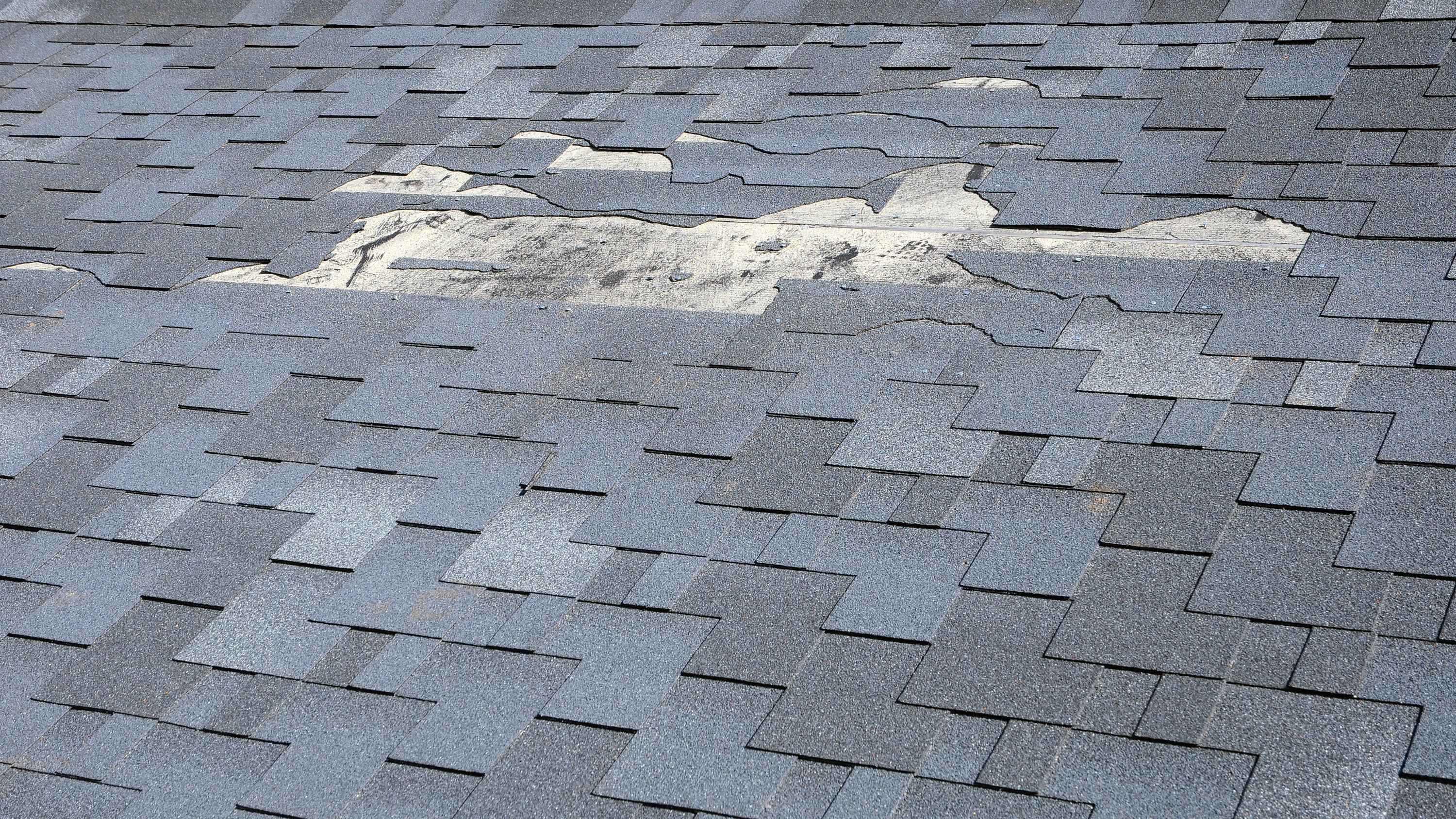
Missing shingles are the visible sign of wind damage. Broken seals and creased shingles are the less visible signs that a professional can find on the roof surface. Both need to be assessed before the next storm season, not after it.
The Cumulative Damage Problem: Why One Storm Is Rarely the Whole Story
The most important thing to understand about Midwest storm damage is cumulative impact. A single hail event that doesn't trigger an insurance claim may still reduce the remaining lifespan of the roof by two to five years. Three or four such events over a decade can put a roof in the physical condition of one that's five to ten years older.
Research on sub-severe hail impacts shows that repeated exposure to smaller hailstones creates measurable damage to shingle granule coverage and mat integrity over time. For homes in Wisconsin and Illinois, this pattern isn't an edge case. It's a routine part of the residential roofing life cycle. When you search for roofing companies near me, look for contractors who ask about your roof's storm history, not just its age.
Storm history matters as much as age. A 15-year-old roof that's gone through a moderate storm season every year may be in significantly worse shape than a 15-year-old roof in a low-storm market.
What to Look for From the Ground After a Storm
You don't need to get on the roof to gather useful information after a storm. A ground-level check within a day or two gives you enough to know whether to call for a professional inspection.
- Check collateral surfaces first. Hail hits your roof and everything else outside at the same time. Look for dents on your AC unit, marks on aluminum fascia and downspouts, dings on your mailbox. Hail damage on these surfaces is strong evidence the roof took a hit, even if you can't see it from below.
- Look for granules in the gutters. After a storm, check your gutters and downspout splash zones for a significant deposit of dark, gritty material. A heavy deposit following a storm points to impact displacement on the shingle face.
- Read the roof surface from a distance. From the driveway or street, look for dark circular patterns or discoloration across the shingle surface. These splatter marks show where hailstones made contact. Look also for any shingles that appear missing, lifted, or sitting at a different angle than those around them.
- Check ridge caps. Ridge caps are among the most hail-vulnerable parts of a roof. From the ground, look for caps that appear damaged, displaced, or visibly marked. They sit at the highest point and take direct, perpendicular impacts from falling hail.
If any of these signs are present, call for a professional inspection. Don't get on the roof yourself. A trained inspector can evaluate mat fractures, seal strip integrity, and deck condition that aren't visible from below.
When Storm Damage Means Repair vs. Roof Replacement
Not every storm-damaged roof needs full replacement. In some cases, hail damage roof repair covers the affected area at reasonable cost. The decision depends on how extensive the damage is, how old the roof is, and whether repair makes economic sense given the remaining lifespan.
Repair is typically appropriate when damage is limited to a specific section, the surrounding material is in good condition, the roof is relatively young, and the deck and flashing are sound.
Roof replacement is typically the right call when hail damage covers multiple slopes, the roof is already in the second half of its expected lifespan, a professional inspection finds mat fractures across a significant percentage of shingles, or the cumulative condition makes repair uneconomical compared to a full replacement.
One note on insurance: if you're filing a claim, check whether your policy covers actual cash value (ACV) or replacement cost value (RCV). An ACV policy pays the depreciated value of your roof. An RCV policy pays the full replacement cost. That difference can mean tens of thousands of dollars. Confirm with your insurer before you need it.
Class 4 Impact-Resistant Shingles: What They Are and Who Should Consider Them
When a roof replacement is necessary after storm damage, many Wisconsin and Illinois homeowners upgrade to Class 4 impact-resistant shingles. GAF and other major manufacturers produce Class 4 products tested under UL 2218 protocols, the highest impact resistance rating for asphalt shingles.
Class 4 shingles use modified asphalt with specialized polymers, heavier fiberglass mat construction, and stronger seal strips. In testing, they're struck with a two-inch steel ball dropped from 20 feet and must show no cracking to earn the rating.
For Midwest homeowners who have filed multiple storm claims, the upgrade makes financial sense two ways. First, these shingles withstand hail events that would damage standard products, reducing the chance of needing another replacement in five to eight years. Second, many insurance carriers offer premium discounts of five to thirty percent for Class 4 roofs, which can offset a meaningful portion of the upgrade cost over time.
Class 4 shingles do cost more, typically fifteen to twenty-five percent above standard architectural products. Whether that premium pays back depends on your storm history, your insurance structure, and how long you plan to stay in the home.
What a Post-Storm Inspection Should Cover
A professional post-storm inspection is a documented assessment, not a sales call. Here is what it should include.
- A documented sample check of shingle surfaces across all slopes for granule loss and mat fracture bruising
- An evaluation of ridge cap condition, which is among the most hail-vulnerable parts of the system
- An inspection of all metal surfaces: flashing, vents, drip edge, and gutters for hail impact marks that confirm roof damage
- A check of seal strip integrity on a representative sample of shingles
- A review of deck condition where visible through the attic
- A written summary with photographs documenting the evidence
If you're filing an insurance claim, that written documentation with photos is your best support for a fair settlement. An adjuster's estimate and a contractor's assessment don't always match. Having your own documented inspection before the adjuster arrives puts you in a stronger position.
How Ridge Top Approaches Storm Damage
Ridge Top Exteriors provides free post-storm roof inspections across Wisconsin and northern Illinois. Our residential roofing teams understand the hail and wind patterns in each of our markets, the insurance documentation process, and the difference between damage that warrants a claim and damage that warrants monitoring. We don't push replacements homeowners don't need, and we don't dismiss damage that deserves a closer look.
If you've been through a significant storm, or if your roof has gone through multiple Midwest storm seasons without a professional assessment, a Ridge Top inspection gives you the honest picture. Our roofing service page covers everything we install and inspect, and our process page explains how we approach a post-storm evaluation.
If your inspection confirms a replacement is needed, our instant quote tool gives you a real starting estimate in minutes. Read verified reviews from homeowners across our service area to see how Ridge Top handles storm damage from first inspection through completed installation.
The next Midwest storm season is coming. The best time to know what condition your roof is in is before it arrives, not after.