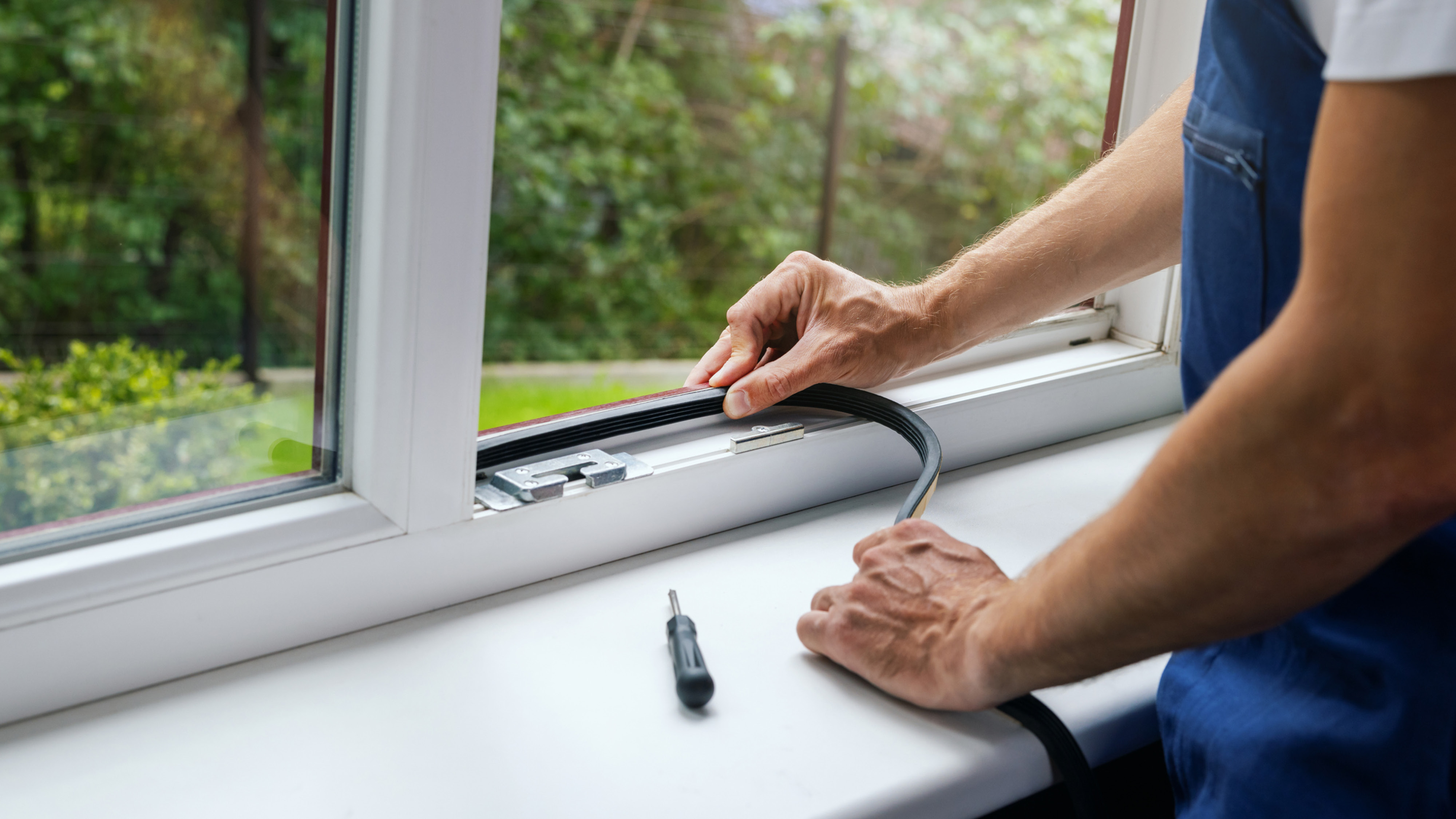
If you've gotten more than one window estimate, you've probably noticed the quotes can vary by thousands of dollars for what looks like the same project. A lot of that variance comes down to one thing: frame material. Vinyl, fiberglass, and wood don't just look different. They perform differently, last different lengths of time, need different maintenance, and cost different amounts both at installation and over the life of the window.
Understanding what you're actually comparing when you receive a window contractor quote makes for a much smarter decision. The U.S. Department of Energy's guide to window energy performance ratings shows how to read the NFRC label on any window, which is the starting point for comparing products across different materials on equal terms.
Why Frame Material Is the Biggest Driver of Window Cost
The glass package matters. The installation quality matters. But frame material is the single biggest variable in what a window contractor quotes you for a residential window replacement. It determines the raw material cost, the manufacturing complexity, and the performance specs that follow from both.
The same window size in vinyl, fiberglass, and wood can differ by hundreds of dollars per unit. Across a full house replacement of 15 to 20 windows, that gap becomes significant. What doesn't always get communicated clearly is that these materials aren't equivalent products at different prices. They have genuinely different performance profiles, and the right choice depends on your climate, budget, and how long you're staying.
Vinyl: The Entry Point and What It Delivers
Vinyl is the most common window frame material in the country and the most affordable option for most homeowners. A quality vinyl window replacement near me typically runs between $800 and $1,600 per window installed, depending on size, style, and glass package.
Vinyl frames are made from PVC with hollow chambers that provide good thermal resistance. They don't rot, don't need painting, and require almost no maintenance beyond occasional cleaning. For most homeowners replacing drafty older windows, vinyl delivers a significant energy upgrade at a manageable cost.
The limitations of vinyl are worth knowing. Vinyl expands and contracts more than fiberglass or wood as temperatures swing. Over time, that thermal cycling stresses the seals at the frame corners and at the glass edge. Premium vinyl with reinforced corners and better spacer systems holds up significantly better than entry-level vinyl. Specifying the product line matters when comparing quotes.
In Wisconsin's climate, the expansion and contraction stress on vinyl seals is more pronounced than in moderate climates. A quality vinyl product can perform well for 20 to 30 years, but the specific product specification matters more in demanding climates than it does in mild ones.
Fiberglass: The Performance Upgrade and When It Pays Off
Fiberglass window frames cost more than vinyl, typically $1,100 to $2,200 per window installed. The premium reflects real performance advantages that add up over the window's life.
The most important difference in a Midwest context is dimensional stability. Fiberglass expands and contracts at nearly the same rate as glass. That means the seal between the frame and the glass unit stays tight through decades of freeze-thaw cycling. Vinyl's greater thermal movement is what eventually stresses those seals over time. Fiberglass simply doesn't have that problem to the same degree.
According to Pella's window frame cost comparison, fiberglass windows typically last 30 to 50 years under normal conditions, compared to 20 to 40 for quality vinyl. Over a 30-year period, a homeowner who pays a 25 percent premium for fiberglass may actually pay less per year of performance than one who replaces vinyl after 20 years.
Fiberglass frames are also paintable, which vinyl generally is not. If your color preferences change in 10 years, fiberglass gives you that option. The energy performance difference between well-specified vinyl and fiberglass is smaller than most homeowners expect. The glass package has more impact on U-factor than the frame material. What fiberglass gives you is primarily structural longevity and dimensional stability, not dramatically different day-one energy ratings.
Wood: The Premium Option and Who It's Actually For
Wood window frames sit at the highest price tier, with installed costs ranging from $1,100 to well over $2,000 per window for quality wood or clad-wood products. The premium buys something real: architectural character, deep customization, and natural insulation properties that synthetic materials can't fully replicate.
Wood is a natural insulator. A properly maintained wood window can hit excellent U-factor performance, and the material supports the detailed profiles that traditional Midwest architecture calls for in ways vinyl can't match.
The critical word is maintained. Wood needs regular attention: repainting or restaining every few years, sealing, and inspecting for early signs of rot or moisture. In Wisconsin and Illinois, freeze-thaw cycling puts real stress on wood. A wood window that goes unmaintained in this climate will fail much faster than its rated lifespan.
Clad-wood products, where the exterior face is covered with fiberglass or aluminum while the interior stays natural wood, reduce the maintenance burden considerably by removing the outdoor wood exposure. This is the most practical way to get the interior character of wood without the full exterior upkeep.
Wood windows make the most sense for homeowners with specific architectural requirements, historic homes, and buyers who genuinely value the interior aesthetic and are willing to commit to the maintenance it requires.
How Midwest and Florida Climates Change the Calculation
Wisconsin and northern Illinois put specific stresses on window frames. Freeze-thaw cycling is the main one. Water gets into micro-gaps, freezes, expands, and over time compromises seals and dimensional integrity. Fiberglass's superior stability under temperature extremes matters more in this climate than in a moderate one.
Heavy snow loads also put indirect pressure on window frames through headers and rough openings. A dimensionally stable frame that doesn't flex under structural loading keeps its seal integrity better over time. Another area where fiberglass has a practical edge in the Midwest.
Florida's stresses are different. Sustained UV exposure degrades vinyl faster than in Northern markets. Salt air in coastal Clearwater and Tampa affects certain hardware and spacer components. High humidity and tropical storm winds create a different set of problems than freeze-thaw. In Florida, fiberglass's resistance to UV degradation and heat load stability matter most. For most Florida window installation projects, a quality vinyl product with the right solar heat control glass package is the practical choice, with fiberglass most justified for high-performance or coastal applications.
What Total Cost of Ownership Actually Looks Like
The window that costs less on day one isn't always the one that costs less over 25 years. Here is a simplified way to think about it.
A vinyl window installed at $1,200 that lasts 22 years costs roughly $55 per year. A fiberglass window installed at $1,600 that lasts 35 years costs roughly $46 per year. The fiberglass costs more upfront but less per year of performance. Whether that math works for you depends on how long you plan to stay in the home.
Maintenance costs factor in too. A wood window that needs $200 in paint and sealing every five years adds $40 per year to its ownership cost, typically making it the most expensive option over a full lifespan even when installation is competitive.
These are simplified numbers, but the principle is real. The right material depends on how you weigh upfront cost against long-term performance, and that weight shifts depending on how long you'll own the home.
What to Look for When a Window Contractor Quotes You
A quote that says 'vinyl windows' or 'replacement windows' without specifying the manufacturer, product line, and key performance specs is not a complete quote. You can't compare two bids that don't specify the same information.
Before accepting any window contractor quotes, confirm the following for each bid:
- Frame material and manufacturer. Vinyl, fiberglass, or wood? What brand and product line?
- NFRC performance specs. The NFRC label shows U-factor, SHGC, and visible transmittance. Ask for these numbers for the specific product being quoted.
- ENERGY STAR certification. Is the product certified for the Northern zone (Wisconsin/Illinois) or the Southern zone (Florida)?
- Glass package. Double or triple pane? Low-E coating? Argon or krypton gas fill?
- Warranty terms. What does the frame warranty cover and for how long? What about the glass unit?
A window contractor who provides this detail in their quote can be held accountable to what they sold you. One who resists specifying is leaving room to substitute.
How Ridge Top Approaches the Material Conversation
Ridge Top Exteriors installs vinyl, fiberglass, and wood window products across Wisconsin, northern Illinois, and Tampa/Clearwater, Florida. Every estimate we provide specifies the frame material, manufacturer, product line, U-factor, SHGC, and ENERGY STAR certification status. We walk every homeowner through the cost and performance difference between materials for their specific home before an estimate is presented, because the right answer depends on their climate, budget, and ownership timeline.
Every residential window replacement we complete follows manufacturer installation specs for the material being installed. Our windows service page covers the brands and materials we install across our markets.
Use our instant quote tool to get a real starting estimate in minutes. Or schedule a free consultation to walk through the material options for your home. Read verified reviews from homeowners to see how Ridge Top handles window installation in practice.
Learn more about how our process works from first contact through completed window installation.
The frame material you choose today determines how your windows perform for the next 20 to 35 years. Understanding the difference before you sign anything is well worth the time.