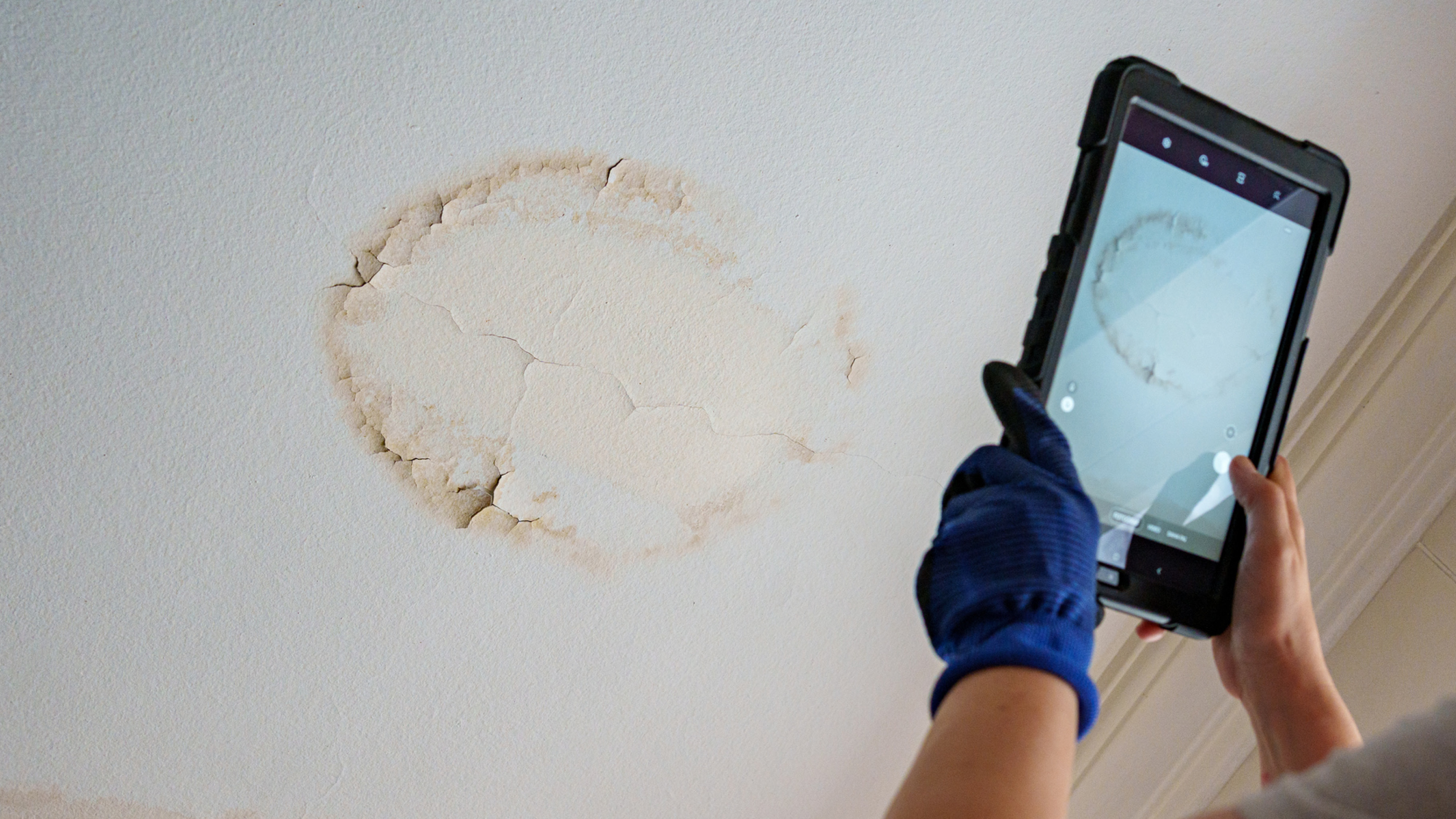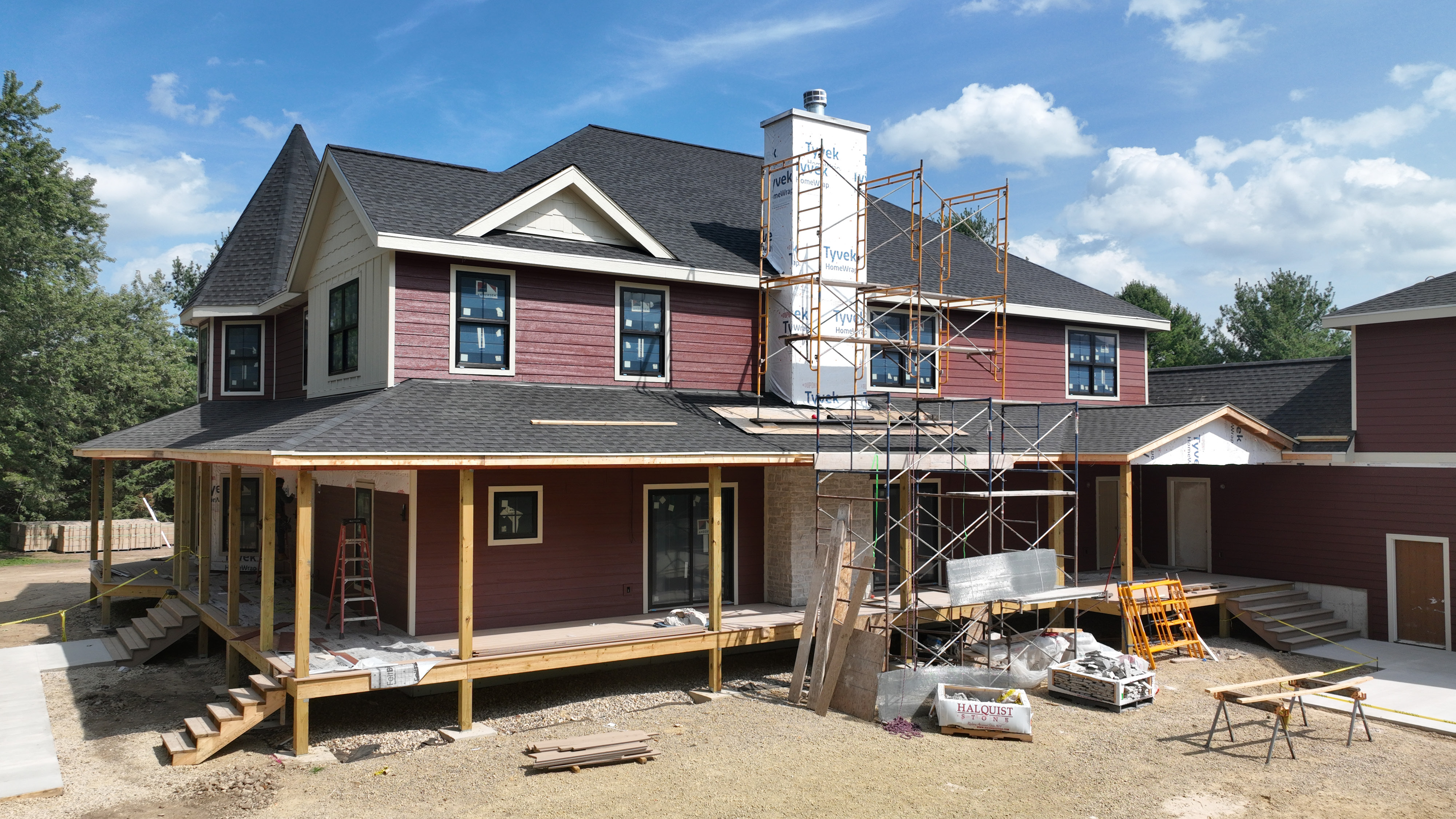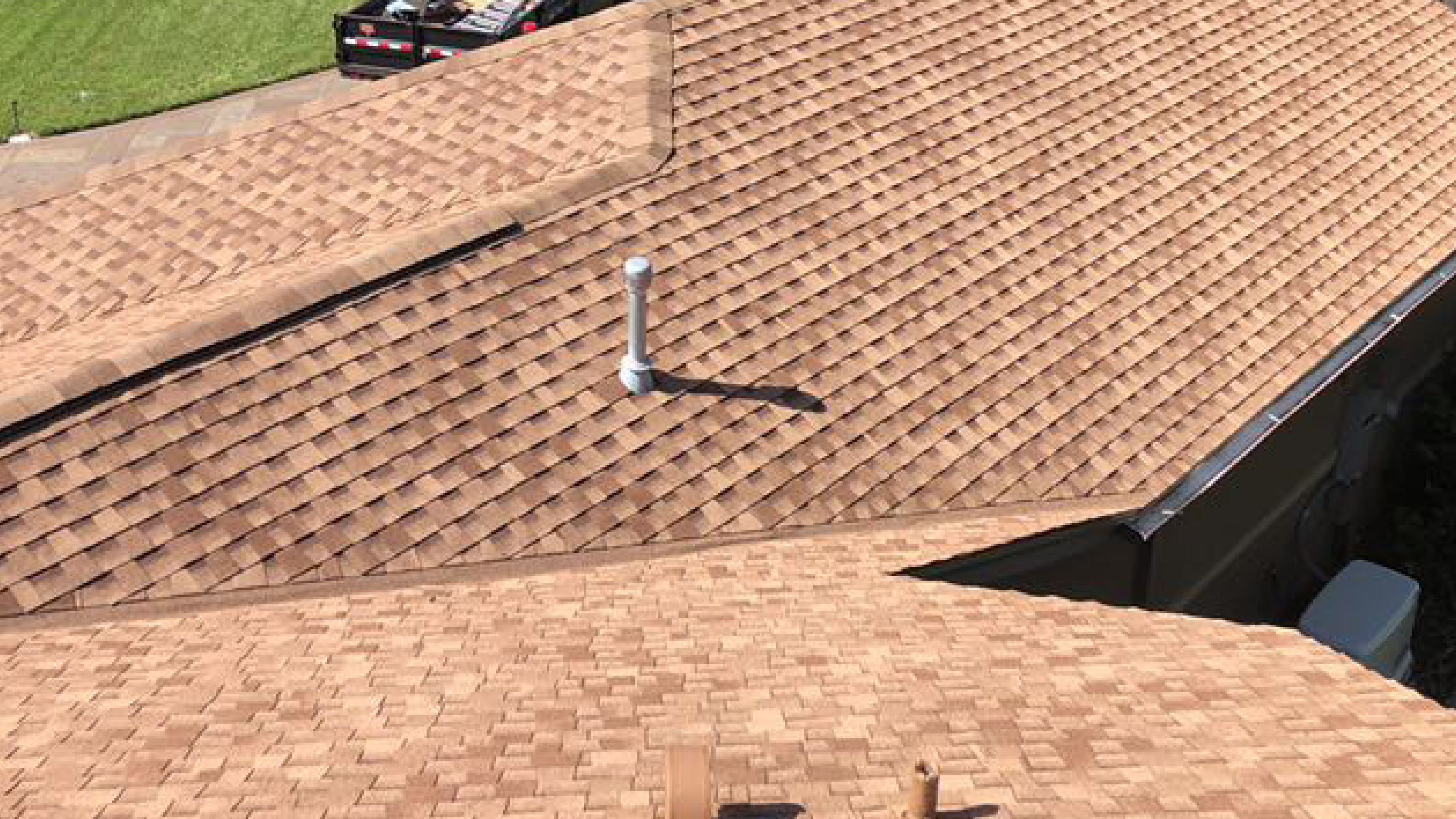
If you are chasing a ceiling stain, the leak almost certainly did not begin where you see the water. It very likely began in one of your roof valleys, the sloped channels where two roof planes meet. Valleys carry more water than any other part of a roof, which is why they fail first, and why the way they were built matters more than the brand of shingle above them.
Here is the good news: valley problems follow predictable patterns. Once you understand how water moves through a valley and where installers cut corners, you can read your own roof with real confidence and judge any estimate you are handed.
What Roof Valleys Are and Why They Carry the Most Water
A roof valley is the V-shaped channel formed where two roof slopes meet and drain into each other. Every drop of rain landing on both of those slopes funnels into that single narrow line. On a home with dormers or an L-shaped footprint, one valley can move the runoff of hundreds of square feet of roof.
That concentration is the whole story. Open field shingles shed light, evenly spread water. Roof valleys handle high-velocity, high-volume flow, plus the debris and ice that flow carries with it.
A valley is also a transition, and transitions need layered protection underneath the shingles. The steep-slope guidance published by the National Roofing Contractors Association treats valleys as their own detail for exactly this reason. When that layering is thin, missing, or punctured, the valley stops being a channel and becomes an entry point.
Why the Leak You See Isn't Where the Leak Began
Water rarely enters your home directly below the spot where it entered the roof. Once it gets past the shingles, it runs along the underside of the decking, follows a rafter, tracks down a truss, and drops wherever gravity finally wins. That can be ten or fifteen feet from the actual opening.
This is why homeowners so often report a stain near an interior wall, a light fixture, or a bedroom corner with no roof feature above it. Those spots are simply where the water ran out of places to travel. Water intrusion testing by the Insurance Institute for Business & Home Safety has shown how far wind-driven rain can move once it slips past the outer layer.
So the stain tells you that water got in. It does not tell you where. Tracing a leak means working uphill from the stain to the nearest transition, and valleys are usually where that trail ends.
The Five Reasons Roof Valleys Leak
Nearly every valley leak traces back to one of five installation or maintenance issues. None of them involve defective shingles.
1. Nails Driven Through the Water Channel
This is the single most common cause of a roof valley leak. Fasteners belong outside the center of the valley, where water never travels at volume. Installation instructions from manufacturers like GAF, Owens Corning, and CertainTeed all specify a keep-out zone on either side of the valley centerline. When a nail lands inside it, you have created a hole at the exact point of the fastest, heaviest flow.
It may not leak the first year. It leaks once the sealing gasket around that nail hardens and the shingle above it lifts slightly.
2. Missing or Undersized Ice and Water Shield
Ice and water shield is a self-sealing membrane that bonds directly to the decking and seals around nails driven through it. Roof valleys should get a full-width run of it before any shingles go down, and Chapter 9 of the International Residential Code sets minimum requirements for valley lining and underlayment. Skipping it, or using a narrow strip that does not extend well past the shingle cut line, removes the only backup layer the valley has.
Standard felt underlayment is not a substitute. It sheds water, but it does not seal.
3. Incorrect Underlayment Overlap
Layered roofing only works when every upper layer laps over the one below it. In valleys, the overlap direction gets reversed more often than you would expect, especially where planes of different pitch meet. A reverse lap turns each seam into a small funnel pointed at your decking.
4. Debris Damming
Leaves, pine needles, and shingle granules collect in valleys because that is where water carries them. A packed dam holds standing water against the shingles and forces it sideways under the courses. Valleys under tree cover need clearing twice a year, which is one of the reasons we built RoofCare+ around scheduled seasonal checkups instead of waiting for a call.
5. Ice Dam Backup
Valleys stay colder and hold snow longer than open roof planes. Freeze and thaw cycling builds ice in the channel, and meltwater backs up behind it and travels uphill under the shingles. Only a properly sized sealing membrane stops that water from reaching the wood.
Warning Signs Your Roof Valleys Are Already Failing
Valleys almost always give you visible evidence before water shows up on a ceiling. Knowing what to look for buys you the option of a small, targeted roof repair instead of a large one.
What to Look for From the Ground
Stand back with binoculars rather than climbing up. Look for a scoured line down the valley where granules have washed away, rust or lifting along the valley metal, exposed nail heads, shingles cupping or curling along the cut line, and debris piled at the bottom of the valley where it meets the gutter.
What to Look for in the Attic
Follow the valley line on the underside of the decking with a flashlight. Dark staining, rusted nail tips, soft or delaminated plywood, and matted insulation all point to water that has been entering for a while.
Photograph what you find and note the date. If storm damage turns out to be part of the story, that record matters, and our guide to what adjusters actually look for in a roof leak claim explains how documentation shapes the outcome.
Does Valley Type Affect Leak Risk?
Yes, but less than how well the valley was detailed. The Asphalt Roofing Manufacturers Association recognizes all three common valley styles as acceptable construction, and each one can perform for decades when the membrane and fasteners are handled correctly.
Open Valleys
Open valleys leave roof valley flashing exposed in the channel, so water runs on metal instead of shingle edges. They shed debris and ice well and are the most forgiving in heavy-runoff conditions, provided the metal is wide enough and fasteners stay clear of the flow.
Closed-Cut Valleys
Closed-cut valleys run shingles from one plane through the valley, then trim the shingles from the other plane in a clean line. They look seamless and perform well when a sealing membrane sits underneath and the cut line is kept back from the center. The risk is that the cut edge becomes the water line.
Woven Valleys
Woven valleys alternate shingles from both planes through the channel. They are fast to install, but they force fasteners close to the water line and resist lying flat, especially with thicker architectural shingles. Several manufacturers no longer permit weaving with their heavier laminated products, and woven valleys are the style we see connected to mid-life leaks most often.
What Correct Valley Construction Actually Includes
Correct valley construction is a short, specific list, and it should appear in writing on your estimate. If a proposal names a shingle brand and a square footage but says nothing about valleys, it is describing the visible half of the job.
- A full-width run of ice and water shield centered in every valley, applied directly to clean decking
- Correct lap direction so every layer drains onto the one below it
- Metal valley flashing sized for the roof area draining into it, where the valley style calls for it
- Fasteners kept well outside the water channel, with no nails through the center of the valley
- Shingle cut lines held back from the center so the channel stays clear
- Clean transitions where valleys meet walls, chimneys, dormers, and gutters
Every item on that list comes straight from published manufacturer instructions and code minimums, not from preference. It is the part of a roof nobody photographs and nobody sees again, which is exactly why it decides whether the roof reaches its rated life. Our roofing services spell out valley detailing on the proposal itself, because proper valley construction is not an upgrade, it is the baseline of honest work.
Repair or Replace: How to Tell the Difference
Plenty of valley leaks are contained repairs, and you deserve to hear that plainly. If the shingles across the rest of the roof are sound, the decking is solid, and the problem is isolated to one valley, rebuilding that valley is the right answer. A single bad valley is not a reason to replace a roof.
The picture changes when the same shortcut shows up everywhere. Nails in the channel of several valleys, no sealing membrane anywhere, reverse laps at multiple transitions, and soft decking in more than one spot all point to a system-wide detailing problem, and that is when full roof replacement becomes the honest recommendation rather than the upsell.
That distinction is also why valley leaks tend to surface five to ten years after installation. The shingles still look nearly new, so most homeowners no longer connect the stain to the roofing job that caused it. If your roof is in that window, check what your workmanship coverage actually says before paying for anything.
Questions to Ask Before You Approve a Roofing Estimate
Six questions will tell you more about a contractor than any brochure. Ask them and listen for specifics, not reassurance.
- How will you build my valleys, and why that method for this roof?
- Will the ice and water shield run the full width of every valley, and how wide?
- Where exactly will fasteners land relative to the water channel?
- Will valley metal be installed, and what gauge and width?
- How will you handle the transitions where valleys meet walls, chimneys, and gutters?
- Can you put all of that in the written proposal?
A contractor who builds valleys properly will enjoy answering these, and will usually point you to the manufacturer's own installation instructions to back up the answer. Hesitation, or a shift back to shingle brands and pricing, is information too.
Roof Valleys Prove the Whole System Was Built Right
Most roof leaks are not material failures, they are detailing failures, and roof valleys are where that shows up first. Water volume, slope changes, debris, and ice all converge in that one narrow line, and it is also the easiest place to save a few minutes on a bid. That is why valleys are the origin point of so many residential leaks.
You do not need to diagnose your roof from the ground. You just need to know that the stain is a symptom, the valley is the likely source, and the answer may well be a contained repair rather than a replacement.
If you would like a second set of eyes, you can reach out to our team for an inspection that covers valley detailing and attic decking, with no obligation attached. If your valleys are still sound and you simply want to keep them that way, RoofCare+ handles the seasonal clearing and checkups that keep small issues from becoming interior stains.