Every fall, we hear the same question from homeowners across Wisconsin, Illinois, and Florida: are gutter guards worth it? After 22 years in the business and more than 40,000 completed exterior projects, we have a pretty clear answer. But it is not the one most product manufacturers want us to give you.
The truth is that gutter guards work well for most homes and are a poor fit for some. Knowing which category yours falls into is the difference between a smart investment and an expensive disappointment.
What Gutter Guards Actually Do
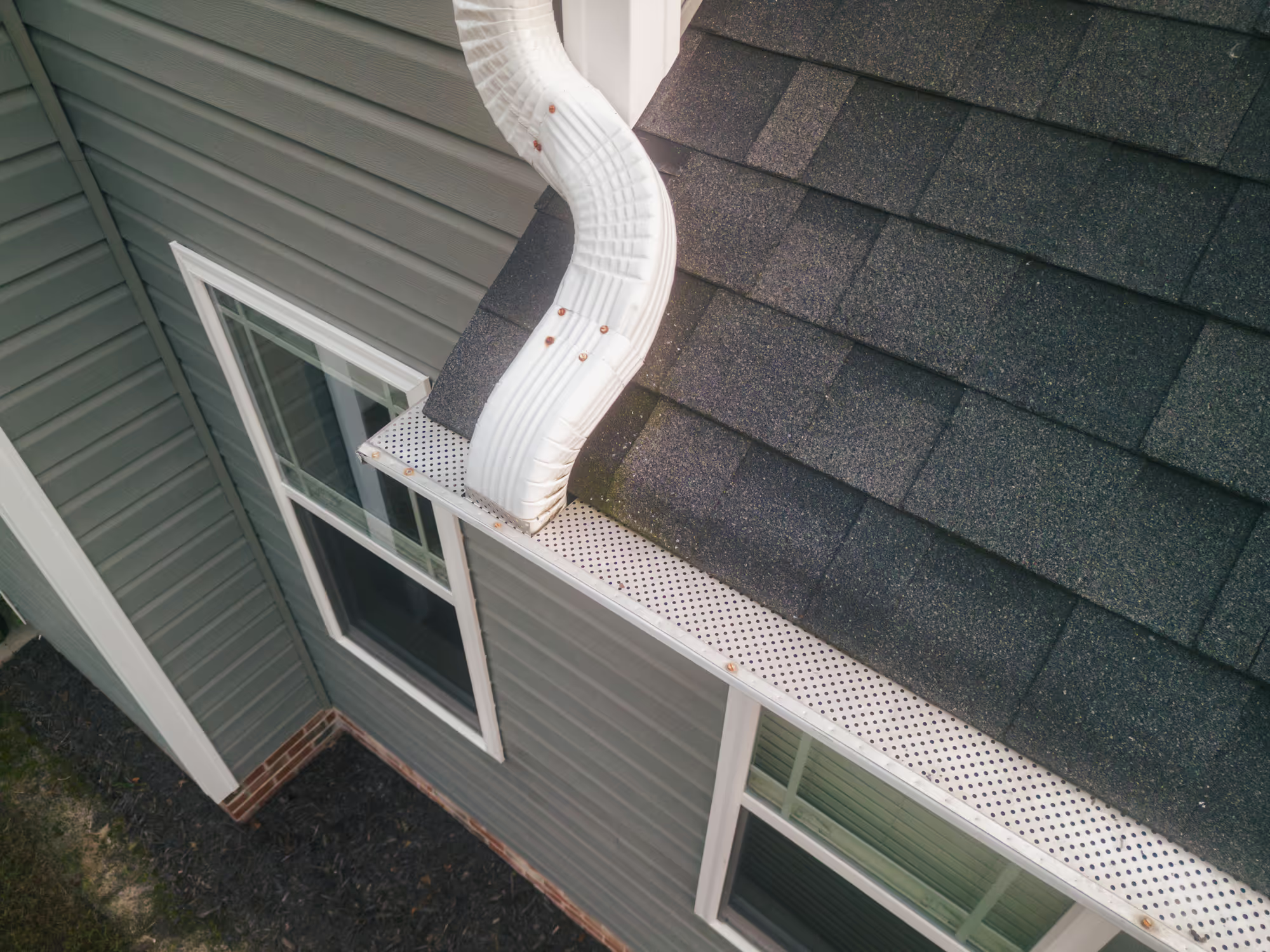
Gutter guards are covers or inserts installed over your existing gutters to reduce the amount of debris that gets in. Leaves, twigs, seed pods, and roof granules are the primary targets. By limiting what enters the gutter channel, guards allow water to flow freely and reduce how often the system needs to be cleaned out.
They do not make gutters completely self-maintaining. They do not eliminate the need for any inspection or occasional cleaning. What they do is significantly reduce the frequency and effort of maintenance, which for most homeowners is the whole point.
The Case For Them
Reduced cleaning frequency. For a home surrounded by mature trees, cleaning gutters without guards can mean two to four trips up a ladder per year. With a quality guard installed correctly, most homeowners drop to once a year or less. That is real time and real safety risk eliminated.
Foundation and fascia protection. Clogged gutters overflow. When they do, water runs down the fascia board, pools at the foundation, and over time causes the kind of damage that is far more expensive than the gutters themselves. Gutter guards keep the system flowing the way it is supposed to, protecting the structure of the home from the roofline down.
Longer gutter lifespan. Debris sitting in gutters holds moisture, which accelerates corrosion and pulls on the hangers that keep the system attached to the home. Guards reduce debris buildup, which extends the useful life of the gutters themselves.
Where Gutter Guards Fall Short
No guard on the market eliminates all debris. Fine particles like pine needles, shingle grit, and small seeds can work their way past most systems over time. In climates with heavy pine tree coverage, this is a real limitation worth knowing about before you buy.
Some lower-cost guards also create new problems. Foam and brush-style inserts trap debris inside the gutter rather than keeping it out, which can be worse than no guard at all. Flimsy snap-on covers can shift or blow off in high winds, which is a particular concern in the Midwest and along the Florida coast.
The other thing we tell homeowners honestly: if your gutters are already old, bent, or pulling away from the fascia, gutter guard installation is not the right first investment. Getting the gutter system itself in good shape first is the only way to get the full benefit of a guard.
Do I Still Need to Clean My Gutters With Gutter Guards?
Yes, but much less often. This is one of the most common misconceptions we run into. Gutter guards are not a permanent set-it-and-forget-it solution. Debris accumulates on top of the guard surface over time and can eventually restrict water flow if not addressed. A quick inspection and light cleaning once a year, ideally in late fall after the leaves have dropped, keeps the system performing the way it should.
Think of it the same way you think about other home maintenance. A new roof does not mean you never inspect it again. Quality gutter guards reduce your maintenance burden significantly, but they work best when they are part of a consistent home care routine.
Which Type Is Right for Your Home?
Not all gutter guards are the same, and the right choice depends on your tree coverage, climate, and gutter system. At Ridge Top, we install three systems we stand behind: GutterRx, Raindrop, and Leaf Solution. Each is designed for specific conditions and gutter profiles. We evaluate your home before making a recommendation, because the wrong product installed on the right home still underperforms.
As a general guide: micro-mesh and reverse-curve designs tend to perform best for homes with heavy deciduous tree coverage. Solid cover systems work well in areas with moderate debris and high rainfall. Foam and brush inserts are the ones we steer homeowners away from, regardless of what the packaging says.
What Does Gutter Guard Installation Cost?
Gutter guard installation cost varies based on the linear footage of your gutter system, the product selected, and the complexity of your roofline. For most single-family homes, you can expect to pay somewhere between $1,000 and $2,500 for a quality installation. Premium micro-mesh systems on larger homes can run higher.
It is worth comparing that number against what you currently spend on gutter cleaning plus any water damage repairs you have dealt with. For most homeowners with significant tree coverage, guards pay for themselves within a few years. For homeowners in areas with minimal debris, the math is closer and the decision is less clear-cut.
Ridge Top offers financing options that make the investment manageable without putting it off until the next overflow damages your fascia.
The Best Gutter Guards for Leaves: What We Actually Recommend
If your primary concern is leaves, the best gutter guards for leaves are micro-mesh systems with a fine enough weave to block debris while still allowing water to pass through quickly during heavy rain. Reverse-curve systems are a strong second choice for most Midwest homes. What we consistently steer homeowners away from is anything with an open foam or brush design, regardless of how it is marketed.
The honest answer is that the best system for your home depends on your specific tree coverage, roof pitch, and climate. That is a conversation worth having with someone who can look at your gutters, not just a product spec sheet.
The Bottom Line
Do gutter guards work? For most homes, yes. They reduce cleaning frequency, protect the system from debris buildup, and help channel water away from the foundation the way your gutters were designed to do. They are not a permanent fix for a failing gutter system, and they are not completely maintenance-free. But installed correctly on a sound system, they are one of the better low-maintenance investments a homeowner can make.
Ridge Top Exteriors has been installing seamless gutters and gutter guards across Wisconsin, Illinois, and Florida since 2002. We install products we believe in and give homeowners an honest assessment of whether guards make sense for their specific situation before recommending anything.
Schedule your free estimate at here or call the Ridge Top location nearest you.