If you can define ten terms, you can read almost any siding estimate in the country. Squares, sheathing, house wrap, flashing, J-channel, lap siding, board and batten, soffit, fascia, and warranty type account for nearly every confusing line on a proposal. Once you know what each one means, two bids that looked nearly identical on price often turn out to describe two very different projects.
We believe any term a home siding company puts in writing should be explainable in one plain sentence. If it cannot be, it does not belong in your contract. That belief shapes how we write every estimate for siding replacement, and it is why we are handing you the vocabulary before the proposal instead of after it.
Why Siding Terminology Costs Homeowners Money
Vague wording is how an incomplete scope gets priced to look competitive. When an estimate says 'install siding' with no mention of what goes behind the panels or how edges get finished, the missing work does not disappear. It resurfaces later as a change order, or as a moisture problem nobody planned for.
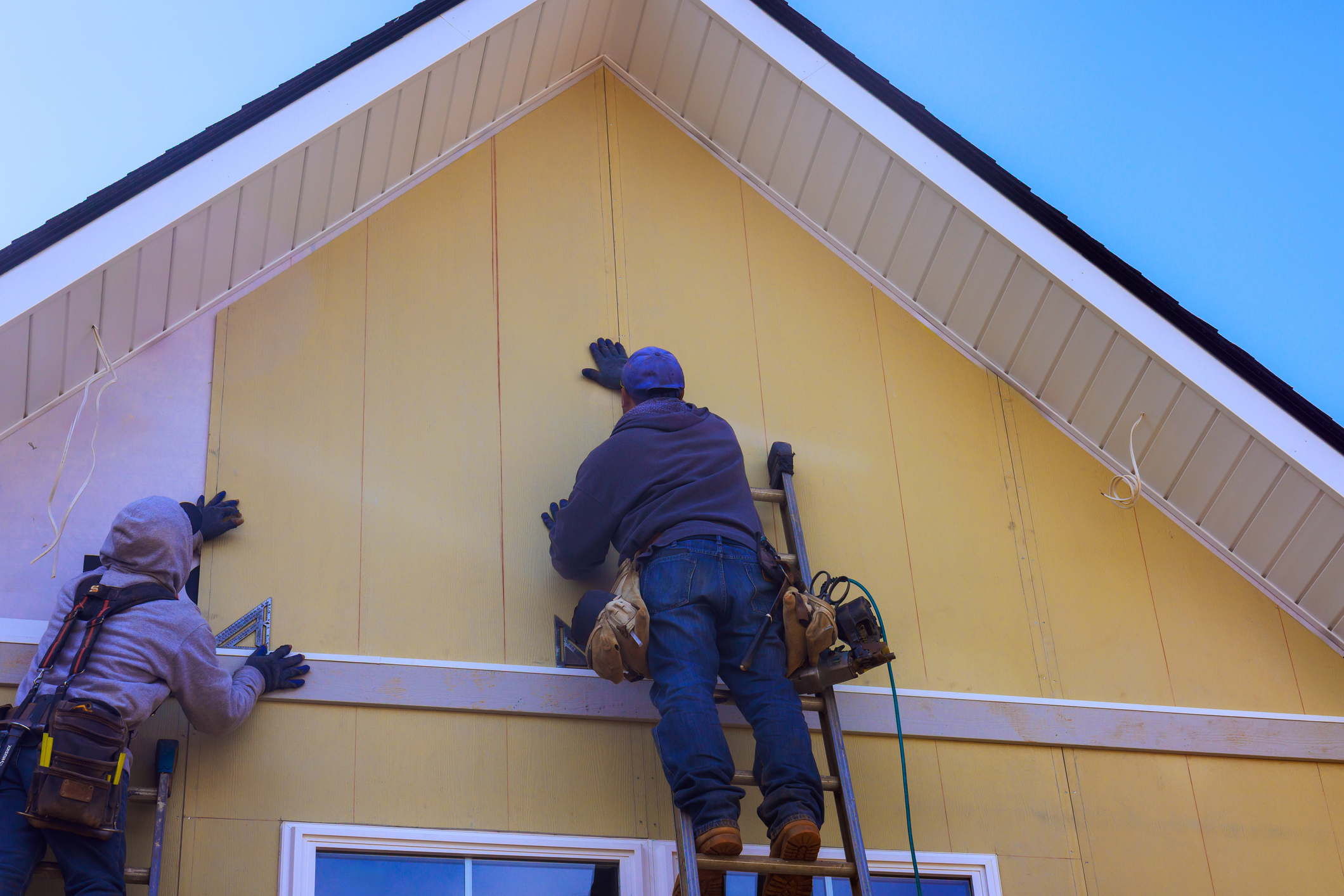
Siding is a system. Sheathing, a drainage layer, flashing, trim, panels, soffit, and fascia all work together, and the weakest link decides how the whole wall performs. The U.S. Department of Energy treats these layers as one building envelope for exactly that reason. Our own siding and wall systems scopes are written layer by layer so nothing gets assumed.
10 Home Siding Company Terms, Decoded
Each term below opens with a one-sentence definition, then explains why it matters on your estimate. Read them with your proposals in hand and mark anything your bids leave out.
1. Square
A square equals 100 square feet of wall surface. Most siding work is measured and priced in squares, which makes it the unit that lets you compare bids directly. If one company quotes 28 squares and another quotes 24 for the same house, someone measured differently. Ask how the number was calculated and whether window and door openings were deducted.
2. Sheathing
Sheathing is the structural panel layer attached to your wall framing, underneath everything you can see. Its condition is the single biggest reason a siding project goes over budget. Nobody knows what is back there until the old siding comes off. A clear estimate states a per-sheet replacement price up front, so if rot turns up, you have already agreed on the math.
3. House Wrap
House wrap, also called a water-resistive barrier, is the layer that drains any water that gets past your siding. Siding is the first line of defense, not the last. The Department of Energy's moisture control guidance explains why that drainage path matters more than the panels themselves. Check whether your estimate names the product and includes seam taping, since an untaped wrap only does part of its job.
4. Flashing
Flashing is thin metal or membrane installed at windows, doors, roof-to-wall transitions, and other joints to direct water away. Most moisture failures begin at these transitions, not in the middle of a panel. Flashing belongs on your estimate as a named line item with locations listed. If you cannot find it mentioned anywhere, that is your first question.
5. J-Channel
J-channel is the J-shaped track that receives and terminates panel ends around windows, doors, and corners. It is not a decorative afterthought. The Vinyl Siding Institute publishes installation standards covering how these terminations should be detailed. Confirm whether your bid includes new channel and trim or reuses existing pieces, because reused trim behind new siding is a common hidden difference between proposals.
6. Lap Siding
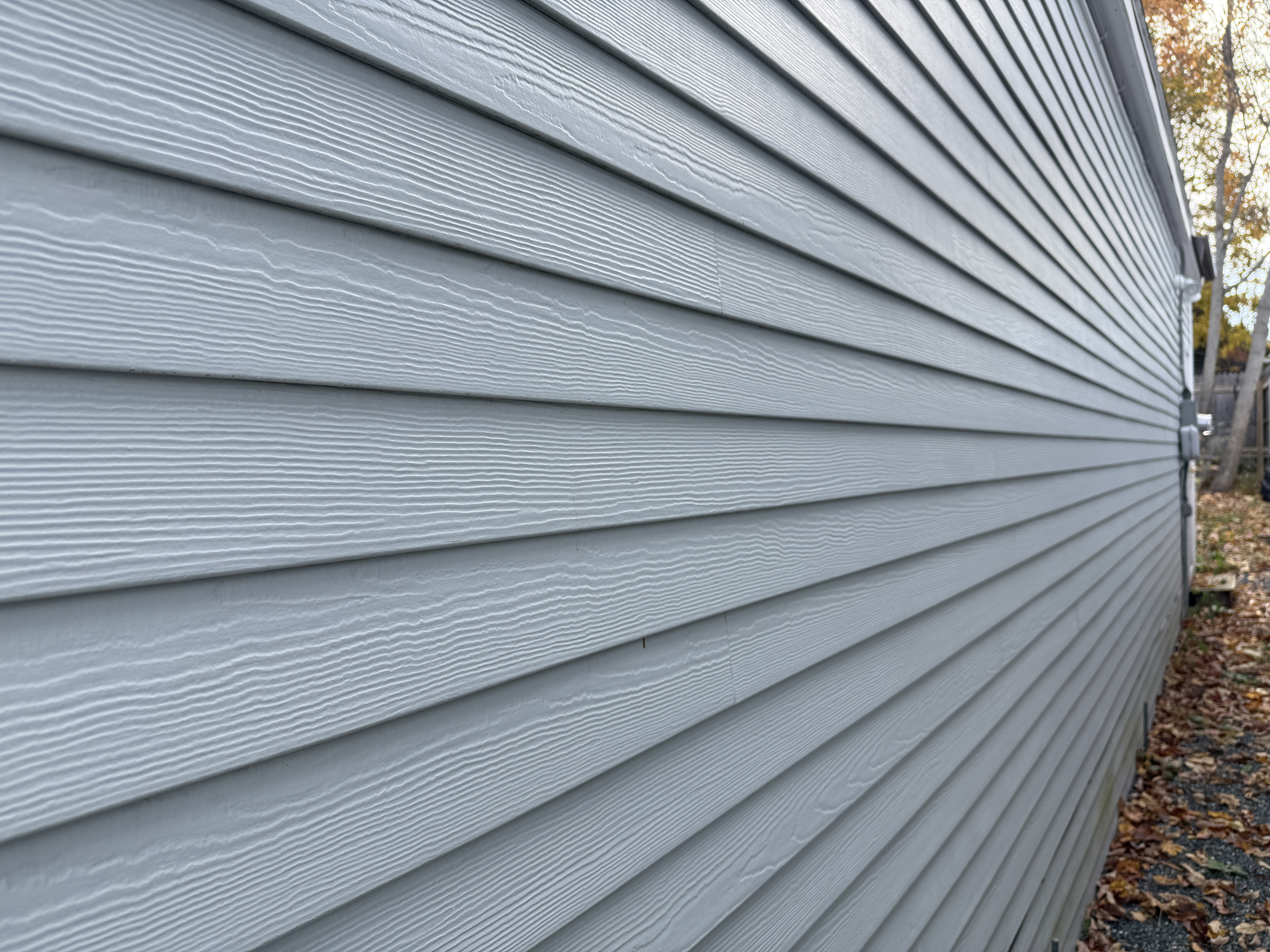
Lap siding is horizontal boards installed in rows where each one overlaps the one below it. The visible portion of each board is called the exposure, and it drives both the look of your home and the quantity of material required. Manufacturer spec sheets, such as the fiber cement documentation from James Hardie, list approved exposures by product. We walk through the lap profiles we carry during every siding consultation so the numbers match what you actually see.
7. Board and Batten
Board and batten is a vertical pattern made of wide boards with narrow strips, called battens, covering the seams between them. Many homes use it on gables, entries, or accent walls rather than the full exterior. Engineered wood lines like LP SmartSide publish panel and batten dimensions, so ask for mixed-pattern areas to be quoted separately. If you want to see a combination before committing, our 3D designer shows color combinations first.
8. Soffit
Soffit is the finished underside of your roof overhang, and vented soffit lets air into the attic. That airflow helps your roof assembly manage heat and moisture, which affects shingle life and energy use. Federal attic ventilation guidance treats intake air at the eaves as a required part of the system. Ask whether the proposal includes vented or solid panels, because the two are not interchangeable.
9. Fascia
Fascia is the horizontal board running along your roof edge, and it is what your gutters attach to. Soft or rotted fascia means gutters have nothing solid to hold, which turns a drainage issue into a structural one. Access equipment is already in place during a siding project, so pairing soffit and fascia installation with siding is usually the most efficient timing. Make sure the estimate says whether fascia is wrapped or fully replaced.
10. Limited Material Warranty vs. Workmanship Warranty
A limited material warranty comes from the manufacturer and covers the product. A workmanship warranty comes from the installer and covers how that product was put on your home. Most expensive failures trace back to installation, which makes the second one the warranty that matters most. Programs like the VSI certified installer program exist because training is what keeps material coverage enforceable, and you can ask us for our written warranty coverage in full before you decide anything.
How to Use These Terms in Your Next Consultation
Vocabulary only pays off when it turns into questions. Bring your estimates to every appointment and work through the same short list with each home siding company on your shortlist. Consistent questions produce comparable answers.
- How many squares did you measure, and how did you handle openings?
- What is your per-sheet price if sheathing needs replacement?
- Which house wrap are you using, and are the seams taped?
- Where exactly is flashing being installed, and is it itemized?
- Is new J-channel and trim included, or are existing pieces being reused?
- What exposure are you quoting for the lap siding, and why that one?
- If board and batten is part of the design, is that area quoted separately?
- Does this scope include soffit and fascia, and is the soffit vented?
- What does your workmanship warranty cover, for how long, and is it in writing?
- Are your installers manufacturer certified for the product you are proposing?
Write the answers next to each bid. Gaps show up quickly, and the lowest number often turns out to be the smallest scope rather than the better value. It also helps to check accreditation and complaint history through the Better Business Bureau. When you are ready to put these ten questions to someone, you can schedule a no-pressure consultation and we will answer every one of them in writing.
Read Your Next Estimate With Confidence
Ten terms are all that separate a confusing proposal from a clear one. Squares make bids comparable. Sheathing, house wrap, and flashing protect your budget and your walls. Lap siding and board and batten define the look. Soffit and fascia complete the job, and warranty language tells you who is accountable years from now.
We would rather hand you this vocabulary and have you question our numbers than win a project on confusion. That is the standard we hold ourselves to, and we expect estimate transparency to become the baseline homeowners demand from any home siding company.
Next step: browse our siding services to see how these layers get specified on a real scope, then read how our free siding estimate starts with color combinations rather than a price. Bring every bid you have collected, and get in touch whenever you want a second set of eyes on the line items.