Most homeowners know they have a roof. Fewer know what pitch their roof is. And almost none realize how much that number affects what their replacement project is going to cost, what materials are available to them, and how long the finished roof will perform. Pitch isn't just an architectural detail. It's one of the biggest variables in your entire roofing project.
This post explains what pitch means, what the different ranges look like in practice, and how pitch affects everything from shingle selection to labor costs to how your roof handles Midwest winters and Florida storm season. GAF's roof pitch guide is a useful reference for understanding the measurement itself before diving into what it means for your project.
What Roof Pitch Actually Means
Roof pitch is the ratio of how much a roof rises vertically for every 12 inches it runs horizontally. A 4:12 pitch means the roof rises 4 inches for every 12 inches of horizontal distance. A 12:12 pitch means it rises 12 inches for the same run, which works out to a 45-degree angle.
This is usually expressed as a number followed by ':12', so you'll hear contractors talk about a '6:12' or '8:12' roof. The higher the first number, the steeper the roof. Most homes in Wisconsin and Illinois have pitches between 4:12 and 12:12. Florida homes, especially ranch-style construction common in Tampa and Clearwater, often run lower, sometimes between 2:12 and 5:12.
Your contractor can measure your pitch exactly, but you can also get a rough sense from the street. A nearly flat roof with a subtle slope is low pitch. A dramatic, sharply angled roofline is steep pitch. Most suburban Midwest homes fall somewhere in the middle.
The Three Pitch Ranges and What Each One Means for Your Roof
- Low pitch (2:12 to 4:12). These roofs look nearly flat and are common on ranch homes, additions, and Florida construction. Water moves slowly off a low-pitch roof, which creates different drainage challenges than steeper profiles. Not all shingle products are rated for installation below 4:12 without special underlayment requirements.
- Moderate pitch (4:12 to 8:12). This is the sweet spot for most residential roofing. Virtually all asphalt shingle products work at these pitches, water sheds efficiently, and installation is manageable without specialized equipment. Most Wisconsin and Illinois suburban homes fall into this range.
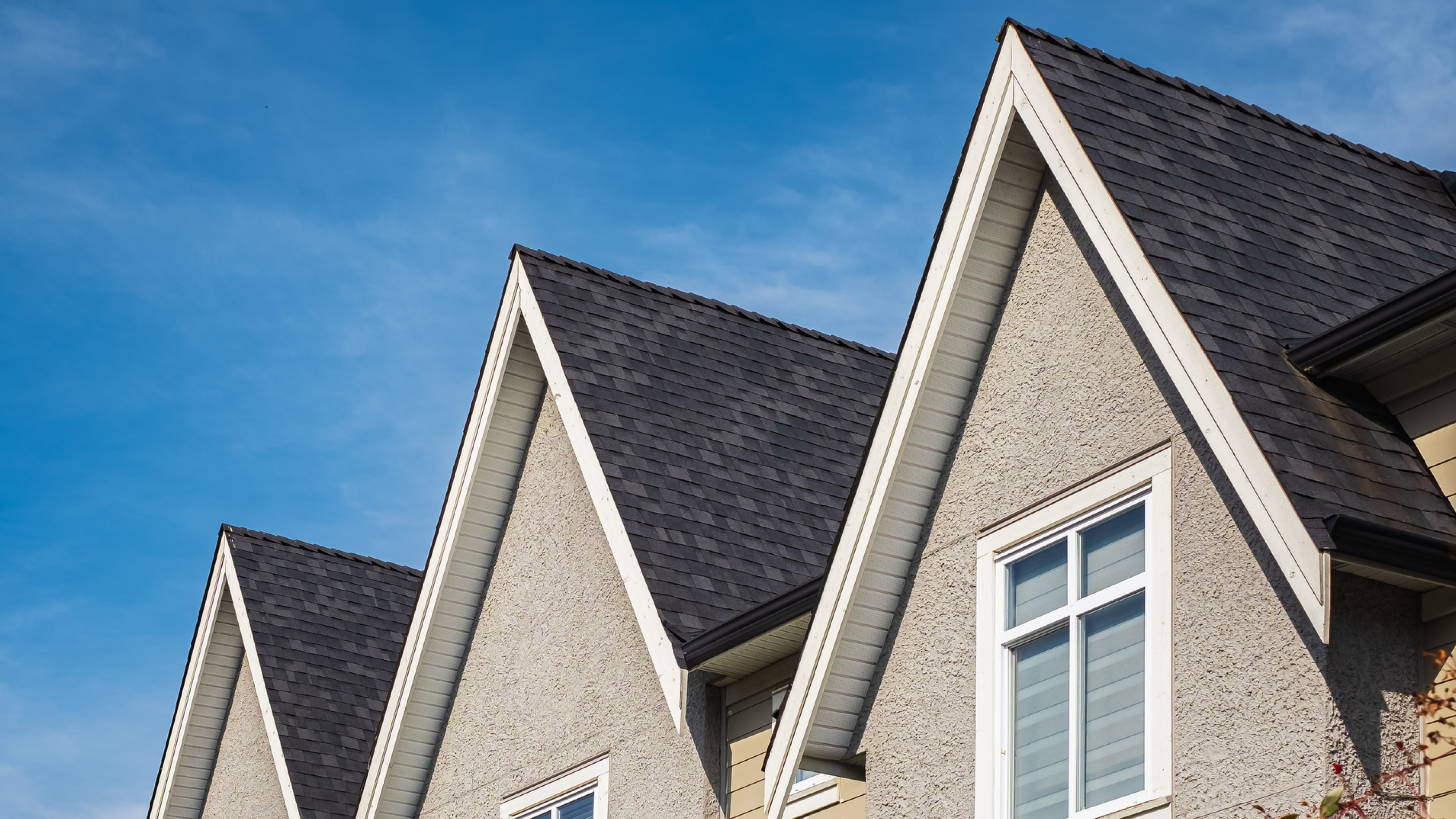
- Steep pitch (8:12 and above). Steep roofs are dramatic and drain water exceptionally well. But they require additional safety equipment, more labor time, and more material because the roof surface area is significantly larger than the home's footprint would suggest. Steep roofs can cost meaningfully more to replace for the same footprint home.
How Pitch Affects Material Options
Not every roofing material works at every pitch. Asphalt shingles, the most common residential roofing material in our markets, are typically rated for installation at 4:12 and above under standard conditions. Below that, manufacturers require a low-slope application method with additional underlayment layers to create a watertight system.
At very low pitches, metal roofing or modified bitumen systems are often the better choice because they create a more continuous seal. Tile and slate, common in some Florida markets, have their own pitch minimums and generally perform best at moderate to steep pitches where water drains quickly off the surface.
The takeaway for most homeowners is that if your roof is at a standard moderate pitch, you have the full range of options open to you. If you're at the low or steep ends, your contractor should be talking with you specifically about what's rated and recommended for your geometry.
How Pitch Affects Replacement Cost
Pitch affects cost in three concrete ways.
First, surface area. A steep roof has significantly more square footage of surface than a low-pitch roof over the same footprint. A home with an 8:12 pitch might have 30 to 40 percent more roof surface than the same home at a 4:12 pitch. More surface means more materials and more labor.
Second, labor difficulty. Working on a steep roof requires additional safety equipment and slows installation considerably. Crew members spend more time securing themselves, materials need to be staged differently, and overall efficiency drops compared to a moderate pitch job. Most roofing companies near me apply a steep pitch surcharge on roofs above a certain threshold, typically 7:12 or 8:12.
Third, complexity. Steep, complex rooflines with multiple valleys, dormers, and hip sections multiply both surface area and flashing requirements. A simple gable roof at 8:12 costs less to replace than a complex hip roof with multiple gables at the same pitch.
When you use an online tool or get an estimate, pitch is one of the variables that most significantly affects the final number. A quote that doesn't account for your specific pitch isn't a complete estimate.
How Pitch Affects Performance and Lifespan
Pitch is actually one of the more significant factors in how long your roof lasts, and it works differently at the extremes.
Steeper pitches drain water faster and more completely, which means shingles dry more quickly after rain and have less standing moisture exposure. That tends to extend granule life and reduce biological growth. Steep roofs also shed snow and debris more effectively, which matters in Wisconsin winters where roof loads can be significant.
Low-pitch roofs create the opposite conditions. Water drains slowly, increasing the time shingles stay wet. In Wisconsin and Illinois, this increases freeze-thaw stress at the eave edge where water pools before running off. In Florida, slow drainage means more prolonged humidity exposure, which accelerates algae and mildew growth on the surface.
Moderate pitches perform well in both markets. They drain efficiently without the labor cost premium of steep roofs, and they're compatible with the full range of underlayment and shingle options that optimize performance for each climate.
How Pitch Plays Out Differently in Wisconsin vs. Florida
In Wisconsin and northern Illinois, pitch matters most in the context of snow load and ice dam risk. Low-pitch roofs are more vulnerable to ice dam formation at the eave because water from snowmelt can't shed quickly enough before it refreezes. Ice-and-water shield requirements are more extensive on low-pitch roofs in Northern markets for exactly this reason.
Steep roofs in Wisconsin do a good job shedding snow, but they also create conditions where sliding snow can damage gutters and create safety hazards at the ground level below. Properly designed roof systems in steep-pitch Wisconsin homes account for this.
In Florida, most residential construction runs at lower pitches, which means that the underlayment requirements and Florida Building Code provisions for low-slope roofing apply more often. In high-velocity hurricane zones around Tampa and Clearwater, the wind and rain performance of the roofing system matters more than drainage speed. Low-pitch systems in these zones require specific tested products and installation methods to meet the code.
What to Ask Your Contractor About Pitch
- What is my roof's pitch, and does that affect which shingle products are rated for my installation?
- Does your estimate include a steep-pitch surcharge? At what pitch does that apply?
- How does my pitch affect the underlayment requirements, particularly ice-and-water shield at the eaves?
- Is my current material appropriate for my pitch, or are there better options given my roof's geometry?
A roofing contractor who answers these questions specifically and without hesitation is someone who has thought carefully about your roof as a system, not just as a surface to cover.
How Ridge Top Approaches Pitch in Every Project
Ridge Top Exteriors accounts for pitch in every roof replacement estimate we provide across Wisconsin, Illinois, and Florida. Our residential roofing assessments include a pitch evaluation that informs material recommendations, underlayment specifications, and accurate surface area calculations. We don't use generic square-foot pricing that ignores pitch complexity.
Our roofing service page covers the materials and systems we install, and our instant quote tool uses your home's actual data to generate a starting estimate that accounts for your specific roof geometry. When you search roofing companies near me, look for a contractor who asks about your pitch before they give you a number.
Read verified reviews from homeowners across our service area or learn more about how we manage every roofing project from first estimate through completed installation.
Pitch is built into your home. Understanding what it means for your roof gives you a clearer picture of what you're actually buying when you get an estimate.