A roof replacement quote is a planning document, not a price tag. If it does not spell out tear-off scope, decking repair allowances, underlayment, ventilation, flashing, disposal, permits, cleanup, and warranties in separate lines, you are not comparing prices. You are guessing. And the one thing most quotes never show you is the part you will look at every single day for the next 25 years: how the finished roof will actually look on your home.
That is why we believe two things belong together. A fully itemized roof replacement quote, and a full-scale digital rendering of your home with the shingle you selected already on it. One protects your budget. The other protects your decision.
What a Complete Roof Replacement Quote Should Include
A legitimate roofing estimate answers three questions without you asking: what is being removed, what is going back on, and what happens if something unexpected is found underneath. Everything else is detail hanging off those three answers.
Vague quotes are not always dishonest. Sometimes they are simply rushed. But a one-page document that reads 'tear off and replace roof, materials and labor included' gives you nothing to evaluate and nothing to hold anyone to later, which is exactly why the National Roofing Contractors Association treats a written scope of work as the foundation of a fair contract. Ask for the long version. A contractor who has thought the job through will already have it written down.
The Line Items to Look for in Your Roofing Estimate
Print your quotes and check each one against this list. Missing items are not always missing work, but every gap deserves a direct question.
- Tear-off scope: how many existing layers are being removed, and whether removal is included or priced separately
- Decking inspection and repair: the cost per sheet of replacement plywood, and how many sheets are assumed in the base price
- Underlayment: the type and coverage across the full roof, not just the valleys
- Ice and water shield: where it is applied, including eaves, valleys, and around penetrations
- Ventilation: intake and exhaust, and whether existing vents are reused or replaced, measured against the standards published by the Asphalt Roofing Manufacturers Association
- Flashing: chimneys, walls, skylights, and pipe boots, listed as new rather than reused
- Disposal and cleanup: dumpster, hauling, and magnetic nail sweep of the property
- Permits and inspections: who pulls them and whether the fee is included
- Warranties: manufacturer material coverage and contractor workmanship coverage, stated as two separate terms with two separate lengths
Two warranties matter more than most homeowners expect. Material coverage protects the shingle. Workmanship coverage protects the installation. Most leaks in the first decade trace back to installation, so the second number is the one worth reading closely.
Why Two Quotes for the Same Roof Differ by Thousands
Most large price gaps come from scope, not greed. When one roof replacement quote comes in eight thousand dollars under another, the difference usually lives in what was quietly excluded.
The most common source is the allowance. An allowance is a placeholder, a stated assumption such as 'includes up to four sheets of decking replacement.' That is fair and normal. It becomes a surprise cost when the allowance is small, the per-unit price beyond it is never listed, and the shortfall shows up as a change order after the roof is already open.
Other frequent gaps: reusing old flashing instead of replacing it, skipping ice and water shield beyond the minimum, leaving ventilation untouched, and excluding permits or disposal. Each one saves real money on the quote and costs real money later. When you reframe cost as scope divided by lifespan, the cheapest number on the table often turns out to be the most expensive per year of protection, a pattern the Remodeling Cost vs. Value Report and the NAR Remodeling Impact Report both track in their regional cost recovery and resale data.
What Home Visualization Software Shows You Before You Commit
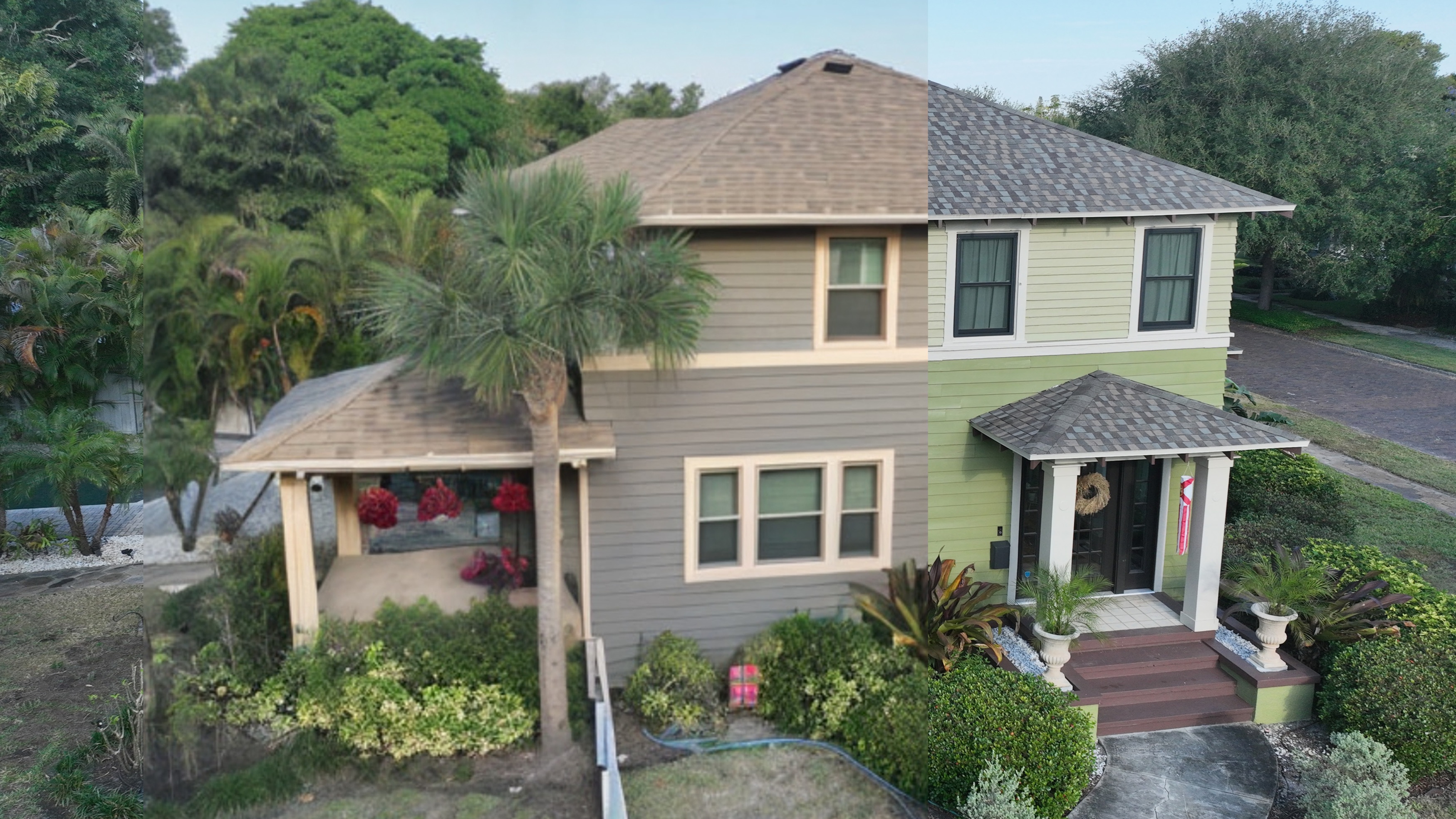
Here is the decision no quote line protects you from: color. You can compare underlayment specifications all afternoon and still end up staring at a roof you do not love. Visualization exists to close that gap, and we treat it as quality control applied to the decision itself, the same discipline we apply to the installation.
Why Shingle Sample Chips Mislead at Full Scale
A sample board is roughly three by five inches. Your roof might be 2,400 square feet of visible plane. That is an enormous leap of faith, and the math works against you in three ways.
- Scale changes perception. A blend that reads as warm charcoal in your hand can read as flat gray across an entire roof plane.
- Light changes everything. Samples get judged under kitchen lighting or an overcast driveway, never in the full daylight your roof lives in.
- Context is missing. A chip tells you nothing about how that color sits against your siding, trim, brick, stone, and the homes on either side of yours.
None of that is the homeowner's failure. It is a tool problem. Shingle color options should be evaluated at the size you will actually see them.
How the Visualization Session Works, Step by Step
The process is simple, and it happens before any material is ordered.
- We photograph your actual home, capturing the real roof lines, pitch, siding, trim, and stone.
- The design software maps your selected shingle onto those exact planes, at full scale.
- You compare several profiles and colors side by side on your own house instead of on a sample board.
- You review the rendering with your spouse or family, on your schedule, with no one standing over you.
- You approve the final appearance in writing, and that approved rendering becomes part of the project file.
The result is straightforward. When the finished look is rendered and approved in advance, color regret and appearance-driven change orders drop sharply, selections move faster, and the conversation shifts from price anxiety to scope clarity. You are no longer approving a description. You are approving a picture of your own home.
How to Compare Roofing Quotes Without Comparing Only Price
Build a simple side-by-side grid. Down the left column, list every line item from the checklist above. Across the top, put each contractor. Fill in what each quote actually states, and leave a blank where it is silent.
The blanks are the whole exercise. Call each company and ask them to fill in their own gaps in writing. Some will, and their number will rise toward the others. Some will not, and that tells you something too.
Then add three rows the estimates rarely include: workmanship warranty length, price per additional sheet of decking, and whether a rendering of the finished home is provided. Now you are comparing the whole job, not the bottom line.
Questions to Ask at Your Roofing Consultation
Bring these to every appointment. Reasonable questions never offend a contractor who has nothing to hide.
- Who is on my property each day, and are they your employees or subcontractors?
- What is your per-sheet price for decking replacement, and how is that documented before the work happens?
- How are change orders priced and approved, and do I sign before the cost is incurred?
- What does your workmanship warranty cover, for how long, and is it transferable if I sell?
- Are permits, disposal, and final cleanup included in this figure?
- How will I see and approve the finished appearance before material is ordered?
- Can I visit or view completed projects nearby with this same shingle?
Watch for the opposite pattern as well. Pricing that expires today, scope explained verbally but never written, refusal to itemize, and no defined change-order process are all signals that the document in your hand is not finished, and all of them appear in the homeowner guidance published by the Federal Trade Commission and the Better Business Bureau.
Requesting Your Roof Replacement Quote and Planning Early
You do not need to be ready to install in order to start planning. Design and selection work is a legitimate, pressure-free step on its own, and doing it months ahead removes the two forces that rush good decisions: peak-season scheduling and material availability.
A typical path looks like this. An inspection and measurement visit, an itemized roof replacement quote delivered in writing, a visualization session on your own home, and then a decision made on your timeline. If installation is a season away, nothing about that sequence changes except the start date.
Your Takeaway: A Quote You Can Read Is a Roof You Can Trust
Judge a roof replacement quote by how much it explains, not by how little it costs. Every assumption written down, every allowance given a unit price, both warranties stated separately, and the finished appearance rendered on your home before a single bundle is ordered. That is the standard worth holding every contractor to, including us.
Next step: keep reading our shingle comparison guide to understand how profile and material choices affect lifespan, then look through local project galleries to see how those choices read at full scale on homes like yours. When you are ready, ask for an itemized quote with a full-home visualization included. No timeline required.