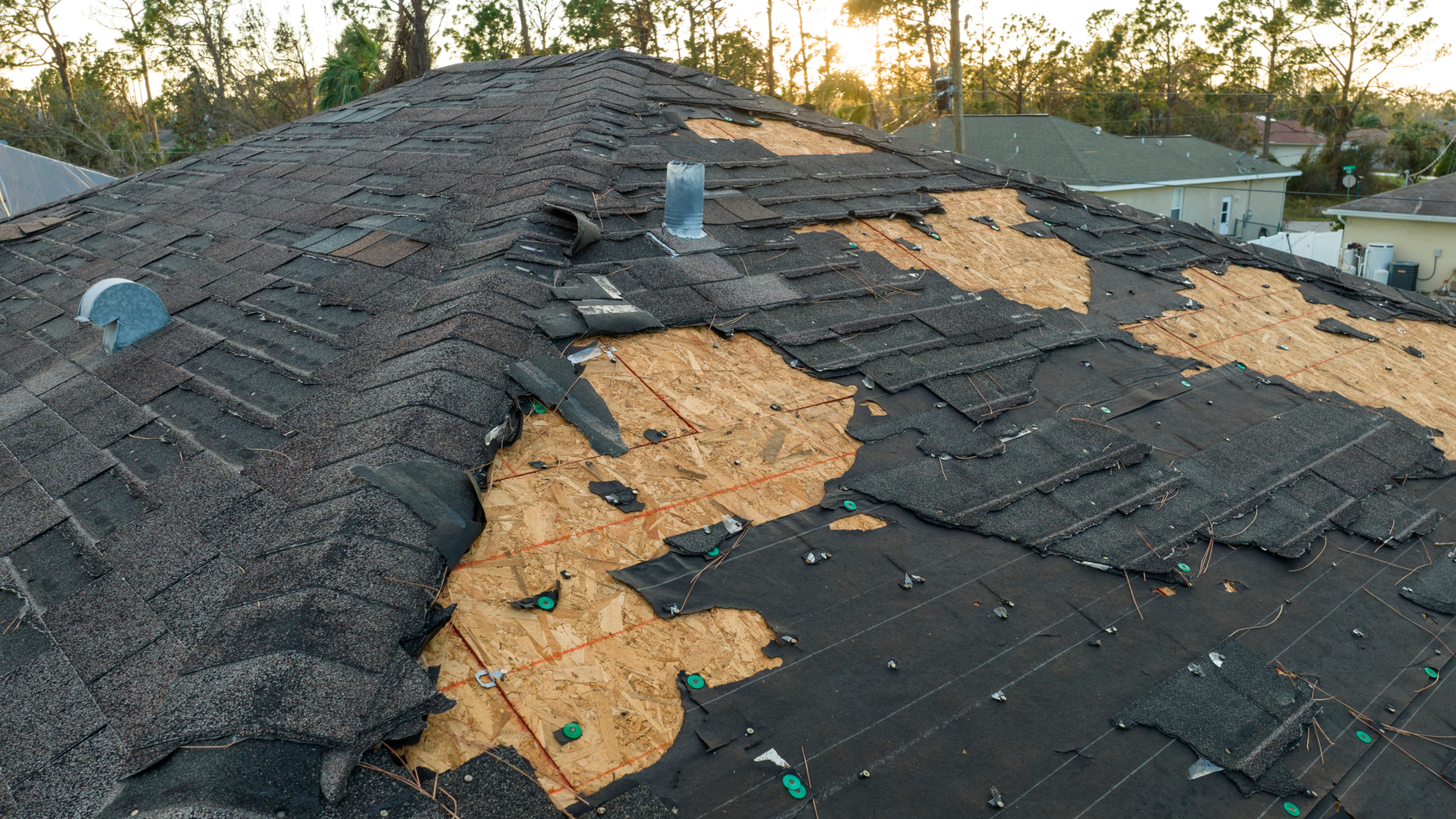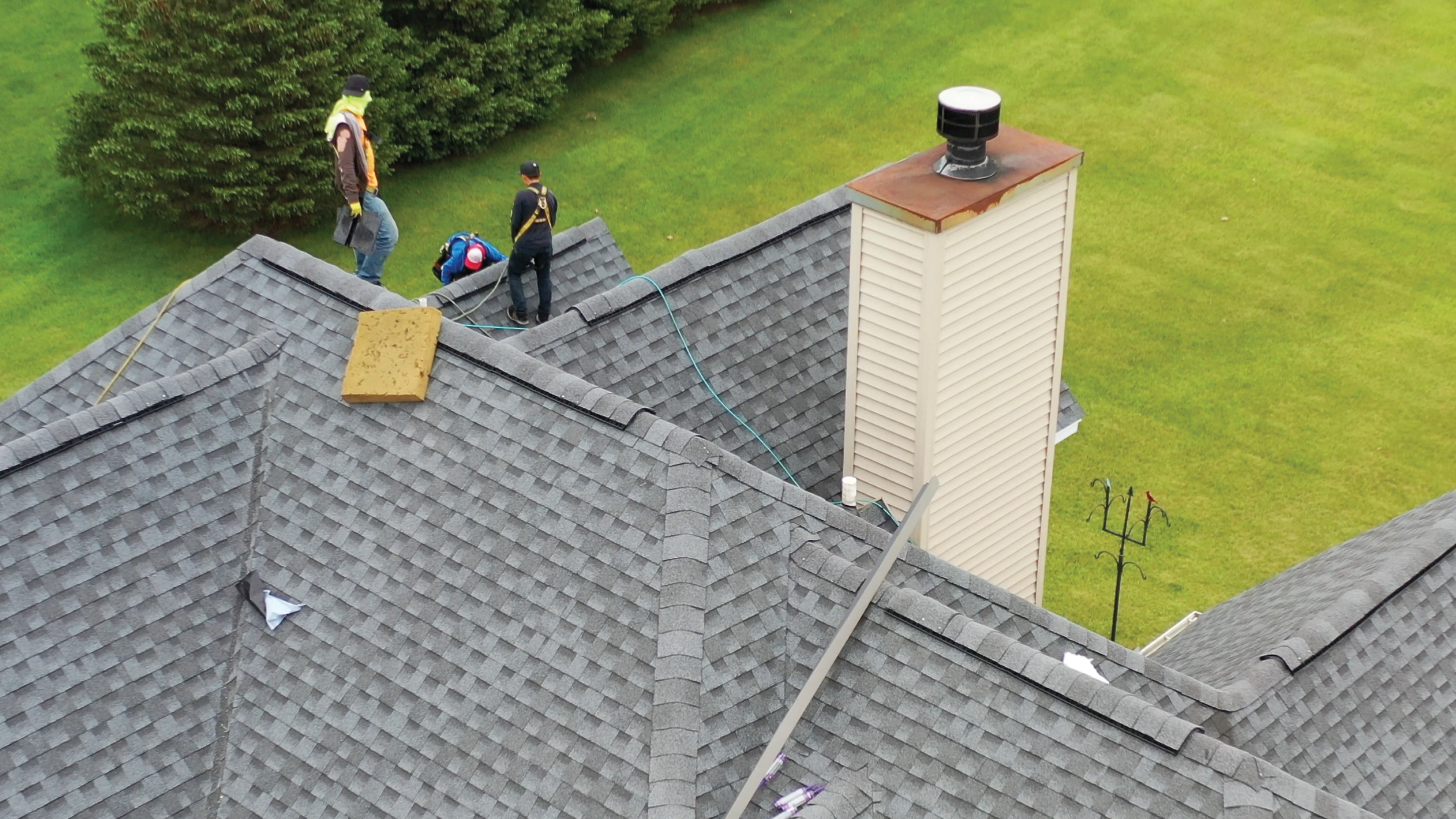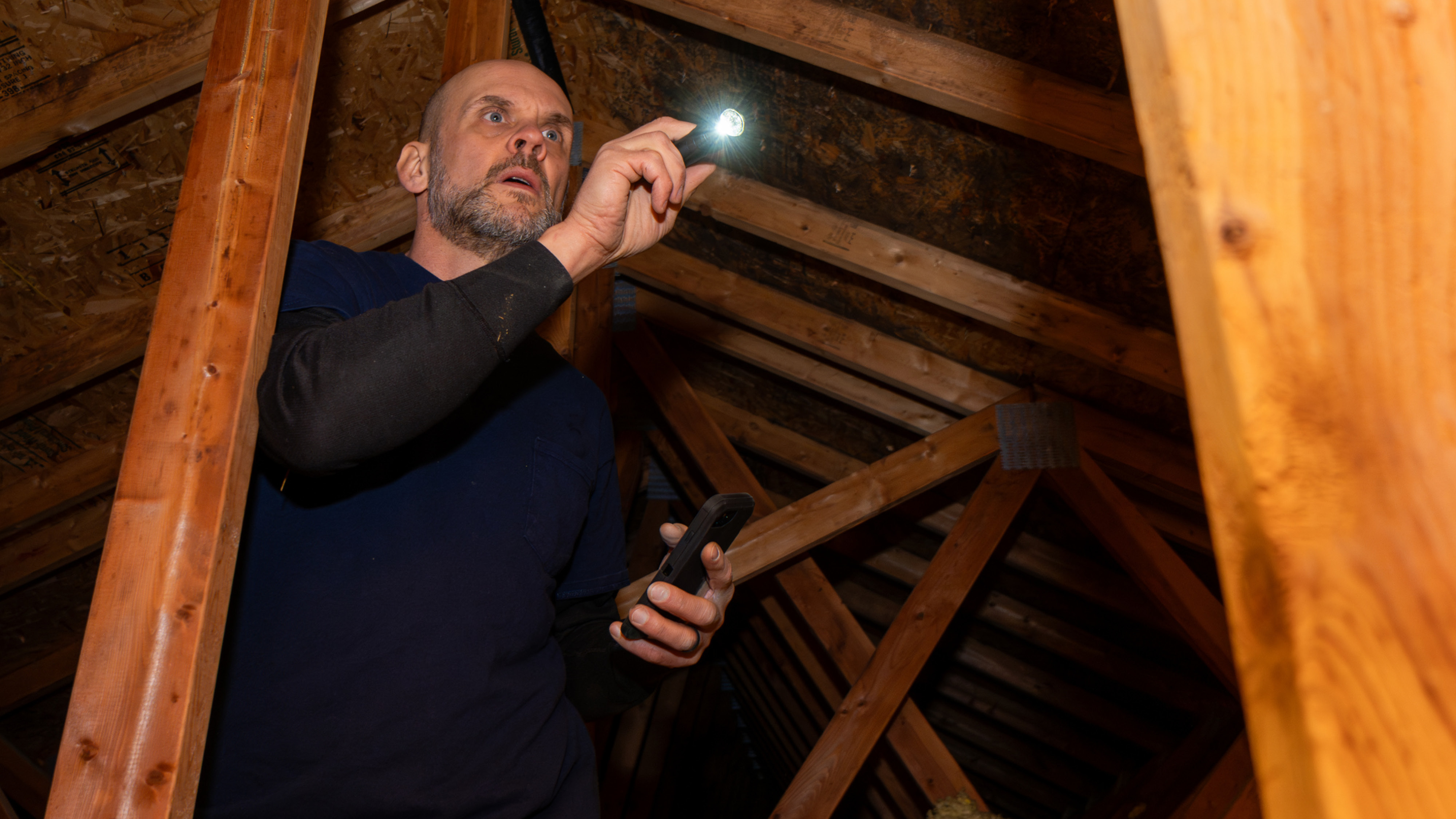
The most alarming problems in a house are almost never visible from the curb. They are sitting quietly above your ceiling, and an attic inspection is the only reliable way to find them. Stained decking, frost on the sheathing, mold in the corners, blocked soffit vents, and a bath fan dumping steam into the rafters: those five findings tell us more about the health of a roof than anything a ladder or a drone can show. Fall is the last comfortable stretch to look. Once heating season starts, whatever is up there gets locked in for four to six months and usually gets worse. So before the first hard freeze, it is worth asking a simple question about your roof: has anyone actually been inside the attic?
Why October Is the Best Time to Look Up
October is when attic problems are still corrections instead of emergencies. The space is cool enough to work in safely, the roof is dry, and there is still time to schedule repairs before the ground freezes. The same conditions found in February arrive alongside ice dams, ceiling stains, and a crew scheduling around snow.
Timing also changes what you learn. Warm, humid indoor air starts moving toward a cold attic the moment the furnace kicks on. The U.S. Department of Energy covers this in its Energy Saver guidance on attic air sealing and insulation, and the short version is that sealing the leaks comes before adding insulation. Catching a ventilation or air-sealing flaw now means you correct the cause before a single winter cycle of condensation and freezing goes to work on your decking. That is the difference between a small repair and a replaced roof deck.
This is also why we built seasonal attic and roof checks into RoofCare+, our ongoing maintenance program. Looking once every fall is how small findings stay small.
Five Frightening Findings Hiding Above Your Ceiling
Here are the five conditions we most often document during an attic inspection, what each one signals about the roofing system, and why none of them can be diagnosed from the ground.
Dark Stains and Soft, Spongy Decking
Dark rings or streaks on the underside of the roof deck mean water has already been moving through the assembly, often across several seasons. Fresh stains have defined edges and may read wet on a moisture meter. Older ones look gray and chalky at the border.
When the wood feels spongy or the layers start separating, the sheathing has lost structural strength. That section has to come off during a replacement, and it is one of the most common reasons a quote changes after the fact. These are the clearest signs of a roof leak in the attic, and they deserve a photo and a note in writing, not a verbal mention. If you are seeing active drips or fresh staining, that is worth a documented look before winter rather than a spring appointment.
Frost, Rust, and Sweating Nails
Frost on the underside of the sheathing is not a leak. It is condensation, and it points to a very different problem. Warm, moist air from the living space is reaching a cold surface and changing state, exactly like a glass of ice water sweating on a summer table. If you like the physics behind it, the researchers at Building Science Corporation have published extensively on why vented attics accumulate moisture in cold weather.
Rusted nail tips and damp, matted insulation tell the same story. When that frost melts during a thaw, it drips onto insulation and ceilings and gets misdiagnosed as a roof leak. The real fix is air sealing and balanced airflow, not more sealant on the shingles.
Mold Growing in the Dark
Attic moisture and mold is a moisture problem first and a cleanup problem second. Growth typically shows up along the north-facing slope, in corners where air stalls, and near bathroom ceilings. It needs three things to survive: organic material, moisture, and still air. Your attic already supplies the first.
Cleaning the surface without correcting airflow guarantees it comes back, usually within a season or two. The EPA's mold and moisture control guidance makes the same point: control the water source or the growth returns. If you find it yourself, resist the urge to scrub or disturb it and have it assessed first.
Blocked Soffit Vents and Buried Insulation
This is the single most common defect we document, and it is quietly responsible for a lot of winter damage. Soffit vents along the eaves are the intake side of the system. Insulation stuffed into that space, or blown in without baffles to hold it back, shuts the intake down completely.
Without intake, ridge vents have nothing to pull. Air stops moving, heat collects at the roof deck, and snowmelt refreezes at the cold eave. That is the mechanism behind most ice dams. There is a published benchmark for how much vent area a roof needs, spelled out in Section R806 of the International Residential Code as roughly one square foot of vent area for every 300 square feet of attic floor, split between intake and exhaust. Correcting attic ventilation and insulation is cheap in October and expensive to live with in January.
Exhaust Fans Venting Into the Attic
Bath and kitchen fans are supposed to carry humid air outside the building. We regularly find ducts that stop short, disconnect at a joint, or terminate directly into the attic cavity. Every shower then pumps warm, wet air into the coldest part of the house.
A single misrouted duct can produce enough moisture to frost an entire roof slope over a winter. It is an inexpensive correction and one of the most satisfying things to fix, because the improvement shows up the following season.
What These Findings Cost You in Winter
Left alone, these conditions convert into costs you can measure. Trapped moisture rots decking from the underside, which means paying for sheathing replacement you could have avoided. Damp, compressed insulation loses much of its performance, so the furnace runs longer and the upstairs bedrooms still feel cold.
Ice dams follow the same chain. Blocked intake, warm deck, melting snow, refreezing at the eave, water backing up under the shingles and into the ceiling below. Homeowners often blame the shingles. In our experience, the cause is usually buried soffit vents or a misrouted exhaust duct. We walked through the longer version of this slow decline in what happens to a roof that goes unattended.
Then there is the exposure that never appears on a one-page quote. Shingle manufacturers write ventilation requirements into their material warranties, and the technical bulletins from the Asphalt Roofing Manufacturers Association explain how airflow affects shingle performance and service life. If a new roof is installed over an attic that does not meet those requirements, portions of that coverage can be at risk, and you may not learn it until you file a claim years later. A complete roofing system includes what is underneath, not just what is nailed on top.
Questions to Ask Before the Cold Arrives
You do not need technical training to tell a thorough contractor from a fast one. You need a short list of questions and a sense of what a real answer sounds like.
- Did you physically enter the attic, and can I see dated photos of what you found?
- What are my current intake and exhaust vent areas, and how do they compare to the 1:300 ratio for my roof size?
- Did you take moisture readings, and where?
- Which decking sections, if any, do you expect to replace, and how is that priced?
- Where does every bath and kitchen exhaust duct terminate?
- What does my shingle manufacturer require for ventilation, and does my attic meet it today?
- Is the attic work written into the scope, or handled as a change order later?
The omissions are just as revealing as the answers. A quote with no ventilation notes, no decking condition, and no photos was almost certainly produced without anyone opening the hatch. Homeowners holding documented findings stop comparing bids on price alone and start comparing them on scope, which is a fairer comparison for every contractor involved.
Don't Let the Attic Be the Scariest Room in Your House
A roof cannot be honestly diagnosed from a driveway, a ladder, or a satellite measurement. That is why we treat the attic inspection as a required, documented step rather than an add-on, and why the findings belong to you in writing with photos whether or not you ever hire us.
If you want to keep learning before you call anyone, start with the Department of Energy's attic insulation and ventilation basics, then take five minutes with a flashlight at the hatch and simply look. When you are ready for a second set of eyes, reach out to our team and we will document what we find. Whatever you see up there in October is far easier to handle than what it becomes in February.