Most homeowners think the warranty on their new siding comes from the manufacturer and covers the product. That's only half the picture. The other half is the installation. And the installation half is where most claims fall apart.
James Hardie offers a 30-year non-prorated warranty on their fiber cement siding. LP SmartSide offers a 50-year limited warranty on their engineered wood products. Both of those numbers can drop to zero if the siding isn't installed according to the manufacturer's specific requirements. And those requirements don't just mean using the right product. They mean following a detailed installation guide that covers fastening patterns, clearance measurements, flashing sequences, caulk products, and more.
The siding contractor you hire is the person who determines whether you actually have that warranty or just think you do.
The Two Warranties You Actually Get
Every quality siding project comes with two separate warranties, and understanding the difference is the first step to knowing what you're actually protected against.
The manufacturer's warranty covers defects in the product itself. If the material warps, cracks, splits, or fails due to a manufacturing defect, the manufacturer is responsible under this warranty. James Hardie's 30-year warranty covers structural integrity and their ColorPlus factory finish. LP SmartSide's 50-year warranty covers rot, fungal decay, and termite damage.
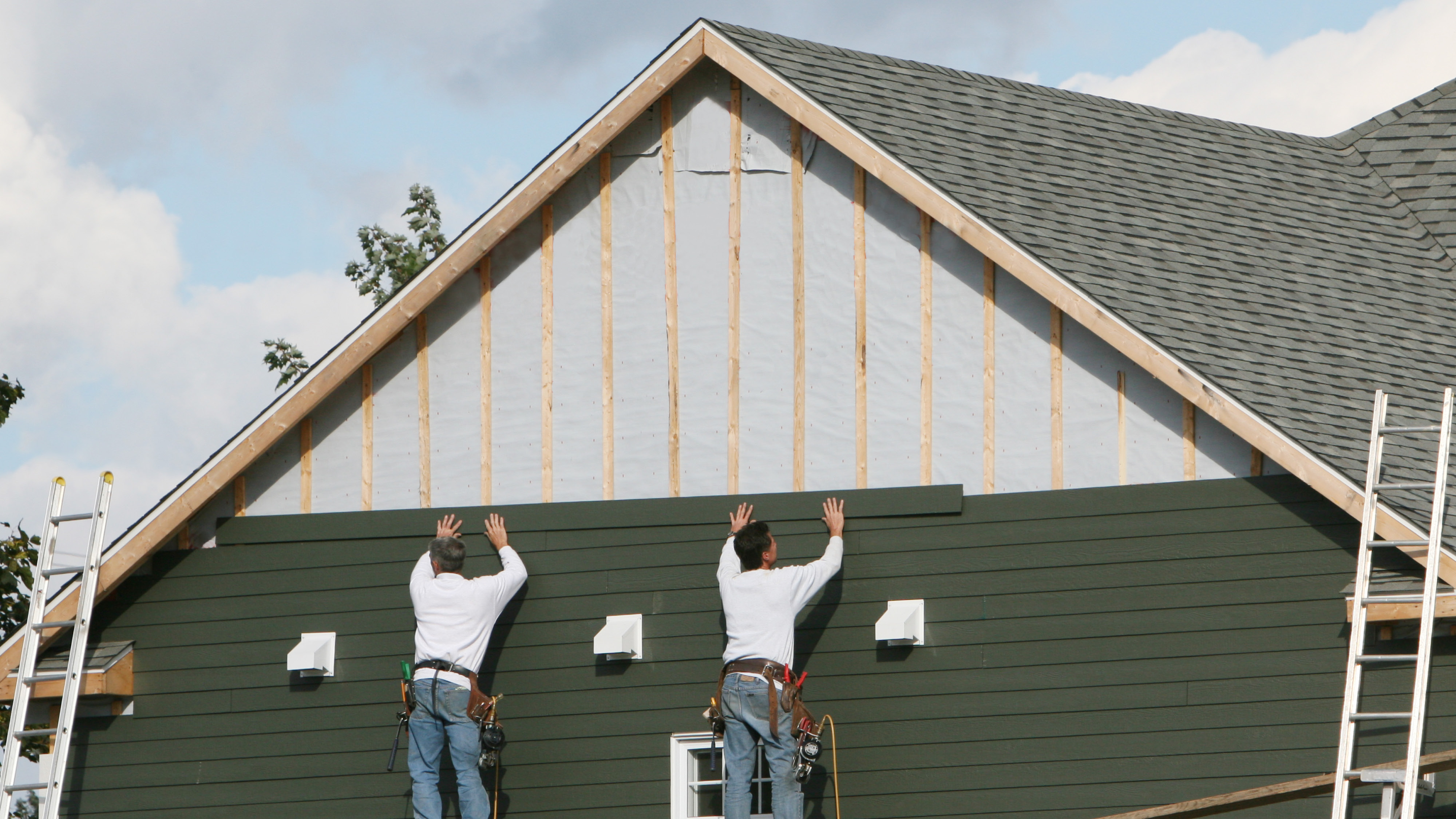
The workmanship warranty covers problems that trace back to how the siding was installed. If panels cup or gap because they weren't fastened correctly, if water gets in because flashing was installed in the wrong sequence, or if clearance requirements weren't maintained and moisture damage results, that's an installation problem. It falls on the contractor, not the manufacturer.
Here's where homeowners often get caught: they assume these two warranties overlap seamlessly. They don't. If a problem traces back to installation, the manufacturer warranty won't cover it. And if the contractor has no workmanship warranty, there's no coverage at all.
What James Hardie's Warranty Requires From Installers
James Hardie has an Alliance Contractor program with multiple tiers. At the qualifying levels, certified contractors receive training on Hardie's Installation Best Practices manual, a specific document that covers how every product in the Hardie lineup must be installed to preserve warranty coverage.
If Hardie products are installed by a contractor who hasn't followed the Best Practices guidelines, the warranty is void. That's not a fine print technicality. It's the stated condition of coverage. A contractor can buy Hardie products from the same supplier as any certified installer. They can quote a project using Hardie by name. But if they install it outside the Best Practices specifications, the homeowner has no warranty protection from the manufacturer.
The practical problem is that this isn't obvious from the outside. A Hardie installation done by an uncertified contractor who ignored the clearance and flashing requirements looks exactly the same as one done correctly, at least for the first few years. The difference shows up when something goes wrong and the homeowner files a claim.
What LP SmartSide's Warranty Requires
LP SmartSide's 50-year warranty has its own specific installation and maintenance requirements. LP's warranty documentation specifies requirements for priming, painting, caulking, and clearances that must be met for coverage to apply. Installation by a contractor who doesn't follow the LP installation guidelines, or who uses incompatible primers or caulks, can limit or void the warranty.
For LP SmartSide specifically, the painting requirements are more involved than for James Hardie's factory-finished ColorPlus products. LP panels arrive primed from the factory and require field painting after installation. The paint must be applied within a specific window after installation, and any paint failure from improper application or incompatible products creates a potential warranty exclusion.
In Florida, where UV exposure is intense and paint degradation happens faster than in Northern markets, the field-painting requirement adds ongoing maintenance obligations that affect warranty status over time. A professional siding installers who understands these requirements sets the homeowner up for long-term coverage. One who doesn't can inadvertently start the warranty clock running in the wrong direction.
The Specific Installation Details That Void Coverage
Both James Hardie and LP SmartSide have specific installation details that, if missed, void the warranty. These are the most common ones Ridge Top sees missed in the field.
- Clearance above grade. Hardie requires siding to be installed at least 6 inches above soil, mulch, or landscaping. LP SmartSide has similar requirements. Siding that contacts or sits too close to grade traps moisture and creates conditions for accelerated degradation. Any resulting damage falls outside warranty coverage.
- Clearance above roof lines. Siding and trim must maintain at least 2 inches of clearance above any roofline. Where siding runs down to a roof surface at a lower addition, porch, or garage, incorrect clearance allows water to wick upward behind the siding.
- Fastener type and placement. Hardie must be nailed with the correct fasteners at the correct spacing. Nailing into the center of the nail hem zone is required. Under-driving or overdriving fasteners, or placing them outside the specified zone, creates attachment and warranty compliance issues.
- Caulk compatibility. Both manufacturers specify approved caulk types for use with their products. Using incompatible caulk that shrinks, cracks, or bonds incorrectly to fiber cement or engineered wood voids the protection at every joint where that caulk was applied.
- Flashing at butt joints and penetrations. Hardie's installation guide requires specific flashing at vertical butt joints that overlap the course below by at least one inch. Missing or incorrect flashing at penetrations, windows, and joints is one of the most common installation shortcuts that leads to voided warranty claims.
What Happens When You File a Claim After an Uncertified Installation
When a homeowner files a warranty claim with James Hardie or LP SmartSide, the manufacturer typically sends a representative to inspect the installation before approving any coverage. That inspection doesn't just look at the failed panel. It looks at the surrounding installation for compliance with the Best Practices guide.
If the inspector finds clearance violations, missing flashing, incorrect fasteners, or incompatible caulk, the claim is denied. The manufacturer's position is that the product wasn't given the conditions it requires to perform as warranted. That's a technically correct position, and it leaves the homeowner with no recourse from the manufacturer.
The homeowner then turns to the siding contractor. If that contractor offered no workmanship warranty, or if the company is no longer in business, there's nowhere to go. The repair cost, including potentially removing and reinstalling entire sections of siding to correct the underlying installation error, falls entirely on the homeowner.
This is not a rare scenario. It's a predictable consequence of hiring on price without verifying certification and warranty terms.
How to Verify a Contractor's Certification Before Signing
Before you sign any siding installation contract, verify the following for any siding companies near me you're considering.
- Check the manufacturer's contractor locator. James Hardie's website has a contractor finder that shows certified contractors and their tier in the Alliance program. If a contractor claims to be certified and doesn't appear there, ask them to explain the discrepancy.
- Ask what tier certification they hold. James Hardie's program has multiple levels. The tier determines what warranty tier the homeowner qualifies for. A contractor should be able to name their certification level without hesitation.
- Ask for the workmanship warranty in writing. What does it cover? For how long? Who do you call if there's a problem? A contractor who can't provide a written workmanship warranty document before the contract is signed isn't offering you real protection.
- Confirm who does the actual installation. Some companies sell the job and subcontract the installation to uncertified crews. Ask directly whether the crew installing the siding is employed by the company and trained to the manufacturer's specifications.
What Workmanship Warranty Coverage Should Look Like
A real workmanship warranty should specify what it covers (installation errors, not product defects), the length of coverage, what the claim process is, and what remedy the contractor provides. Coverage for one to two years is common for lower-tier contractors. Coverage for five years or more from a certified installer is the standard to look for on a quality job.
The workmanship warranty is the document that protects you when the manufacturer says the problem is an installation issue, not a product defect. Without it, you're relying entirely on goodwill from a contractor who may or may not still be in business when the problem appears.
How Ridge Top Protects Your Warranty
Ridge Top Exteriors is a certified installer for every siding product line we sell, including James Hardie fiber cement and LP SmartSide engineered wood. Our professional siding installers are trained to each manufacturer's installation specifications, and every project is completed to the standards that qualify the homeowner for full manufacturer warranty coverage.
We also provide our own written workmanship warranty on every siding installation, separate from the manufacturer's product warranty. If an installation issue surfaces after the job is done, we come back and fix it. That's not a verbal commitment. It's in writing before the contract is signed. Our siding service page covers the full range of products we install across Wisconsin, Illinois, and Florida.
Use our instant quote tool to get a real starting estimate. Read verified reviews from homeowners across our service area to see how Ridge Top's certified installation holds up over time. And learn more about how our process works from first estimate through completed installation.
The warranty on your siding is only as good as the contractor who installs it. Ask the question before you sign.