The frightening part of roof damage is almost never the part you can see from the driveway. A missing shingle is a symptom. The real story is happening underneath it, in the flashing, underlayment, and decking that quietly manage every drop of water hitting your home. That is why most roof damage repair projects fail: not because the materials were bad, but because the scope of work never named the actual cause of the leak. This guide walks you through the warning signs that genuinely matter, how to tell a targeted repair from a real replacement, and what an honest inspection and written scope should include before you sign anything.
The Warning Signs Most Homeowners Walk Right Past
You can catch most roof problems early with a ten minute walk around your house and a careful look at your ceilings. The National Roofing Contractors Association encourages homeowners to look at their roof on a regular schedule rather than waiting for a storm, and twice a year plus after major weather is a sensible rhythm. The signs of roof damage that matter are the ones telling you water has already found a path in, or is about to.
Curling, Cracked, and Missing Shingles
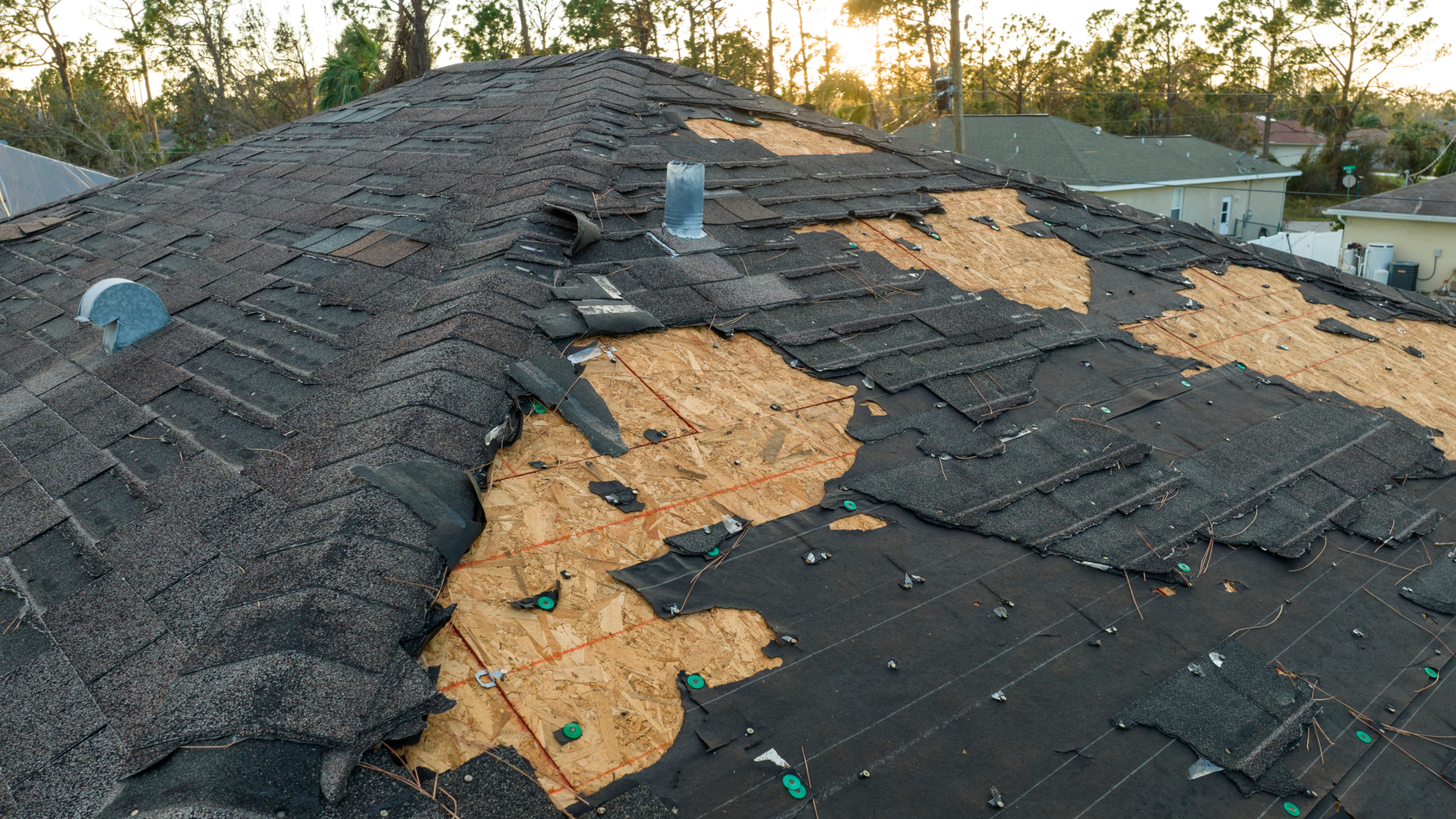
Shingles that curl at the edges, crack across the face, or lift at the corners have lost the flexibility that keeps them sealed to the shingle below. Once that seal breaks, wind drives rain sideways underneath, straight to the underlayment.
A few missing shingles after a storm is a repair conversation, not a crisis. But pay attention to the pattern. Damage concentrated on one slope usually points to wind or impact. Damage scattered across every slope usually points to age, heat, or poor attic ventilation cooking the roof from below. Technical guidance from the Asphalt Roofing Manufacturers Association is a useful plain-English reference on how shingles are designed to perform and how they age.
Granules Piling Up in Your Gutters
Those coarse, sand-like particles collecting in your gutters and at the base of downspouts are the protective granules that shield your shingles from sunlight. Some shedding is normal on a brand new roof, and ARMA's technical bulletins explain why loose granules appear early in a roof's life. Steady accumulation on a roof that is ten years or older is a different message: the shingles are losing their armor.
Bare, shiny patches on the shingle surface are the visual confirmation. Once granule loss is widespread, the shingle degrades quickly and a patch here or there stops being a sensible investment. This is exactly the kind of judgment call our roofing team is asked to make every week, and the honest answer depends on what the rest of the roof looks like.
Stains, Sagging, and Daylight in the Attic
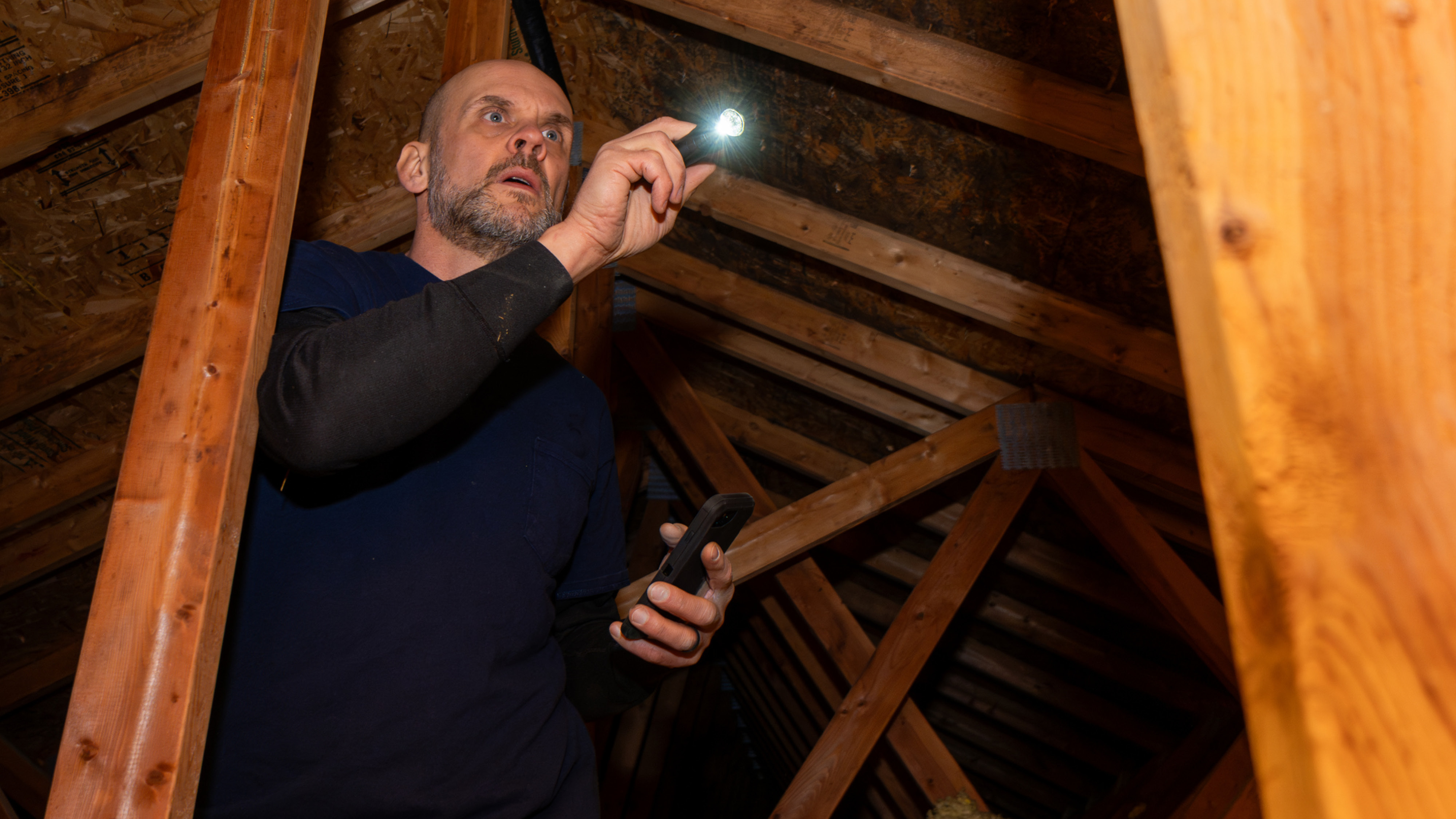
The most useful inspection you can do yourself happens inside. Take a flashlight into the attic on a bright day and look for daylight coming through the roof deck, dark water staining on the wood, rusted nail tips, matted or damp insulation, and any musty smell.
From outside, a roofline that dips or waves between rafters suggests the decking underneath has absorbed water and lost strength. Inside your living space, a brown ring on the ceiling or a bubble in the paint means moisture has traveled through insulation and drywall. By then the leak has usually been active for a while, so do not assume a fresh stain means a new problem.
The Real Horror Story Is Under the Shingles
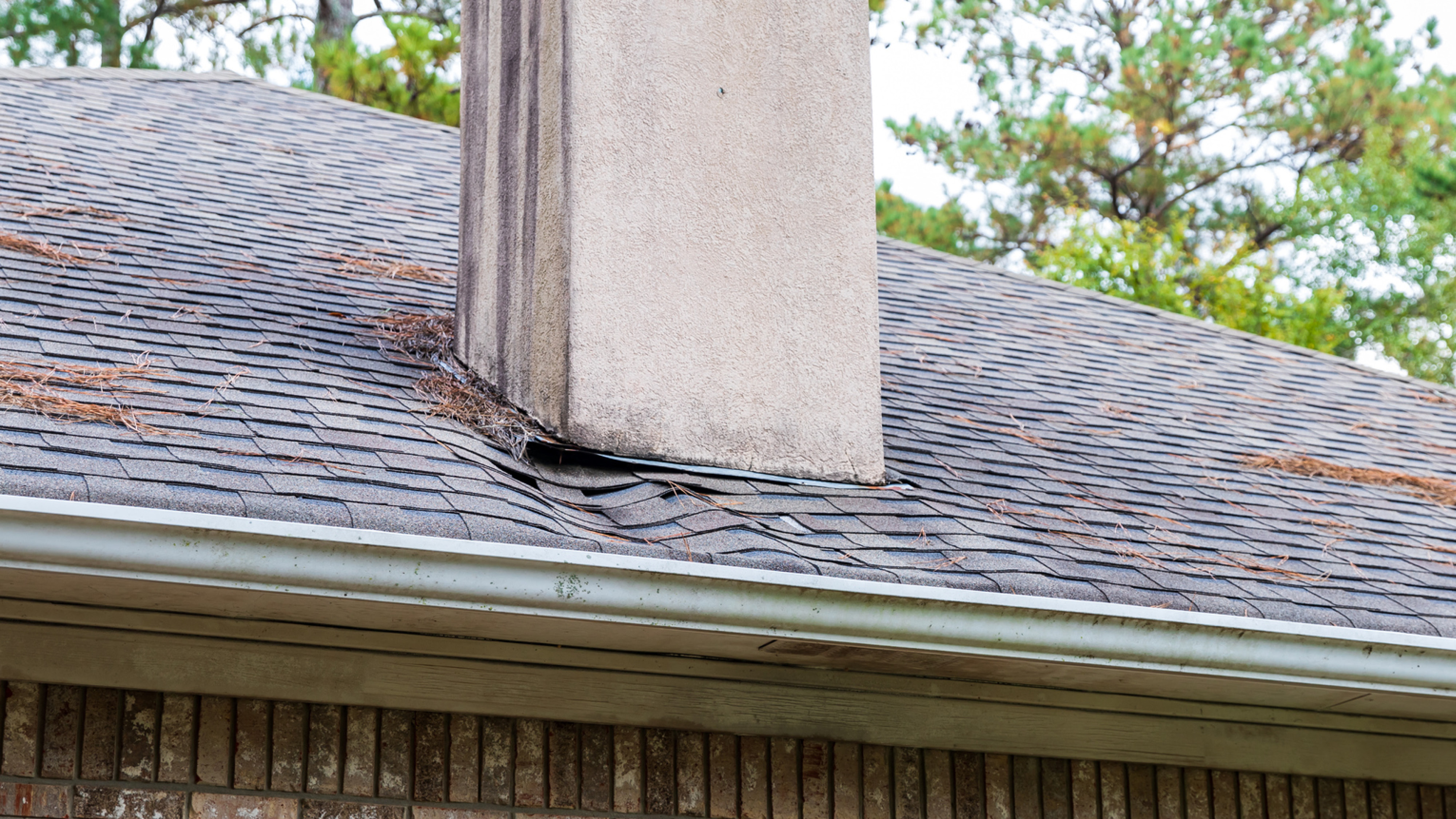
Most roof leaks do not start in the middle of a shingle field. They start at the transitions: the metal flashing where the roof meets a wall or chimney, the valleys where two slopes drain into each other, and the rubber boots sealing the plumbing vents. Those are the places where water changes direction, and where installation details decide whether your roof performs or fails.
This matters because of how the failure progresses. Water gets past a cracked pipe boot or tired valley metal, soaks the underlayment, then sits against the wood decking. The shingles above still look perfectly fine. Meanwhile the deck softens, fasteners lose their grip, insulation compresses and stops insulating, and moisture works toward your drywall.
If you want to see how exacting these details are meant to be, the installation literature published by manufacturers such as GAF, Owens Corning, and CertainTeed spells out exactly how flashing, valleys, and ventilation are supposed to be built. Those documents are public, and a contractor who follows them will be glad you read them. Treating the roof as a complete system rather than a surface is the whole idea behind how we approach roofing work.
Attic ventilation belongs in the same conversation. A roof that cannot exhaust heat and humidity bakes shingles from underneath and invites condensation in winter. The ENERGY STAR and U.S. Department of Energy guidance on attic ventilation and insulation is worth ten minutes of your time, because balanced airflow protects both your shingles and your heating bill. We are regularly called to roofs repaired only a few years earlier where the same leak returned, because valley metal, step flashing, or pipe boots were reused past their service life and ventilation was never evaluated. Shingles were replaced. The cause was not.
Roof Damage Repair or Full Replacement: How to Tell
The roof repair vs replacement decision comes down to three honest measurements: the age of the roof, how widely the damage is spread, and the condition of the wood decking underneath. Any contractor who answers that question without inspecting all three is guessing, or selling.
A targeted roof damage repair is usually the right call when the roof still has meaningful service life left, the damage is isolated to one area or one slope, the decking is sound and dry, and matching material is available. Reroofing a healthy roof because of one leak at a chimney is not integrity. It is an oversized invoice.
Replacement becomes the sensible investment when the shingles are near the end of their expected life, granule loss is widespread across multiple slopes, there are repeat leaks in different locations, or the decking has soft, rotted sections requiring significant sheathing work. At that point, repairs stop being repairs and become a series of payments toward a roof you will replace anyway. If you reach that fork in the road, our guide on seeing your new roof before you sign a replacement quote walks through what a transparent proposal should look like.
Two more things worth checking before you decide. First, read your shingle warranty on the manufacturer's own site, because layered patchwork using mismatched materials and details can affect the coverage you assumed you had. Second, if a storm was involved, the Insurance Information Institute publishes straightforward homeowner guidance on roof claims and the documentation insurers expect. Reading it before you call your carrier puts you in a much stronger position.
What an Honest Roof Damage Repair Inspection Includes
A legitimate inspection produces a diagnosis and a document, not a verbal quote scribbled on a business card. You are paying for someone to find the root cause, then write down exactly how they intend to fix it. If you cannot hold the scope in your hand and read it, you cannot hold anyone accountable to it.
Here is what a thorough roof damage repair inspection should cover, and what you should expect to receive afterward:
- A walk of the roof surface, not just a look from the ground or a drone pass
- Close evaluation of every flashing point: chimneys, walls, skylights, valleys, and plumbing vent boots
- An attic entry to check decking, underlayment staining, insulation moisture, and ventilation performance
- Photos of each problem area, labeled so you can see what the roofer saw
- Measurements of the affected area rather than vague descriptions like 'the back side'
- An itemized written scope listing every component being replaced, including underlayment, flashing, and fasteners
- A plain-language explanation of the root cause and why the proposed fix addresses it
- Written warranty terms covering both materials and workmanship, with the duration of each
Keep that photo and measurement documentation even after the work is done. It becomes your baseline for the next inspection, and the Insurance Information Institute notes that a documented maintenance history makes any future claim conversation far simpler. If keeping that record current on your own feels like one more thing to track, our RoofCare+ program handles the scheduled inspections and documentation for you.
Questions to Ask Before You Sign Anything
These five questions separate a system-level repair from a cosmetic patch. Ask every contractor the same set, then compare the answers side by side.
- What is the root cause of this leak, and how did you confirm it?
- Which components are you replacing versus reusing, and why?
- Did you evaluate the attic ventilation, and what did you find?
- What does your scope include if you open the roof and find rotted decking?
- What is covered by the material warranty, what is covered by your workmanship warranty, and for how long?
When you compare estimates, compare scope first and price second. Two bids that differ by a thousand dollars usually differ by several line items. The cheaper one often reuses flashing, skips underlayment, or ignores ventilation. That is not a discount. It is a deferred cost with interest.
Don't Let a Small Leak Haunt You All Winter
A leak left through one more season rarely stays the same size. Water follows the path it has already carved, and freeze-thaw cycles widen it. What began as a cracked pipe boot turns into rotted decking, saturated insulation that no longer holds heat, stained drywall, and in the worst cases mold remediation costing several times the original repair. Waiting does not save money. It changes who you write the check to.
The good news is that this is one of the easiest home problems to get ahead of. A documented inspection now tells you whether you are looking at a two hour repair or a project to plan for spring, and either answer is better than guessing through winter.
Judge the Diagnosis, Not the Discount
A roof is a system, and a repair only works when it addresses every part of the water's path: shingles, flashing, valleys, underlayment, decking, and ventilation. Learn the warning signs, insist on a written scope that names the root cause, and compare contractors on the thoroughness of their diagnosis. Done that way, roof damage repair resolves the leak at its source, keeps your deck and insulation dry, protects your warranty coverage, and lets your roof reach the service life it was built for.
If you want to keep learning before winter, spend time with the homeowner resources from the NRCA on inspection and repair standards, the ENERGY STAR material on attic ventilation and insulation, and your shingle manufacturer's warranty page. On our side, our article on reviewing a roof replacement quote is the natural next read if your roof is closer to the end of its life.
And when you are ready for a second set of eyes, you can request a no-pressure roof damage repair inspection and receive photos, measurements, and an itemized scope to review on your own timeline. No decision required at the kitchen table.