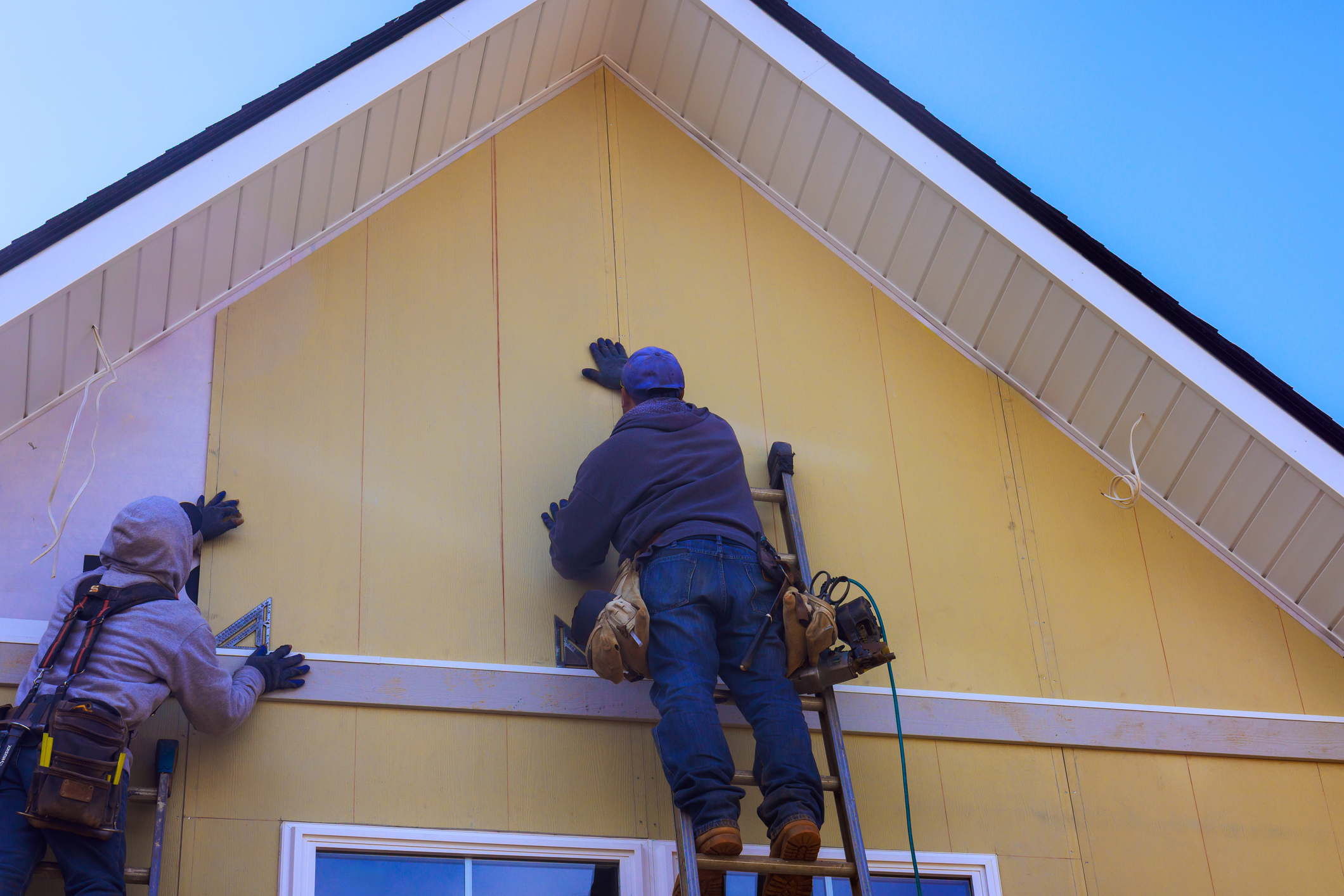
Professional siding installers are trained through four channels: manufacturer certification on the specific product they install, state or local licensing, documented jobsite safety training, and years of supervised field experience. Manufacturer certification is the credential that matters most, because it is the only one tied directly to how your siding gets fastened, flashed, and warrantied.
The problem is that none of those four usually appear on an estimate. That gap explains why two bids for the same house, the same square footage, and the same product can lead to very different outcomes ten years later. Below is what each credential means, which ones carry real weight, and the short list of questions that lets you verify training in a single conversation.
Why Siding Installer Training Varies So Much
Siding sits in a low-barrier corner of the trades. In most states, it is not a separately licensed specialty the way electrical and plumbing work are, where a journeyman card and inspections are built into the process. A general contractor registration is often the only requirement, and in some areas even that is thin.
The practical result is that anyone with a nail gun, a ladder, and a truck can present themselves as a siding company. On paper, that company and a fully certified crew look identical. Both list the same product name, the same wall area, and a number at the bottom.
This is why we encourage homeowners to compare qualifications before comparing price per square foot. Training is the largest invisible variable in any siding replacement project, and it is the one variable you can verify in writing before you sign.
Manufacturer Certification: The Most Meaningful Credential Professional Siding Installers Hold
Because siding is not a licensed trade in most places, manufacturer certification has become the clearest measure of training available to homeowners. Siding manufacturers publish detailed installation specifications covering fastening, clearance, flashing, joint treatment, and finishing. Their training programs exist to teach crews those specifications and to confirm the crew can execute them.
Certification also affects your coverage. Certified companies can often register completed projects for enhanced or extended warranty tiers that uncertified crews cannot offer. Installation that deviates from published specifications can also reduce or void manufacturer coverage, which means an untrained crew can quietly cancel the protection you paid for.
James Hardie Contractor Training
Fiber cement is heavier, more brittle, and less forgiving than other siding materials, so James Hardie runs a contractor program built around its published installation requirements. The company rebuilt and renamed that program as the James Hardie ALLIANCE in early 2025, with tiers that reflect installation history, training, and customer satisfaction scores. Training covers correct cutting and dust-control practice, nail type and placement, required clearances at roofs, decks, and grade, and how joints and penetrations must be flashed.
When you hear the term James Hardie certified installer, that is what stands behind it: a crew trained to the manufacturer's own standard rather than to habit. Program members also submit to periodic installation audits, which is one of the few outside checks that exists in this trade. Ask which specific people on the crew hold the credential, not just whether the company name appears on a list.
LP SmartSide Preferred Contractor Training
LP SmartSide is engineered wood, and it has its own rules for cut-edge sealing, fastener depth, butt joint treatment, and ground clearance. LP's BuildSmart preferred contractor program trains crews on those guidelines through a mix of online and hands-on instruction, and you can confirm a company's standing through the LP SmartSide contractor locator.
One detail worth knowing: LP's 50-year limited product warranty applies to the siding itself and depends on installation that follows LP's application instructions. It does not cover the contractor's workmanship, which is a separate promise your installer has to make on their own.
Engineered wood is forgiving to handle and unforgiving about moisture. A crew trained on the product knows that a sealed cut edge is not an optional finishing touch. It is the difference between a wall that lasts and a wall that swells at the seams.
Vinyl Siding Institute Certified Installer Program
Vinyl is the most commonly installed and most commonly mis-installed siding material, largely because it looks simple. The Vinyl Siding Institute runs a certified installer program validated by an independent third-party administrator, which makes vinyl unusual among exterior claddings. Candidates need at least two years of hands-on installation experience before they can sit for it.
The program is built on ASTM D4756, the recognized industry installation standard, and it tests correct fastening, keeping panels straight and secure, and preparing the areas around windows and doors to keep water out. Certification lasts three years, after which the installer has to recertify, and VSI maintains a public registry you can search to confirm a name.
That expansion detail matters more than it sounds. Panels nailed too tight will buckle in summer heat and pull apart in winter cold, which accounts for a large share of the wavy walls you see driving through older neighborhoods. If you are still weighing vinyl against fiber cement or engineered wood, our siding and wall systems overview walks through how each material behaves over time.
Licensing, Insurance, and Safety Training Are Baselines, Not Credentials
A licensed and insured siding contractor has met the minimum, not the standard. Requirements vary widely by state, so start with your own state's portal. Wisconsin homeowners can search credentials, including the Dwelling Contractor certification required for residential work, through the DSPS credential search. Florida homeowners can confirm a license number, status, and disciplinary history on the DBPR verification portal.
Illinois works differently and surprises people. The state licenses roofing contractors through IDFPR, but there is no statewide general contractor license, so siding and general construction credentials are handled at the municipal level. If you are in Illinois, check both the state lookup and your village or city requirements.
Insurance deserves the same scrutiny, and no state portal will show it for you. General liability protects your property if something goes wrong on site. Workers' compensation protects you from liability if someone is injured on your roofline. Ask for certificates issued directly by the insurer, with policy numbers and active dates, rather than accepting a verbal assurance. We are happy to send ours before anyone sets foot on your property, and you can request them here.
Safety training belongs in the same conversation. Exterior crews work at height all day, and OSHA requires fall protection in construction at six feet above a lower level. A companion standard, 1926.503, sets the training requirements behind it. Companies that invest in recurring safety training tend to invest in installation training too, because both come from the same belief that work should be done correctly rather than quickly.
Field Training: The Skills Certification Does Not Teach
Certification teaches the specification. Field training teaches judgment, and judgment is what protects your walls. When we are called in to correct another company's siding work, the failure is almost never the product. It is a trained-eye detail that was skipped.
The details that separate experienced crews are consistent and specific:
- Integrating the weather-resistive barrier so water drains out of the wall instead of into it
- Installing kick-out flashing where a roofline meets a wall, the single most common missing detail we find
- Flashing windows and doors in the correct sequence, from the bottom up
- Setting nail depth and spacing so panels hold without being pinned
- Leaving proper expansion gaps and ground clearance
- Tying soffit and fascia installation cleanly into the siding plane
None of these are learned from a manual alone. They are learned through supervised repetition on real houses, which is why crew tenure matters as much as certification. It is also why in-house payroll crews tend to deliver more consistent results than rotating subcontractors who may have never worked together before your project.
One more point that rarely gets mentioned: manufacturers revise their installation requirements over time, and several programs now build recertification into the credential itself. A certification earned years ago, with no refresher training since, is weaker than it looks on a website badge.
How to Verify an Installer's Training Before You Sign
Training should be auditable. Every claim a contractor makes about qualifications should come with a number, a certificate, or a name you can check against the registries linked above. Here is the short list we recommend using on every bid you hold:
- Which manufacturer certifications do you hold, and what are the certification ID numbers?
- When did your crew last complete refresher or updated product training?
- Can you send your contractor license number and current certificates of general liability and workers' compensation insurance?
- Will in-house employees install my siding, or subcontractors? Who specifically will be on my property?
- How long has that crew worked together?
- Who is my named project manager and single point of contact?
- What written warranty coverage do you provide on workmanship, separate from the manufacturer's product warranty?
Qualified professional siding installers answer all seven without hesitation, usually in writing and usually the same day. A contractor who treats these questions as an inconvenience has told you something useful about how your project will be managed.
The estimate itself tells you something too. A company that can show you your own house with new siding before work begins is one that plans in detail, which is why our free siding estimate includes a 3D designer that shows color combinations first.
Training Is the Part of Your Siding You Will Never See
Once the last panel goes up, every siding job looks good. The flashing, fastener depth, and barrier details are sealed behind the wall, and you will not know whether they were done correctly until weather tests them. That is exactly why training deserves more weight in your decision than it usually gets.
We expect manufacturers to keep tightening installation requirements and tying their strongest warranty tiers to verified, recurring training. We also expect homeowners to keep asking for credentials in writing, which is a healthy thing for this trade.
If you are comparing three to five companies right now, use the seven questions above on each one, run every license number through your state portal, then review our completed siding projects to see how trained crews handle the details at corners, rooflines, and windows. When you want a second set of eyes on your estimates, you can schedule a no-pressure consultation and we will walk through what each bid includes, what it leaves out, and what your walls actually need.